

Sanaa places Saudi regime before comprehensive deterrence equation If siege on Yemen is not lifted
SANAA, July 04 (YPA) – The failure of Saudi warplanes to intercept an Iranian civilian aircraft, and its landing today (Friday) at Sanaa International Airport after Sanaa forces confronted the Saudi fighters and forced them to leave Yemeni airspace, signals the end of one phase and the beginning of another, more decisive one regarding the siege on Yemen—the title of which is lifting the blockade by force.
The Saudi regime’s attempt to prevent the landing of a civilian aircraft carrying patients, the wounded, and stranded citizens at Sanaa Airport confirms that Riyadh still clings to the policy of blockade and has not abandoned using it as a leverage card. This persists despite all the recent talk about calm and de-escalation, thereby giving Sanaa the full right to utilize all its options to lift the siege, including the military option.
This is precisely what transpired on Friday; Sanaa did not stop at merely condemning the attempt or making a political stance. Instead, it transitioned into field action by targeting the Saudi fighter jets that violated Yemeni airspace and forcing them to withdraw, allowing the civilian aircraft to continue its journey and land safely at Sanaa Airport.
A New Reality on the Ground
What occurred reveals that Sanaa has indeed begun imposing a new reality aimed at ending the siege practically, and that it will not back down from this path, viewing it as part of the battle for national sovereignty. This direction is further reinforced by the statement issued by the Yemeni Armed Forces, which carried an unprecedented warning to the Saudi regime against the consequences of repeating any attempt to violate Yemeni airspace or target Yemen. The statement emphasized that any escalation of this kind would be met with a comprehensive response targeting airports and vital interests across land and sea.
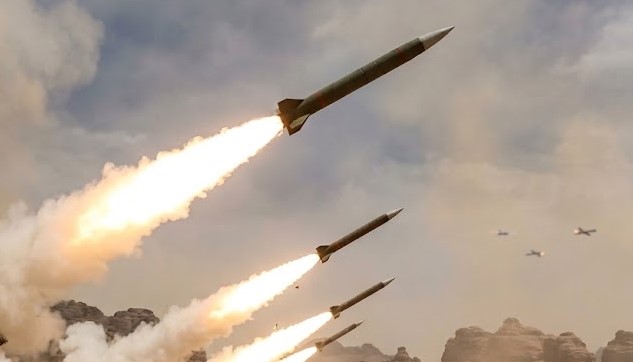
The substance of this warning is not limited to establishing the “airport-for-airport” or “port-for-port” equation; rather, it establishes a broader strategic deterrence equation. Its premise is that the siege will no longer be one-sided. Sanaa, which has accumulated advanced missile and aerial capabilities over the years of war, now possesses a bank of vital targets deep within Saudi territory. This includes economic, logistical, and infrastructure facilities with direct impact, many of which would be difficult to replace or rapidly restore to operation if targeted.
Consequently, the message conveyed by the military statement transcends the framework of traditional military response, establishing the equation of “blockade for blockade.” Under this rule, the continued closure of Sanaa Airport or the obstruction of Yemeni aerial and maritime navigation will become costly for Saudi Arabia on both economic and strategic levels, rather than an action that can be imposed free of cost.
Riyadh’s Two Choices
Accordingly, Riyadh finds itself facing two choices with no third alternative:
- Either accept ending the siege and lifting the restrictions imposed on Yemeni aviation and navigation movements,
- Or bear the consequences of a mutual blockade affecting its own airports, ports, and vital facilities, thereby turning its economic and logistical security into part of the deterrence equation imposed by Sanaa.
In this sense, the Iranian aircraft incident does not merely represent a success in securing the landing of a civilian flight; it marks the declaration of the confrontation’s transition into a new phase. In this phase, breaking the siege is no longer just a political demand, but a field reality that Sanaa is working to enforce through the power of deterrence. Any attempt to re-institutionalize the blockade will be met with different engagement equations, where the security of vital and strategic Saudi facilities is directly linked to the immediate termination of the siege on the Yemeni people.
Popular Backing and Military Readiness
It is essential to note that the use of force by Sanaa forces to break the blockade imposed on Sanaa Airport reflects, in a significant way, a direct response to the aspirations and demands of the Yemeni street. The public continues to turn out in massive armed rallies and gatherings in the capital, Sanaa, and various governorates, demanding serious action to end the aggression and lift the siege imposed on Yemen for the past 11 years.
This development arrives to confirm that the military decision-making in Sanaa is inseparable from its popular base; rather, it intersects with it directly. Popular pressure acts as an additional driving factor toward adopting more decisive options in confronting the continuation of the siege, thereby reinforcing the legitimacy of military action in this direction.
Furthermore, the equation of power in Sanaa appears different today than at any time in the past. In its military maneuvers, Sanaa relies on an advanced military arsenal alongside a vast human depth recently revealed by general mobilization. This backing exceeds hundreds of thousands of fighters and hundreds of brigades capable of integration and mobilization within the structure of the Armed Forces.
This military-human composition grants Sanaa a growing capacity to impose its options on the ground. It enhances its ability to shift from a posture of reaction to one of initiative, consolidating a broader and more impactful deterrence equation in any upcoming course of confrontation.
YPA