

From Minneapolis to New York… Massive public protests threaten Trump’s second term
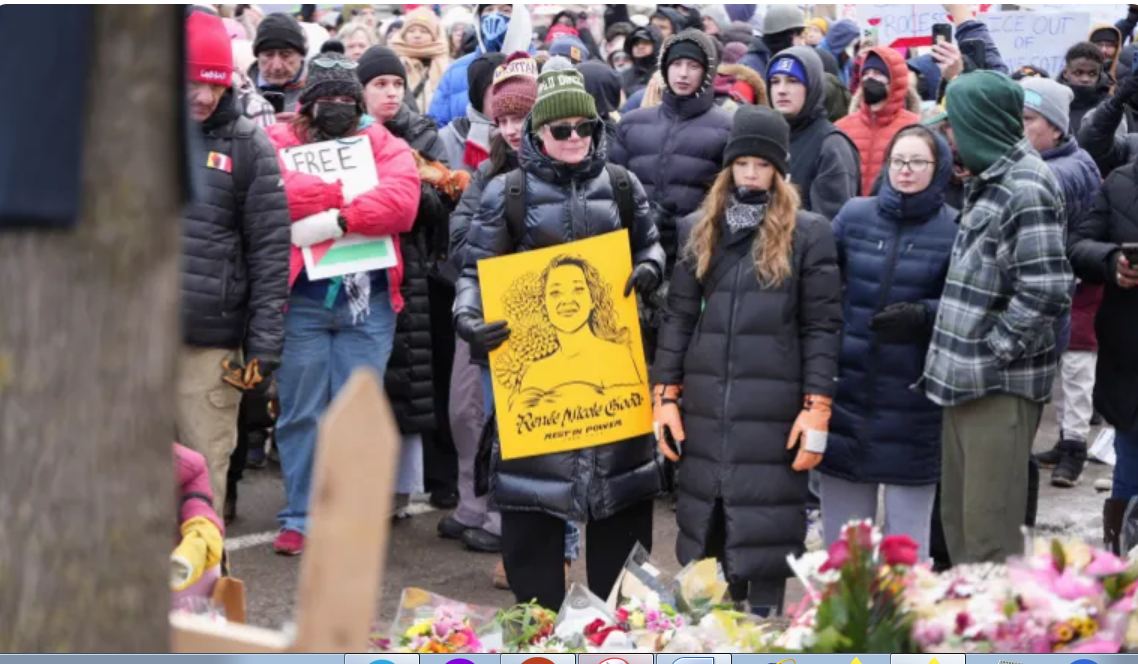
SANAA, Jan. 12 (YPA) – In a ground-level escalation reflecting the growing tension between federal authorities and local communities, several U.S. cities, led by Minneapolis, have witnessed a tidal wave of protests demanding the withdrawal of Immigration and Customs Enforcement (ICE) and an end to the prosecution of undocumented immigrants.
These large-scale demonstrations erupted following the killing of a woman who was shot by a federal agent while driving her car—an incident that protest organizers described as stark evidence of the dangers inherent in the “Iron-Fist” approach pursued by the Trump administration.
With more than one thousand demonstrations scheduled over the weekend, Minneapolis has emerged as a focal point of resistance to federal policies, amid widespread public demands to hold those responsible for acts of violence accountable and to ensure the protection of human rights for all individuals, regardless of their legal status.
The streets of Minneapolis are no longer merely venues for temporary protest; they have transformed into spaces of sustained public outrage against President Trump and federal immigration policies. Thousands rallied to denounce what they described as shameful practices targeting immigrants. This mass mobilization has placed the Trump administration in direct confrontation with the streets, particularly after the killing of citizen Renee Nicole Good—an incident that triggered intense debate over the legality of excessive force and residency laws. Protesters are now demanding the permanent removal of ICE from the city.
Demonstrators chanted slogans rejecting the continuation of the federal government’s arrest campaigns against undocumented immigrants and condemned the killing of Ms. Goode by an immigration officer. They called for accountability while repeatedly chanting the victim’s name, Nicole Goode,37 years old.
According to media reports, thousands defied extreme cold and gathered in a snow-covered park near the site of the shooting. Protesters raised banners calling for ICE’s expulsion from Minnesota. Harsh weather conditions did not deter demonstrators from taking to the streets in forceful marches, carrying signs filled with anger and demands for justice.
The chants echoing the name of Renee Nicole Good have become an anthem of rebellion against what protesters describe as “federal repression” of immigrants. Demonstrators argued that ICE raids and arrest campaigns had gone far beyond law enforcement, now threatening lives and spreading fear throughout communities. The protests have spread to major cities such as New York, Washington, and Philadelphia, highlighting a deepening national divide over U.S. immigration policies.
Protest organizers stated that more than one thousand demonstrations were planned over the weekend following Good’s killing while she was driving her vehicle.
In Philadelphia, participants marched in the rain from City Hall to the local ICE office. Similar demonstrations mobilized large crowds in New York, Washington, and Boston.
The Trump administration attempted to justify the killing by claiming that the immigration agent who shot Renee acted in self-defense. However, local authorities strongly rejected this narrative, asserting that video evidence shows Good’s vehicle was moving away from the officer and posed no threat.
A mobile phone video—believed to have been recorded by the officer who fired the shots—showed the officer approaching Good’s car and then turning away as she tells him, “I’m not mad at you.”
After passing in front of the vehicle, another officer was heard ordering Good to exit the car before she attempts to drive away, followed by the sound of gunfire. At the end of the clip, the officer recording the video can be heard cursing at her.
The killing of Renee Good by an ICE officer has reignited debate over the scope of authority granted to federal agencies. Protesters argued that the Trump administration had transformed ICE into a paramilitary force operating with excessive violence and without meaningful local oversight. Demonstrators rejected what they described as “extrajudicial field executions” and demanded that federal officers be subject to state criminal laws rather than shielded by federal protections.
Based on available data at the beginning of 2026, current protests against Trump—particularly following the Minneapolis incident—appeared to be affecting him more deeply than during his first presidential term.
This is due to several political and strategic factors. Recent opinion polls conducted in January indicated a significant decline in Trump’s popularity, with support dropping to as low as 24 percent in some indicators—a historic low not seen since his first term. This decline was not limited to Democrats but included former supporters such as independent voters, suburban groups, and even segments of his traditional base, increasingly frustrated by government shutdowns and federal job cuts as the midterm congressional elections approach.
At the same time, a growing number of major cities—such as Minneapolis, New York, and Portland—are refusing to cooperate with ICE, undermining Trump’s ability to implement his flagship “mass deportation” agenda.
This trend has also fueled criticism of Trump allies, including Elon Musk, for their role in “managing government efficiency,” a process that resulted in the dismissal of thousands of federal employees. Current protests increasingly linked “police and immigration violence” with “harsh economic policies,” forming a unified opposition front against the Trump administration’s broader approach.
These demonstrations reflected widespread rejection of Trump’s domestic and foreign policies, which protesters viewed as evidence of authoritarianism. Organizers have announced plans for a nationwide strike on January 20, 2026—the anniversary of Trump’s second inauguration—in defense of democracy and civil liberties.
Observers believed that the ongoing protests are significantly impacting President Trump by eroding his popular legitimacy and creating legal and political obstacles to his policies. However, the decisive factor will be whether this movement can successfully transform “street anger” into “votes at the ballot box” during the upcoming midterm elections.