

Saudi–Emirati rivalry in Yemen falls within a unified US project
SANAA, Jan. 22 (YPA) – The leader of the Ansarullah movement, Sayyed Abdul-Malik Badr Al-Din al-Houthi, underscored the nature of the Saudi role in Yemen, clearly outlining the facts in his speech today.
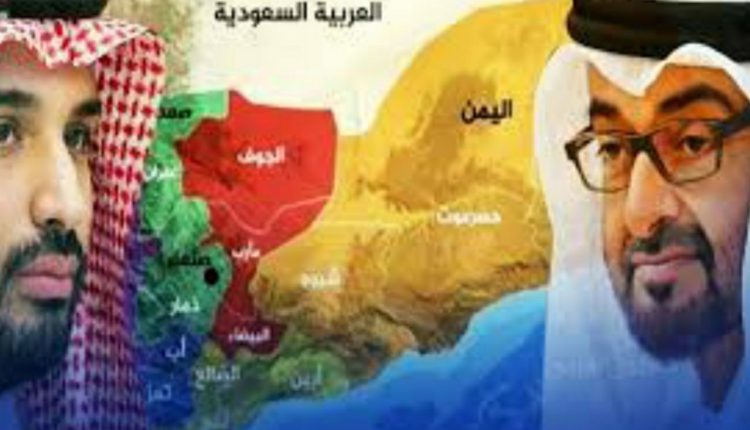
He exposed Saudi Arabia’s stances on Yemen’s unity and sovereignty and outlined the dimensions of the Saudi–Emirati conflict in southern and eastern Yemen, within the context of the entanglement of regional and international roles in targeting the country .
The Saudi Role Within the American Project
Sayyed Abdul-Malik al-Houthi affirmed that the Saudi and Emirati movements come within the framework of a single, indivisible project that serves the American agenda in the region.
He explained that what has occurred since the beginning of the war in Yemen is not the result of independent Saudi or Emirati initiatives, but part of a broader Zionist–American project, in which Saudi Arabia and the United Arab Emirates were tasked with executive roles to achieve the strategic objectives of the United States and “Israel.”
Saudi Implementation and US Supervision
In a deeper reading of the scene, Sayyed Abdul-Malik al-Houthi pointed that “the formula of decisions and positions of the tools is the same, with full Saudi execution and under American supervision.”
This clarifies that what occurred previously was not accidental or unplanned, but part of a clearly defined project. The Emirati role, including its affiliated armed formations, operated within this framework, following a plan devised by Saudi Arabia under direct American supervision.
Sayyed al-Houthi further emphasized this point by likening these tools to a “radio,” whose volume is turned up or down according to Saudi decisions—illustrating the level of control and direction Riyadh exercises over these forces.
Discipline and the Boundaries of Saudi Influence
The leader noted that the continued presence of these tools during the previous phase was not due to inherent strength, but to strict discipline in following Saudi directives and respecting the red lines defining their influence. Even when faced with humiliation or marginalization, these parties remained compliant as long as they stayed within the allowed boundaries, explaining their persistence and continued presence on the scene.
Hadramout and Mahra: The Core of the Conflict
Sayyed Abdul-Malik al-Houthi clarified that the shift in Saudi policy occurred after local Emirati-backed forces took control of the Hadramout and Mahra governorates, as this expansion crossed a red line for Riyadh, which views the two governorates as within its direct sphere of influence.
Accordingly, the recent Saudi move against the UAE and its forces was not a defense of Yemen’s unity or sovereignty, but a reaction to Abu Dhabi’s overstepping of its assigned boundaries and its expansion into areas that Saudi Arabia considers zones of exclusive influence.
Exploitation of Rhetoric
The leader emphasized that Saudi Arabia is indifferent to both unity and secession, instead using slogans strategically to serve its interests. This is reflected in its fighting formations, some deployed under extremist takfiri labels, while others operate under purely secular banners. This suggests that invoking Yemeni unity during the confrontation with the UAE was not a principled stance, but a tool for mobilization and recruitment—applied temporarily and replaced as circumstances dictate.
Unity of the Plan Between Saudi Arabia and US
Sayyed Abdul-Malik al-Houthi linked Saudi behavior to the American approach, emphasizing that Washington, when targeting countries, relies on policies of mobilization and the activation of other actors—whether forces, regimes, or organizations.
This connection highlights the unified planning, coordination, and objectives of Saudi Arabia and the United States, with roles divided between oversight and strategic planning on one hand, and execution and field operations on the other, all within a single project targeting Yemen, its sovereignty, and its future.
Location and Wealth: The Essence of the War on Yemen
The leader explained that the core of American targeting of Yemen lies in controlling its strategic location and natural resources. Through its tools—Saudi Arabia and the United Arab Emirates—Washington seeks to occupy Yemen and exploit its wealth, using local actors under various guises to achieve this objective.
@E.Y.M