

Smuggling of al-Zubaidi redefines military alliance between UAE, Somalia
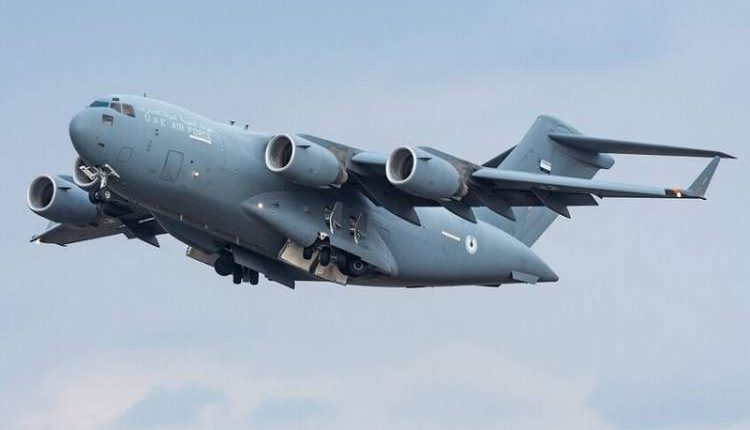
SANAA, Jan. 11 (YPA) – The Somali government has banned UAE-owned or chartered military and cargo aircraft from entering the country’s airspace, according to media reports citing security sources.
The ban follows reports that the UAE transported Aidaros al-Zubaidi, President of so-called “Southern Transitional Council” (STC), through Somali territory without the prior permission or knowledge of Somali security agencies.
Despite Abu Dhabi requesting a grace period to contain the crisis and address the disputes, the Somali side insisted on implementing the flight ban effective January 8.
Sources added that one of the six UAE military and cargo aircraft stationed at Somali airports violated Mogadishu’s orders twice—on Friday and Saturday—prompting the government to threaten further measures.
According to other reports, Somali authorities have approved six evacuation flights from Bosaso Airport and four from Mogadishu as an exception to facilitate the withdrawal of UAE military personnel and equipment currently in the country.
Sources clarified that the ban on UAE flights does not extend to civilian carriers, such as “flydubai.”
Field data suggests the beginning of a gradual dismantling of the UAE’s military presence in Somalia.
A Strategic Shift
Mogadishu’s decision can be read as a strategic turning point in its relationship with Abu Dhabi, moving beyond a mere “diplomatic spat” to a phase of redefining national sovereignty.
The decision serves as a firm message from the Somali government that it will not tolerate foreign military or logistical movements that bypass official channels. Mogadishu viewed the uncoordinated transport of Aidaros al-Zubaidi—a controversial Yemeni political figure—through its airspace or territory as a slight to its authority. Its response via the flight ban is an attempt to enforce new diplomatic “rules of engagement.”
While the UAE has established itself as a major player in Somalia—particularly in semi-autonomous regions like “Somaliland” and “Puntland”—the dismantling of its military presence indicates Mogadishu’s desire to reduce its reliance on Abu Dhabi regarding security matters.
Furthermore, the ban will exert indirect pressure on local Somali factions maintained by close ties with Abu Dhabi, thereby strengthening the central government’s grip in Mogadishu.
Despite the severity of the military decision, the exemption of civilian flights like “flydubai” suggests that Mogadishu wishes to avoid a total rupture in relations, maintaining essential commercial links.
A History of Friction
UAE-Somalia relations gained momentum in 2014 when the two parties signed an agreement for Abu Dhabi to train and support Somali security and military forces to combat ‘Al-Shabaab’ movement and piracy. The UAE also undertook the payment of salaries for hundreds of Somali soldiers.
Parallel to its work with Mogadishu, the UAE signed separate agreements with the regions of Puntland and Somaliland to train local forces (such as the PMPF in Puntland). This frequently drew the ire of the central government, which viewed these moves as an undermining of its sovereignty.
In 2018, military relations collapsed after Somali authorities at Mogadishu Airport seized $9.6 million from a UAE aircraft. Abu Dhabi claimed the funds were intended for army salaries, while Mogadishu suspected they were earmarked for buying political influence. In response, the UAE cancelled the training program, withdrew its instructors and equipment, and closed the Sheikh Zayed Hospital.
In January 2023, following President Hassan Sheikh Mohamud’s rise to power in 2022, a new military and security cooperation agreement was signed in Abu Dhabi. This agreement faced opposition within the Somali Parliament; some MPs labeled it “ambiguous” and claimed it granted the UAE broad influence without sufficient oversight, though the government defended it as a necessity for the fight against Al-Shabaab.
The UAE’s strategy in Somalia relies on a “string of bases and ports,” such as the Berbera base in Somaliland (which Mogadishu does not recognize) and the Port of Bosaso, managed by P&O company (a subsidiary of DP World). The latter serves as a vital logistical and security hub—a presence that may now be coming to an end following Somalia’s recent decision.
YPA