

How Sanaa disrupted Saudi oil calculations: A US agency reveals what lay hidden
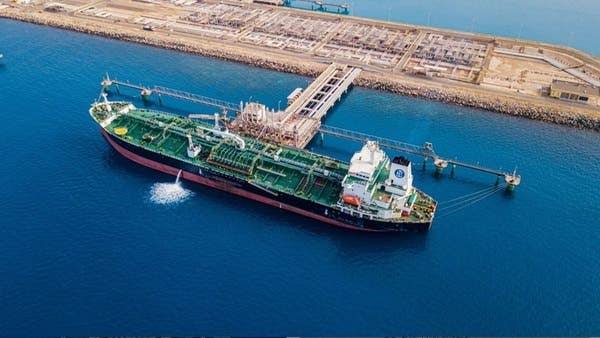
NEW YORK, Aug. 24 (YPA) – The US news agency “Bloomberg” revealed on Sunday a striking picture of the scale of economic losses and mounting pressures facing Saudi Arabia across its oil and logistics infrastructure, driven by the maritime blockade imposed by Sanaa on the movement of Saudi vessels and tankers in the Red Sea and the Gulf of Aden.
A recent Bloomberg report tracked escalating economic and logistical fallout confronting Saudi Arabia due to the disruption of oil tanker traffic linked to Saudi ports and maritime routes, against the backdrop of maritime interdiction operations carried out by Sanaa forces in the Red Sea and Gulf of Aden against Saudi ships.
The American report affirmed that Saudi oil logistics have come under strain due to Yemeni operations in the Red Sea, noting that Saudi Arabia—as one of the world’s largest oil exporters—is avoiding passage through the Bab al-Mandab Strait for its shipping operations, forcing its tankers to take significantly longer sea routes around Africa.
According to the report, rerouting tanker traffic over immense distances—reaching up to approximately 17,000 miles on certain voyages—imposes far more complex logistical arrangements and elevates transport and operational burdens, at a time when Riyadh is striving to maintain the flow of its crude exports to global markets.
Bloomberg pointed out that the targeting of Yanbu alongside navigation restrictions has prompted Saudi Arabia and its commercial partners to reorganize shipping routes to bypass certain maritime corridors. Meanwhile, vessels operated by Greek, Norwegian, and South Korean companies have stepped in to transport shipments between Yanbu and the southern terminal of the Saudi pipeline.
In a notable shift, the report indicated that Saudi Arabia has begun offering options to select Chinese clients to lift crude directly from the Gulf of Oman, outside the Strait of Hormuz. Satellite imagery and vessel-tracking data further revealed a marked concentration of Saudi oil tankers in the Gulf of Oman, according to the agency.
These developments, per data cited by Bloomberg, underscore the scale of the challenge confronting the Saudi oil logistics apparatus; securing shipments is no longer merely a function of production and export capacity, but now demands the complex redrawing of maritime routes and absorbing extra overhead to ensure supplies reach destination markets.
This unfolds as Saudi Arabia seeks to maintain its footprint in the global oil market, rendering sustained maritime disruptions an added compounding pressure on the cost structure and flexibility of Saudi export operations, while putting supply lines to an increasing test amid regional naval tensions.
YPA