

Ex-US envoy acknowledges Ansarallah’s autonomy, challenging Western, Gulf narrative
WASHINGTON, Aug. 03 (YPA) – A former US official has acknowledged that the Sanaa-based authorities operating under the Ansarallah movement (commonly known as the Houthis) exercise independent decision-making, stating that characterizing the group merely as an “Iranian proxy” represents a misreading prevalent in Western and Gulf policy circles.
In comments highlighted by political observers, Alison Minor, former Deputy US Special Envoy for Yemen, indicated that reducing the movement to a direct proxy does not accurately reflect the realities of the Yemeni landscape.
Minor emphasized that the group formulates its policies autonomously—a statement viewed by analysts as a rare acknowledgement from a former US diplomat that diverges from long-standing narratives regarding relations between Sanaa and Tehran.
Observers note that these remarks reflect a potential shift within certain US policy discussions toward re-evaluating the dynamics of the conflict in Yemen. They suggest the statement highlights the geopolitical complexities of the region, contrasting with traditional frameworks promoted by Saudi Arabia and its regional allies that view the Sanaa administration primarily as an extension of Iranian influence.
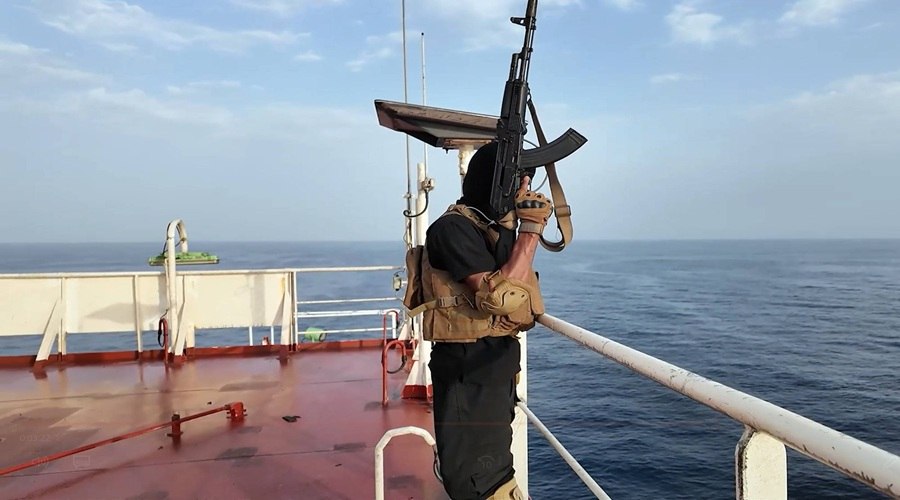
Analysts further point out that the statements underscore the growing regional influence and military capacity of the Sanaa authorities, demonstrated during recent maritime operations linked to the Gaza conflict, as well as years of confrontation with the Saudi-led coalition.
The Sanaa administration continues to demand an end to the coalition blockade and military operations, having previously enforced naval restrictions against regional shipping under the principle of reciprocal deterrence (the “siege-for-siege” equation).
YPA