

Sanaa International Airport: From destruction and blockade to opening and enforcement by force
SANAA, July 07 (YPA) – Sanaa International Airport represents the primary civilian and humanitarian artery for Yemenis, and the vital gateway connecting millions of citizens to the outside world.
Since 2015, this civilian facility has been subjected to a systematic policy led by the Saudi-led coalition, ranging from direct military destruction and navigational blockade to the circumvention of political understandings, which ultimately led to its closure.
Direct Bombardment and Navigational Ban
The targeting of the airport began from the very first moments of the coalition’s aggressive war in March 2015, as coalition aircraft launched intensive airstrikes that inflicted severe damage on the airport’s runways and vital facilities. This put it out of service and destroyed a number of ‘Yemenia’ Airways aircraft parked on the tarmac, coinciding with the declaration of a comprehensive airspace ban.
To deepen this paralysis, the Saudi-led coalition imposed a complete blockade on navigational movement in 2016, under which civilian aircraft were banned from landing or taking off. This was accompanied by repeated bombardment of the facility over the following years to ensure it remained disabled and destroyed, thereby isolating millions of civilians inside Yemen.
The Policy of Procrastination
After years of total closure, the coalition signed a UN-brokered truce agreement with the Sanaa authorities in April 2022. Among its most prominent provisions was the opening of airports and seaports. The agreements included operating two commercial flights per week from Sanaa to Jordan and Egypt, and later to New Delhi. However, the coalition obstructed the scheduled destinations, restricting travel to Jordan only, with a scarce and intermittent number of flights.
With the coalition’s continued intransigence in opening the agreed-upon destinations of Cairo and India, the blockade entered a new phase in March 2023 by tightening restrictions on the only available destination (Jordan). The Jordanian authorities—under pressure and instigation from the Saudi side—imposed prohibitive conditions, which included banning males in the (15-50 years) age group from entering without prior permission, and requiring medical reports issued exclusively by Jordanian hospitals.
In addition, other airlines (such as Djibouti Airlines, Jordanian Airlines, and Al-Saeeda) submitted requests to operate after obtaining approvals from Cairo and New Delhi, but the coalition refused to grant them permits, proving its lack of seriousness in lifting the blockade on Sanaa Airport.
A Blockade in Another Form
Yemen Airways (Yemenia) in Aden was not far from the coalition’s path, as it turned into an agent and a tool in the hands of the coalition to double the blockade. This was done by reducing scheduled flights and seeking to transfer the main administrations and bank accounts from Sanaa to Aden to tighten the noose on Sanaa under flimsy pretexts.
In the face of this, the Sanaa authorities took a precautionary measure to pressure the company’s management to reverse the transfer decisions and to ensure that humanitarian flights did not stop. They proceeded to detain four civilian aircraft belonging to the company immediately upon their return from transporting pilgrims from Jeddah, in order to ensure the continuation of flights from Sanaa Airport and to prevent their cessation, as indicators had emerged showing the coalition’s intention to halt the flights.
Recent Military Targeting and Total Closure
The series of targetings against the airport reached its final chapter during the “Al-Aqsa Flood” battle. The coalition used Yemen’s supportive stance for the Gaza Strip as a pretext to destroy the remaining civilian aviation assets.
In direct coordination, aircraft belonging to the Israeli occupation launched violent raids targeting the airport and its facilities, which led to the destruction of the four civilian aircraft that were securing the scarce humanitarian flights—the last of which was a civilian aircraft on May 28, 2025. This put the airport completely out of service, returning it once again to the square of total closure and complete paralysis.
Based on the foregoing, the chronological sequence of events shows that Sanaa International Airport was not merely collateral damage of the war, but rather the target of a systematic and integrated policy of destruction and blockade led by the coalition. This policy began with direct military bombardment in 2015, followed by a comprehensive ban, and evolved into placing political and administrative obstacles to foil the truce agreements, using the economic file and the livelihoods of patients as leverage cards, and ending with the total destruction of the last civilian aircraft.
In the face of this, it was imperative for Sanaa to take practical steps to break the blockade on the airport. The first of these steps came on the morning of Friday, July 3, 2026, marking a prominent strategic shift and variable through the execution of the first actual operation to break the aerial blockade imposed on Sanaa International Airport for years
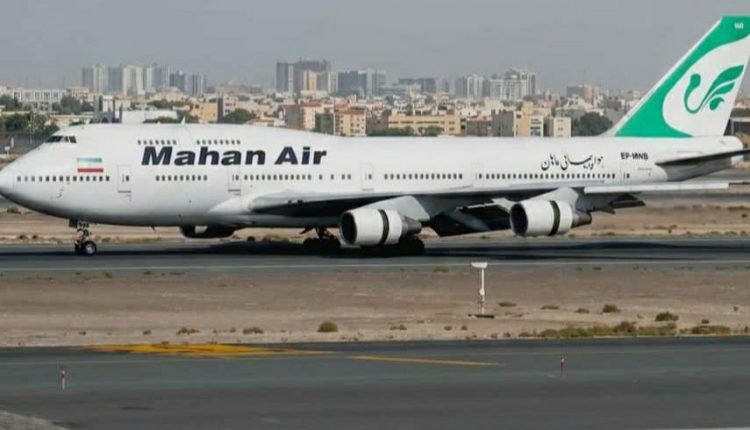
This courageous step was represented by the safe landing of the first Iranian civilian aircraft at the airport, carrying on board more than two hundred Yemeni citizens, including the sick, the wounded, and stranded individuals, alongside transporting an official Yemeni delegation from Sanaa to the Iranian capital, Tehran, to participate in the funeral procession of the martyr of the Axis of Resistance, the leader Sayyid Ali Khamenei.
This achievement did not pass without an attempt at obstruction by the coalition. According to a statement by the Yemeni Armed Forces, a formation of Saudi warplanes attempted that day to intercept the Iranian aircraft and prevent it from landing by violating Yemeni airspace. However, the Yemeni Air Defense Forces immediately confronted those fighter jets with a number of air defense missiles, forcing them to leave the airspace against their will, allowing the aircraft to continue its path and land successfully.
Following this field success, the Yemeni Armed Forces hastened to establish a new equation of military deterrence, declaring that the protection and continuation of civilian flights between Sanaa and Tehran has become part of their direct military duties regardless of the consequences.
They warned the Saudi regime that any new attempt to violate the airspace or prevent civilian aviation would be met with a comprehensive response targeting the enemy’s airports, vital interests, and economic facilities on land and at sea. They confirmed the readiness of all their formations to enforce the choices of the leadership to end the aggression and expel foreign forces, coinciding with a call to the Yemeni people to continue general mobilization and raise combat readiness in response to the directives of Sayyed Abdul-Malik Badreddin al-Houthi.
With this bold step, Sanaa effectively ended long years of the unjust blockade imposed on Sana’a International Airport, and cut off the hand of the Saudi-led coalition, which had long tried to suffocate the Yemeni people by closing their aerial gateways.
The success of this operation represents an actual and realistic inauguration of the opening of the airport to international navigation by a purely Yemeni decision. This is especially true since Sanaa did not stop at securing the arrival of this flight, but clearly announced the continuation of regular periodic flights between Sanaa and Tehran as a fixed and permanent path regardless of the repercussions, which constitutes the core of the strategic shift in managing the conflict and imposing the Yemeni will.
YPA