

China imposes sweeping sanctions on 56 major US companies
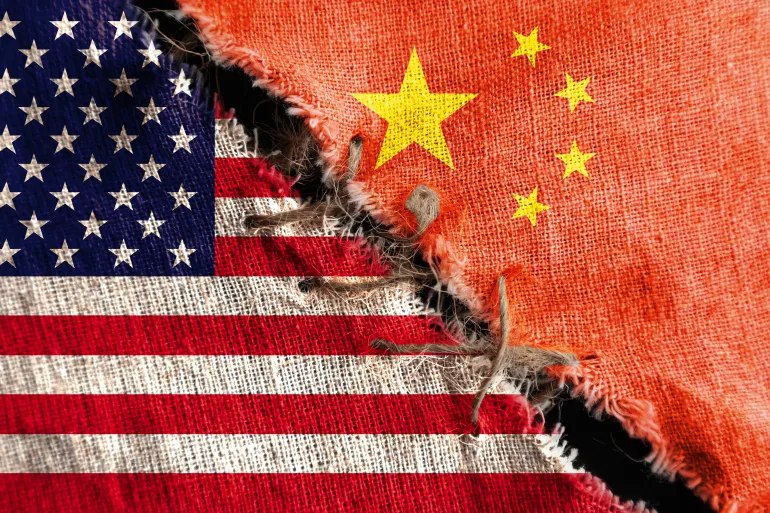
BEIJING, June 22 (YPA) – China announced on Monday a new round of sanctions targeting 10 U.S. companies operating primarily in the defense and rare earth sectors, marking a significant escalation in economic tensions despite recent diplomatic engagement between Beijing and Washington.
The Chinese government said the measures were introduced in response to the U.S. Department of Defense’s decision earlier this month to place several major Chinese firms, including Alibaba, Baidu, and BYD, on its list of companies allegedly linked to the Chinese military.
Under the new restrictions, Beijing added 10 American companies and entities to its export control list, prohibiting the transfer of dual-use goods and technologies with civilian and military applications. China’s Ministry of Commerce stated that organizations and individuals worldwide are barred from supplying these entities with Chinese-origin dual-use products and ordered the immediate suspension of any ongoing exports.
Among the companies targeted are USA Rare Earth, drone and robotics manufacturer Red Cat Holdings, and electromechanical systems producer Aviox.
Chinese officials described the sanctions as a direct response to Washington’s expansion of the so-called “Chinese Military Companies” list, urging the United States to halt what Beijing characterized as the suppression of Chinese enterprises.
In a parallel move, China’s Ministry of Finance barred government agencies and local authorities from purchasing products from 46 American companies in public procurement projects. The restrictions affect subsidiaries of major defense contractors, including Lockheed Martin, RTX Corporation, and the defense division of Boeing. Subsidiaries of General Dynamics and Sierra Nevada Corporation were also included.
From an academic perspective, these measures reflect the growing phenomenon of economic statecraft, in which governments use trade restrictions, export controls, and investment limitations as instruments of geopolitical competition. Scholars in the field of International Political Economy increasingly describe U.S.-China relations as a form of strategic decoupling, particularly in critical sectors such as rare earth minerals, semiconductors, artificial intelligence, and defense technologies.
The latest measures may further complicate diplomatic and commercial relations between the world’s two largest economies, particularly as the White House has reportedly invited Chinese President Xi Jinping to visit Washington later this year. Despite the relative easing of tensions following President Donald Trump’s recent visit to Beijing, the renewed exchange of sanctions underscores the continuing rivalry over technology, security, and global supply chains.