

External Ambitions and Internal Resilience: How Yemen Foiled Regional US Hegemony
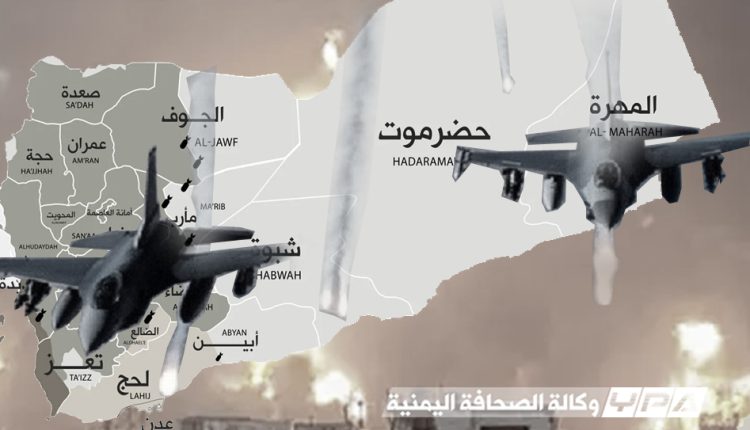
SANAA, March 28 (YPA) -The announcement of the war on Yemen on March 26, 2015, was not an incidental event, but part of a complex conflict shaped by overlapping regional and international ambitions under multiple pretexts. The war reflected the overlapping goals of powers aiming to reshape regional influence in line with their long-term strategic interests.
Geographical Location: A Key Factor in the Conflict
Yemen’s strategic position, overlooking a major global maritime route, has made it a key target. Its location along international trade corridors, has attracted the attention of Western powers seeking to control these vital waterways and expand their regional and global influence.
Strategic Ports and Islands
Since the beginning of the war, Saudi-led coalition forces have sought a clear presence in Yemen’s key areas, particularly in Aden, along the coast, and on strategic islands. The coalition’s objectives have centered on controlling ports—chief among them Aden Port—which serves as a major junction connecting maritime routes in the Arabian Sea, the Indian Ocean, and the Red Sea.
With US backing, the coalition has also expanded its military presence on strategic islands such as Socotra and Mayun, given their military and logistical importance. It has worked to establish a maritime network of influence extending from the Horn of Africa to Yemen.
The coalition has supported multiple local actors, most notably the Southern Transitional Council (STC) and forces on the western coast, while also establishing military bases and indirectly managing some ports, thereby strengthening its regional foothold.
Bab el-Mandab Strait : A Global Trade Lifeline
The Bab el-Mandeb Strait is a chokepoint on the Suez Canal route through which more than 10% of seaborne crude oil volumes pass, making it one of the world’s most critical strategic chokepoints and a constant focus for major powers seeking to secure their interests.
Hadramout: A Gateway to Saudi Ambitions
Hadramout, Yemen’s largest governorate, holds strategic importance as an oil-rich region near the Saudi border. In this context, Saudi Arabia has sought to expand its influence in the region under the pretext of securing its borders and establishing a strategic depth.
Riyadh has also sought access to the Arabian Sea via Hadramout to implement an oil pipeline project aimed at bypassing the Strait of Hormuz, providing an alternative export route.
It has pursued this goal by supporting local groups and leveraging political, tribal, and economic tools to consolidate its presence.
The Role of the US, Britain, and “Israel’
The United States, Britain, and” Israel” operate under the stated objective of “protecting international navigation” and securing strategic interests. However, their involvement extends beyond this narrative, as they seek to shape a sphere of influence through local and regional actors.
These powers also aim to isolate Yemen from regional issues—most notably the Palestinian cause—and to reshape its political stance in line with their interests, as part of a wider struggle over regional influence.
Yemeni Resilience: A Decisive Factor
In the face of these ambitions, Yemeni resilience has emerged as a decisive factor in undermining such projects, despite ongoing pressures including blockades, economic sanctions, and attempts to impose piecemeal solutions.
The experience has shown that although the intensity of the war may have diminished militarily, it continues in other forms—remaining, as described, “a fire under the ashes,” capable of igniting at any moment.
Nevertheless, Yemenis’ commitment to sovereignty and independence has demonstrated that popular will can confront domination projects, and that any attempt to impose control by force cannot withstand internal resolve.
Deterrence Equations Within Borders
Yemen’s steadfastness represents not just a defensive position, but a powerful deterrent to external domination plans. As pressures mount, it is evident that the nation’s future lies in the hands of its people, while attempts at hegemony will eventually break down against this enduring resilience.
@E.Y.M