

100 Days of Gaza ceasefire: 1,300 violations result in 1,820 martyrs and wounded
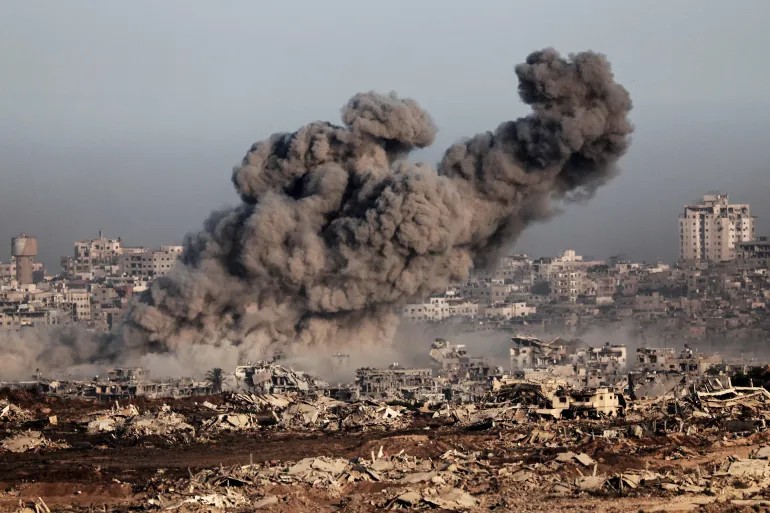
GAZA, Jan. 21 (YPA) – The Islamic Resistance Movement, Hamas, affirmed in an extensive political memorandum that the ceasefire agreement in the Gaza Strip has been subjected to systematic and continuous violations by the Israeli occupation, despite the movement’s full commitment to its terms since the moment it came into effect.
In a statement published on its official website on Tuesday, the movement noted that the memorandum was issued 100 days after the agreement took effect. It was addressed to mediators, guarantors, countries, and international organizations, both in appreciation of the efforts that led to the agreement and as a warning regarding the gravity of the ongoing violations and their catastrophic repercussions on the humanitarian situation in Gaza.
Hamas stressed that it treated the agreement as a legal and moral commitment aimed at protecting civilians and stopping the bloodshed, rather than a political cover for continued aggression or the reproduction of genocidal policies against the Palestinian people.
The movement explained that it adhered to the agreed-upon timeline, handing over 20 live occupation soldiers within the first 72 hours, as stipulated by the agreement.
It further clarified that it continued searching for the remains of prisoners despite the widespread destruction in the Strip, the occupation’s fire control over 63% of its area, the presence of unexploded ordnance, and the loss of several guards during search operations. It noted that 27 out of 28 remains were located, confirming ongoing efforts to find the final body in coordination with mediators and the ICRC.
Death Toll
The memorandum reported that the number of martyrs during the ceasefire period reached 483, distributed as follows:
- 169 children (35%)
- 64 women (13.3%)
- 19 elderly persons (3.5%)
- 191 civilian men (39.8%)
- 39 resistance members (8.1%)
The movement emphasized that 96.3% of the martyrs fell within the “Yellow Line” protected zones, which reflects the deliberate and systematic nature of the killings carried out by the occupation.
Wounded Toll
The movement announced the recording of 1,294 injured during the agreement period—an average of 13 injuries per day—distributed among 428 children (33%), 262 women (20%), 66 elderly persons (5%), 528 civilian men (41%), and 10 resistance members (1%). All injuries occurred within the areas covered by the agreement, a clear indicator of the continued direct targeting of civilians.
Field Violations
The memorandum indicated that the Israeli occupation committed 1,298 field violations (average of 13 per day), including:
- 428 cases of direct fire.
- 66 military incursions.
- 604 cases of aerial and artillery bombardment.
Furthermore, the occupation executed approximately 200 demolition operations of homes and residential blocks within the Yellow Line and control zones, in an effort to impose geographic and demographic changes.
The report also highlighted the arrest of 50 civilians and fishermen at sea and violations of the agreed-upon withdrawal maps by distances ranging from 200 to 1,300 meters, as seen in the Jabalia camp.
The movement confirmed the imposition of additional fire control zones, reaching a depth of 1,700 meters in the northern part of the strip, and estimated the new fire control area beyond the yellow line at about 34 square kilometers.
It explained that these violations were accompanied by daily engineering destruction, including bulldozing land, demolishing buildings, and removing entire residential neighborhoods.
Collapse of the Health Sector
The movement declared that the occupation policies have led to a near-total collapse of the health sector due to the blockade and the prevention of medical supplies. This includes blocking medical teams and specialized units, as well as the seizure and destruction of medicines.
The occupation also prohibited the entry of X-ray machines, ICU equipment, and operating room supplies, alongside construction materials for hospital repairs, contributing to rising death rates among children, the elderly, and the patients with chronic diseases.
Aid and Trucks
The memorandum clarified that the occupation failed to commit to the entry of 600 aid trucks daily as stipulated. It accused the occupation of providing misleading figures that do not reflect reality on the ground.
It indicated that what actually entered during the past two months did not exceed 26,111 trucks out of the agreed 60,000 trucks, distributed between 15,285 trucks of humanitarian aid, 10,165 trucks of commercial goods, and only 661 fuel trucks.
The fuel sector was the most affected, as only 661 trucks entered instead of 50 trucks per day, a percentage not exceeding 13.2% of what was required, which caused widespread paralysis in the work of hospitals, bakeries, and the transport and energy sectors.
The occupation also prevented the operation of the Strip’s sole power plant and blocked solar panels, bakery equipment, rescue tools, and the necessary quantities of caravans and tents for the displaced.
The memorandum also pointed to the disruption of water, sewage and communications networks, and the prevention of the entry of building materials and heavy equipment, stressing that these restrictions have been ongoing for more than 27 months.
It explained that the Rafah crossing has remained completely closed in both directions since the start of the agreement, depriving thousands of wounded and sick people of treatment outside the Gaza Strip, restricting the travel of students and humanitarian cases, preventing the entry of medical delegations and international experts, and hindering the return of citizens to their homes.
The Prisoner File
Regarding prisoners, Hamas confirmed that the occupation refuses to disclose the fate of dozens of detainees and missing persons, stalls the release of women and children, and refuses to provide lists of detainees who died in custody.
The occupation still withholds more than 1,200 bodies of martyrs and is accused of documented crimes against detainees, which have been broadcast in the media as part of a policy to undermine the agreement.
Conclusion and Demands
The movement concluded by calling for urgent international action to:
- Stop violations immediately and compel the occupation army o fully withdraw from the Gaza Strip, complete the first phase and move immediately to the second phase of the agreement.
- Compel the occupation to end fire control over the 34-square-kilometer area and establish a neutral international field monitoring mechanism.
- Ensure the entry of 600 trucks daily, including 50 fuel trucks, under direct international supervision and enable the United Nations and its agencies to operate without restrictions.
- Immediately open the Rafah crossing in both directions for patients, students, and humanitarian cases, and the entry of fuel, medical supplies, caravans tents and building materials, and revealing the fate of detainees and missing persons, releasing women and children , and handing over the bodies being held.
YPA