
UAE-backed STC puts itself in jaws of double crisis !
ADEN, Dec.23 (YPA) – The Southern Transitional Council (STC), backed by the UAE, recently has found itself unable to implement its promises to declare the so-called “Southern state”, after its recent military adventure led it to a double impasse represented in the attempt to expand towards the Hadramout and Mahra, and in the popular protests that it itself sparked in Aden and a number of southern cities.
The latest moves for the STC, in early December, were part of the UAE’s efforts to control the oil sources in Hadramout and Mahra, as a final stage to complete the influence on the ports and the southern and eastern coasts of Yemen. However, this step collided with regional complications, most notably the sharp contrast with Saudi Arabia, which considers these areas within its strategic sphere of influence, and prompted it to mobilize about 30 thousand military elements in the Al-Abr area on the borders of the Wadi Hadramout.
According to political data, Riyadh has moved to impose gradual isolation on the STC through what was known as the “quiet fire” policy, including stopping the entry permits of commercial ships to the port of Aden, and freezing the remaining Saudi deposit with the Aden-based central bank, in exchange for the withdrawal of the transitional factions from the Hadramout and Mahra. This coincided with Saudi moves at the international level, including the United Nations and the Security Council, in light of the American rejection of any channels of communication with the STC.
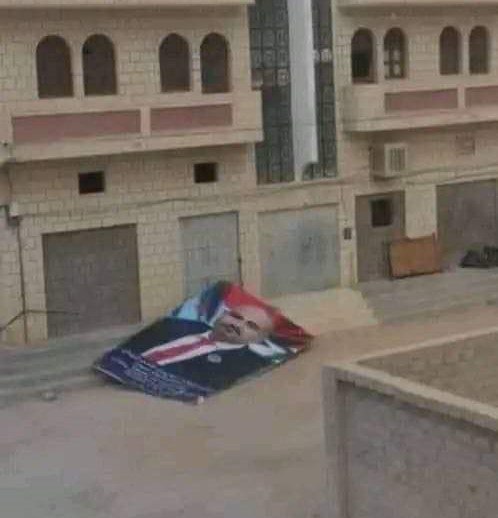
On the other hand, the STC tried to turn its military movements into a popular cover, by pushing hundreds of its supporters to sit-in camps in Aden and other southern cities, under the slogan of demanding the declaration of the “southern state”. However, this step backfired on it internally, after its supporters raised the ceiling of expectations to the point of actually declaring secession, at a time when Saudi Arabia, internationally, is committed to maintaining the unity and stability of Yemen.
Faced with the inability of the STC to translate these demands on the ground, the sit-in camps turned into symbolic events, lost their political momentum, and became a witness to the failure, but a popular pressure tool against it, in light of his fear of being classified as a rebel force, as part of the “Yemeni legitimacy” produced by the Riyadh consultations in 2022.
Field estimates indicated that the transitional government has become unable to fulfill its promises during the current stage, amid the escalation of military tensions in eastern Yemen and the likelihood of the situation sliding into armed confrontations.
In this context, Hadrami researcher Shadi Basurah warned that imposing the facts by force could only lead to a repetition of the bloody scenarios witnessed by southern Yemen in 1967, 1986, 1994 and 2015, without achieving secession, which means more losses, external interventions and erosion of the gains of the Southern cause.
Basurah stressed that the most viable option was to build a successful model based on improving the economy and services, as the real gateway to gaining people’s trust, achieving stability and sustainable development, stressing that the solution in Yemen would not come through temporary predominance, but through a transparent dialogue based on common interests, which seems that the STC failed to realize, to find itself captive of its promises and adventures, threatening to return the southern issue to ground zero.
AA