

Sayyed Al-Houthi warns against soft war, criticizes Arab regimes’ silence on Israeli attacks on Syria
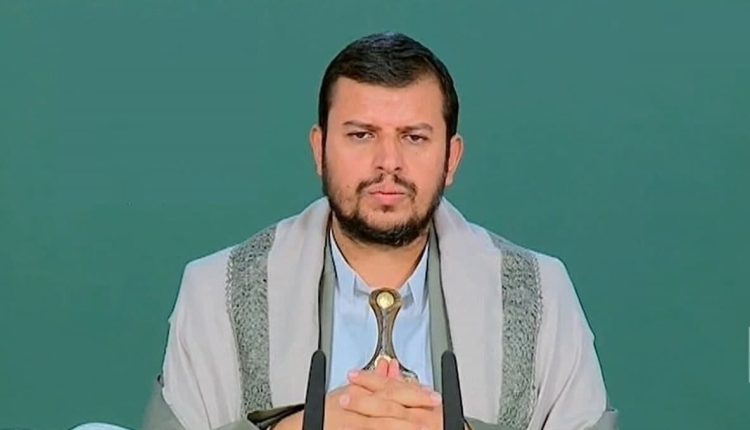
SANAA, Dec. 10 (YPA) – Sayyed Abdul-Malik Al-Houthi, in a televised speech marking the birth anniversary of Sayyeda Fatimah Al-Zahra’a and the International Day of the Muslim Woman, warned against the “satanic soft war” targeting the Islamic nation’s faith identity.
He described it (the soft war) as “the fiercest of contemporary wars and the most influential on the consciousness and directions of peoples.”
Sayyed Al-Houthi stated that what Muslims face today “is not only a military war, but a vast soft operation seeking to shape new cultures and deviant loyalties that distance the nation from the path of Islam and link it to misleading parties.”
He added that “the crimes of the Israeli occupation against Palestinian women—including killing, targeting, and humiliation—constitute bloody scenes that have stirred the global human conscience, while the majority of Arab and Islamic regimes remain without a genuine stance.”
Criticism of Arab Positions
Sayyed Abdul-Malik Al-Houthi accused some Arab regimes of “providing financial, intelligence, and media support to the Israeli enemy,” considering this support to represent “the clearest manifestations of the terrible imbalance in the nation’s reality and its moral and human decline.”
He emphasized that “the acceptance of the concept of impunity by some Arab regimes and elites” reveals a “dangerous shift in vision and insight and a flaw in consciousness,” pointing out that parties within the region “have adopted a distorted concept of peace, making it a title for surrender and acceptance of the occupation’s control.”
In the Regional Context
Sayyed Al-Houthi’s speech coincides with escalating tension in recent days on the Syrian front with occupied Palestine, particularly in Quneitra, a sensitive area subject to strict rules under the disengagement agreements since the 1970s.
Background on the Scene in Quneitra
In recent days, the area recorded “Israeli” intrusions and attacks within the separation strip, in addition to limited clashes near the village of Khan Arnabah, which sparked local protests.
According to residents’ testimonies, locals gathered near an “Israeli” checkpoint demanding its removal, while a large convoy of the Syrian Internal Security passed the checkpoint without engagement or firing—a scene that highlights the fragility of the security situation and the complexities of control.
Increasing Vulnerability of Local Residents
Field sources confirm that the forces of the Interim Government and the dominant factions in the area did not intervene to protect the villages from the repeated incursions. This prompted the locals to stage direct protests amid the absence of organized forces capable of preventing violations or controlling the front lines.
Experts believe this security vacuum has reopened the file of the disengagement rules, especially with the escalation of Israeli raids deep into Syrian territory, including the vicinity of Damascus, without a response from the local controlling forces in the South.
A Model of Linkage to the United States
Sayyed Abdul-Malik Al-Houthi linked the situation in Quneitra and the security vacuum there to what he described as the “hypocrisy option” of some dominant groups in Syria, accusing them of “being linked to the Americans and not being hostile to Israel, but rather seeking a relationship with it despite the raids and occupation.”
He said that this model “expresses the image of deviation that has afflicted a part of the nation due to soft warfare and the replacement of concepts,” considering that the acceptance by some of those groups of policies aiming at “changing the Middle East” serves “complete Israeli hegemony.”
Call to Revive Consciousness and Draw Inspiration from Sayyeda Al-Zahra’a
Concluding his speech, Sayyed Abdul-Malik Al-Houthi stressed the importance of drawing inspiration from “the model of Sayyeda Fatima Al-Zahra’s and the symbols of faith” to revive the Islamic spirit and build a consciousness capable of confronting “cultural and political subservience.”
He concluded that the nation needs to “restore its global role in supporting the oppressed and breaking the hegemony of the aggressor powers, instead of being dependent on the arrogant.”
YPA