

Fall of Hadramout is indication of Saudi-Emirati trend to reshape landscape in Yemen
SANAA, Dec. 04 (YPA) – The latest developments in Hadramout province reveal new data confirming the existence of a Saudi-Emirati conspiracy against Yemen and a push toward its partition.
This is being carried out by imposing new realities on the ground that strengthen the position of the secessionist forces—the Southern Transitional Council (STC), which is backed by the UAE—and enable them to control Yemen’s southern governorates. The goal is to sever any connection between North and South Yemen, even if that connection involves forces fighting under the Saudi-led Coalition’s banner and command.
The Changing Scene in Hadramout
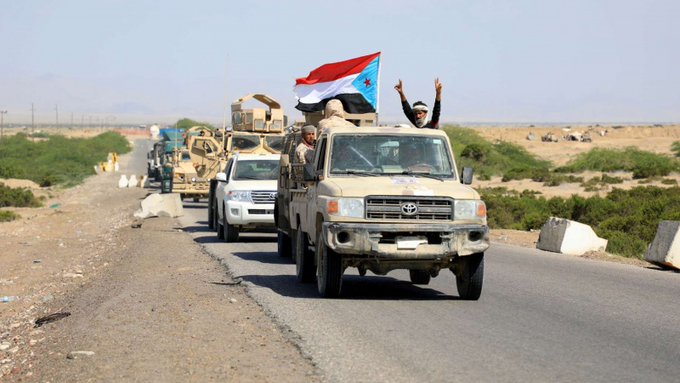
While the situation in previous days showed the Saudi-backed ‘First Military Region’ (Islah Party militants) mobilizing its forces in preparation for a confrontation with the UAE-backed STC forces deployed to Hadramout, the scene fundamentally shifted within hours. STC forces quickly took control of Sayoun Airport, the Republican Palace, and the headquarters of the First Military Region command in Hadramout valley, subsequently beginning an advance toward Marib city, the main stronghold of the Islah Party.
According to military assessments, this shift could not have occurred so easily without prior understandings between Saudi Arabia and the UAE, or unannounced Saudi directives to the Islah-affiliated First Military Region forces to withdraw and hand over their positions to the STC.
The Position of the Hadramout Tribal Alliance
So far, the Hadramout Tribal Alliance—an entity loyal to Saudi Arabia—is demonstrating a firm stance against the STC’s expansion, particularly concerning the oil regions.
Despite this stance, military estimates suggest the alliance lacks the capacity to effect substantial change on the ground following the fall of the First Military Region, given its weaker military strength compared to the more organized and better-armed STC forces. If this alliance was outside the Saudi-Emirati arrangements, it is not unlikely that there is an agreement between Saudi Arabia and the UAE for the alliance to remain in place, preparing for a new phase of managing these provinces.
Are Riyadh and Abu Dhabi Pushing for Secession?
The recent developments in Hadramout, and the expulsion of the Islah forces, indicate that a new trajectory is being shaped in Yemen’s southern and eastern governorates that reinforces the position of secessionist forces. Saudi Arabia’s stance is understood as part of arrangements aimed at re-delineating the relationship between North and South Yemen.
If the continued existence of the Hadramout Tribal Alliance is part of the Saudi-Emirati agreement, this suggests the Coalition is establishing a more dangerous phase than merely separating South Yemen from the North. It may extend to fragmenting these governorates into multiple mini-states, given the alliance’s vision for self-rule.
The indicators suggest that the Saudi-Emirati movements in Hadramout may transcend the military dimension to encompass broader strategic objectives. These include reshaping the reality on the ground before any new round of negotiations with Sanaa, especially amid escalating demands from Sanaa for Riyadh to implement the agreed-upon peace roadmap or face renewed escalation.
According to these perspectives, the STC’s control over Hadramout and the redistribution of coalition forces aim to create a new landscape where South Yemen is positioned entirely differently than before. This would allow Riyadh and Abu Dhabi to present the “partition of Yemen” as an option or as a fait accompli on the ground.
This strategy aims to bolster the influence of the UAE-backed Southern forces while granting Saudi Arabia greater room for maneuver in any comprehensive political settlement. It achieves this by presenting the new ground reality as a “negotiating fact” rather than just a political demand. This scenario aligns with regional developments and the two parties’ desire to restructure the Yemeni scene to secure their interests.
However, this remains the vision of Saudi Arabia and the UAE. Sanaa’s vision, on the other hand, is absolutely clear: any agreements in Yemen must be built on the basis of preserving Yemen’s unity and independence; anything less will lead to a coming war to liberate every inch of Yemen.
YPA