

Saudi executions: Over 2,000 death sentences carried out in decade
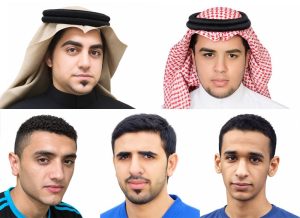
SANAA, Oct. 21 (YPA) – It is no longer possible for a living human conscience to ignore how Saudi Arabia’s official machinery of killing and repression has turned into an open slaughterhouse, where innocent lives are taken without restraint or accountability.
Under King Salman bin Abdulaziz and Crown Prince Mohammed bin Salman, more than 2,000 people have reportedly been executed over the past decade alone, entrenching a policy of authoritarianism and systematic repression.
These alarming figures, the report argues, expose the gap between the authorities’ claims of reform and openness, promoted through state propaganda, and allegations of grave human rights violations that contravene domestic and international legal standards.
Executions of Children and Adolescents: Crimes Against Childhood Under Judicial Authority
One of the most severe forms of alleged brutality by the Saudi authorities, according to the report, is the direct targeting of children accused of committing crimes while they were minors. It describes this practice as a blatant challenge to the United Nations Convention on the Rights of the Child and international instruments that prohibit the execution of juvenile offenders.
Despite what the report calls the superficial safeguards of the 2018 Juvenile Law and related royal orders, it stats that the authorities have continued to execute minors. It puts the number of children and juveniles executed since 2015 at no fewer than 17.
Before the blood had dried on the gallows, the report says, Saudi authorities announced another execution on October 17, 2026: that of Hassan Zaki Al-Faraj. He was reportedly put to death over charges linked to acts committed when he was 14. The report further added that he was subjected to severe torture and six full months of solitary confinement to force him to confess.
The report says the executions did not end with Al-Faraj. It affirmed that a mass execution carried out last Saturday claimed the lives of several members of the Shia community, including Mohammed bin Munir bin Mohammed Al-Zaher, Ali bin Abd Rab Al-Hussein Al-Sheikh, Reda bin Mohammed bin Ali Al Abu Abdullah, and Ali bin Hassan bin Ahmed Al-Ribh. It describes the executions as further evidence of the sectarian nature of the campaign.
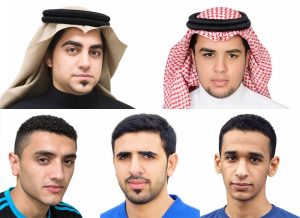
Meanwhile, the report says, other prisoners sentenced to death for offenses committed as children remain at risk of execution. Among them is Yusuf Al-Manasif, whose death sentence was recently upheld by the Supreme Court. The offenses date to when he was between 15 and 16 years old and reportedly involved participation in peaceful protests and funeral processions.
The report compares his case with those of other prisoners who were executed, including Abdullah Al-Derazi, who was put to death on October 20, 2025, becoming the 300th person executed that year; Jalal Al-Labbad, who was executed on August 21, 2025, without his body being handed over to his family; and Ali Al-Subaiti, who was executed on April 9, 2026, over offenses said to have been committed when he was just 12 years old.
List of Executed Prisoners and Those Facing Imminent Execution: Children on Death Row
In addition to the cases mentioned above, the report says judicial documents and human rights organizations’ reports indicate that other children remain at imminent risk of execution after enduring systematic torture and being denied basic guarantees of a fair trial. They include:
Yusuf Al-Manasif: Arrested on April 6, 2017, he reportedly endured solitary confinement and severe torture before his death sentence was recently upheld.
Ali Al-Mabyouq: Arrested on January 29, 2018, over participation in funeral processions before reaching the age of 18.
Jawad Qureiris: Reportedly subjected to severe beatings and 270 days of solitary confinement to force false confessions before being sentenced to death on November 5, 2022.
Mahdi Al-Mohsen: One of several individuals facing sham trials before the Specialized Criminal Court, which it accuses of serving as a platform for issuing death sentences against innocent people.
United Nations bodies, particularly the Working Group on Arbitrary Detention, have described certain arrests and sentences in these cases as arbitrary and as serious violations of legal protections, according to the report.
Rapid Increase in Executions and Expanding Use of the Death Penalty
The report says executions under King Salman and Crown Prince Mohammed bin Salman have accelerated sharply. It added that the first 1,000 executions took six years, while the next 1,000 occurred in less than four years. It also clarified that some executions were carried out secretly, without disclosure by the Interior Ministry.
This increase, the report argues, undermines claims that the death penalty is restricted to the most serious crimes. It cites figures indicating that murder cases account for only 49% of executions, while the remainder involve drug-related offenses and other charges that, it argues, do not meet the legal threshold for capital punishment.
The report also alleges that 41 women have been executed in cases involving fabricated charges and a lack of basic humanitarian safeguards.
Systematic Persecution of Dissidents
The report further argues that the executions reflect systematic persecution of people who oppose the authorities or express dissent. It accuses the Specialized Criminal Court of being used as a political instrument to intimidate critics and suppress opposition, relying, it notes, on confessions extracted through torture, psychological abuse and severe beatings, while denying defendants access to lawyers and their families.
Citing Human Rights Watch, the report states that 14% of all executions are linked to explicitly political cases involving people who were convicted for exercising their legitimate rights to freedom of expression and peaceful protest.
Outcry and Calls for International Action
The report concludes that the documented cases point to a pattern of serious human rights violations in Saudi Arabia, particularly the extensive use of the death penalty against dissidents convicted of offenses committed while they were children.
From Hassan Zaki Al-Faraj to Yusuf Al-Manasif, Ali Al-Mabyouq, Jawad Qureiris, Ali Al-Subaiti, Mahdi Al-Mohsen, Abdullah Al-Derazi and Jalal Al-Labbad, the report says, the cases share a recurring pattern of arbitrary arrests, prolonged solitary confinement, torture, coerced confessions, unfair trials and executions carried out despite international commitments made by Saudi Arabia.
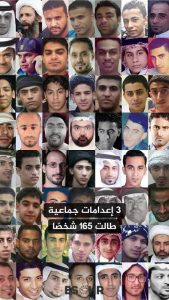
Human rights organizations, it adds, stress that the large number of executions represents more than statistics, arguing that the expansion of capital punishment reflects judicial repression. They say the practice has increasingly affected dissidents and people convicted of offenses that, in their view, do not meet the legal threshold of the most serious crimes.
The report argues that these executions undermine the authorities’ reform messaging and efforts to improve the country’s international image.
In light of the executions reported in 2026 and the total of more than 2,000 under King Salman and Crown Prince Mohammed bin Salman, the report calls on the international community to break its silence and exert pressure on the Saudi authorities to halt executions, particularly those involving minorities and peaceful dissidents. It also calls for a comprehensive international review of the Saudi judicial system to ensure compliance with international human rights standards, including the Convention on the Rights of the Child, the International Covenant on Civil and Political Rights, and the Convention Against Torture.
@@