

Sanaa discusses expanding economic partnership with private sector
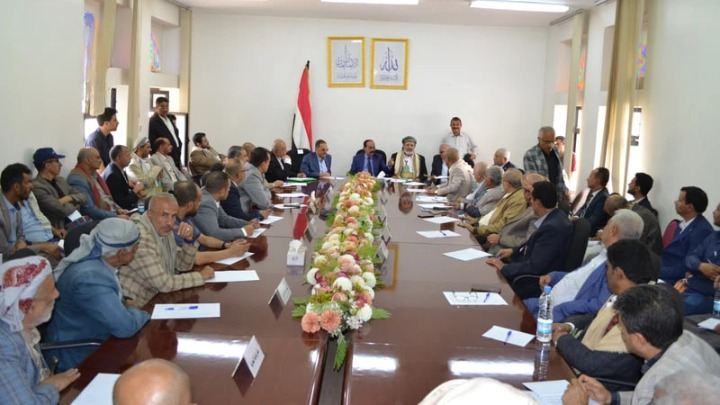
SANAA, Aug. 30 (YPA) – Yemen’s Sanaa-based Shura Council held discussions on Sunday with the leadership of the Federation of Yemeni Chambers of Commerce and Industry and major business groups in the capital on mechanisms for launching a broader economic partnership aimed at stimulating investment, supporting local production, and localizing industrial and development-oriented industries within Yemen.
The move reflects a growing push by the Sana’a authorities to redefine relations between the state and the private sector.
The meeting, attended by Shura Council Chairman Mohammed Hussein Al-Aidarous, Deputy Chairman of the General Federation of Chambers of Commerce and Industry Mohammed Salah, representatives of chambers and business groups, as well as council members and officials from its financial and economic committees, addressed challenges facing traders and manufacturers.
Discussions pointed toward transforming the private sector from a recipient of government measures into a key partner in economic and investment development in a manner that serves the national interest.
From Crisis Management to Building a Productive Economy
The meeting reviewed the commercial and industrial sector’s proposals for establishing a more effective partnership with the public sector and addressing obstacles hindering business and investment activity, particularly amid the repercussions of aggressive war, blockade, and the economic conditions facing the country.
Al-Aidarous affirmed the Shura Council’s commitment to developing practical solutions and proposals to strengthen the partnership between the government and private sector, encourage national capital and Yemeni businesspeople to expand their activities inside the country, and create a more favorable investment environment.
He stressed the need to implement measures aimed at economic stimulation, industrial localization, and protection of local products, while improving relations between state institutions and the private sector and directing investment toward the priorities and needs of the Yemeni economy.
Localizing Industry: A New Economic Priority
One of the key outcomes of the meeting was the emphasis on industrial localization and reducing dependence on foreign markets as central pillars of the proposed economic strategy. This includes encouraging local investors and manufacturers to expand production and create greater added value within the Yemeni economy.
The participants also underscored the importance of making use of the incentives provided under the investment law, which could facilitate additional productive projects and give national capital a greater role in industrial, agricultural, and development sectors.
Al-Aidarous praised the private sector’s role in supporting the national economy and maintaining market stability, highlighting what he described as the prudent management of the chambers of commerce in responding to economic changes imposed by the war and blockade.
Move to Ease Burdens on Traders and Manufacturers
As a practical step, the Shura Council chairman tasked his deputy and the financial and economic committees with coordinating with specialists at the General Federation of Chambers of Commerce and Industry to prepare a unified vision containing solutions and measures to address challenges facing traders and manufacturers.
The assignment reflects an effort to move from diagnosing private-sector problems toward developing joint solutions between state institutions and business representatives, potentially providing greater room for domestic investment to expand.
According to the proposals presented at the meeting, the objective is no longer limited to overcoming the repercussions of the economic crisis, but also to building a Yemeni productive base, stimulating domestic investment, and expanding cooperation between the state and national capital, with the aim of developing an economy more reliant on production, industry, and agriculture.
Against this backdrop, the private sector in Sanaa appears to be gradually assuming a more central role in the change and construction agenda, as one of the key drivers of efforts to revive the economy and localize industries within Yemen.
Aa