

Rights report uncovers in figures economic impact of Saudi-led Coalition war, blockade on Yemen
A disaster that goes beyond destruction to starvation of millions of civilians
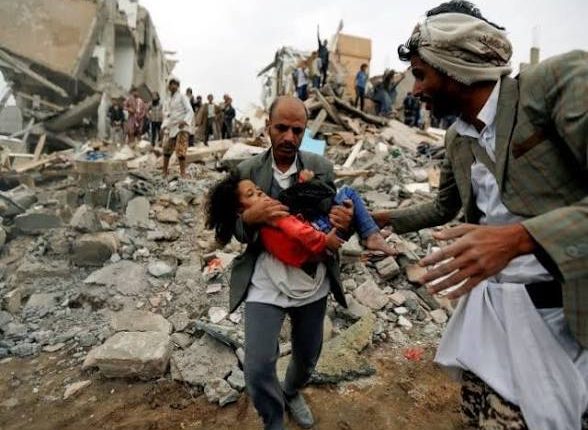
SANAA, Aug. 03 (YPA) – “Insan Organization for Rights and Freedoms” launched on Monday, in Sanaa, a report titled “The Economic War on Yemen: Failure to Neutralize the Economy and Using Yemenis as Leverage.”
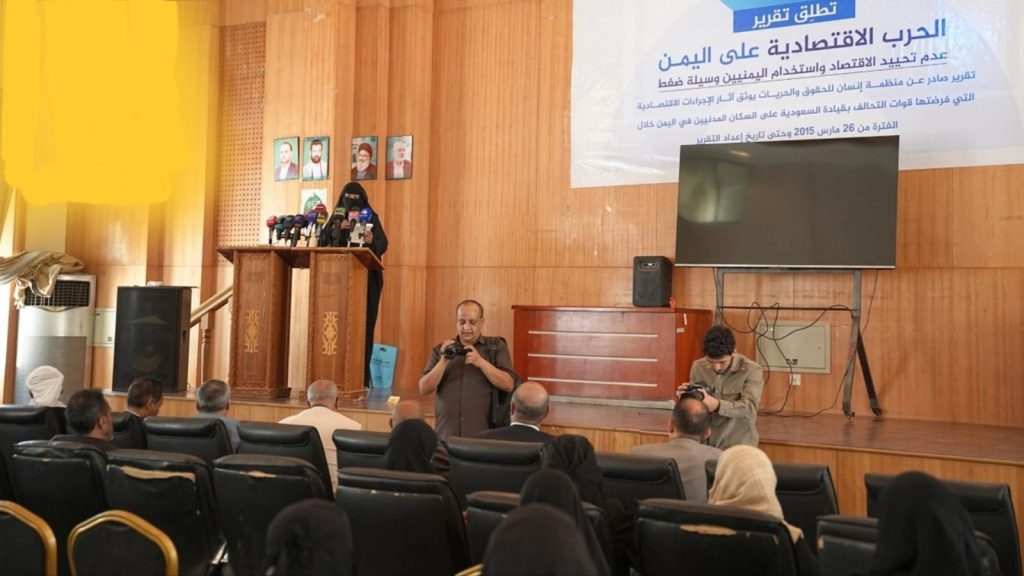
The report documents the economic and humanitarian impacts resulting from the measures imposed by the US, Saudi, Emirati, and Zionist military war coalition on Yemen since March 26, 2015, stressing that these measures have left widespread repercussions on citizens’ lives and livelihoods.
During a press conference held to release the report, the Head of the National Authority for Human Rights, Ali Taysir, confirmed that the report documents—with numbers and statistics—the magnitude of the economic and humanitarian losses Yemen has suffered during the war years. He pointed out that the targeting of civilian and service facilities and infrastructure—including hospitals, markets, schools, universities, and even traffic lights, alongside everything connected to human life—led, according to the report, to initial estimated losses of over $1.131 trillion, with more precise estimates expected to be issued later.
Taysir noted that the multinational aggression launched crimes in Yemen amounting to war crimes, crimes against humanity, and genocide before the eyes of the entire world and within the hearing of the United Nations, whose mechanisms and capabilities failed to utter a single word or letter regarding what has been happening in Yemen over nearly 12 years of multinational aggression.
The report indicates that the economic war was not limited to destroying vital facilities and infrastructure, but extended to directly affecting the lives of millions of Yemenis through restrictions imposed on air, sea, and land ports. This resulted in supply chain disruptions, soaring prices of food, fuel, and medicine, and a decline in purchasing power—worsening living conditions and pushing broad segments of the population into poverty and need.
Furthermore, according to the organization, the report addressed the repercussions of targeting economic, production, and infrastructure facilities, including airports, roads, bridges, industrial and agricultural sites, and food supply systems. It considered that these actions weakened economic activity and stripped thousands of Yemenis of their sources of income, at a time when the country faces one of the most complex humanitarian crises in the world.
The report also highlighted that relocating the operations of the Central Bank of Yemen to the city of Aden, along with the accompanying restrictions on the banking sector and financial transfers, impacted the payment of salaries for hundreds of thousands of state employees. This contributed to deepening the monetary and economic crisis and impeding trade and investment.
For her part, the Deputy Chief of Insan Organization for Rights and Freedoms, Amal Al-Makhathi, explained that the report is the culmination of years of monitoring and documentation. She emphasized that using the economy as leverage in conflicts primarily impacts civilians, who bear the brunt of rising prices, deteriorating basic services, and collapsing employment opportunities.
The report classified the use of economic tools to exert pressure on civilians, as well as the failure to neutralize the economy from the conflict, as a grave violation of International Humanitarian Law and International Human Rights Law. It called for independent and transparent investigations, ensuring accountability, redressing harm to victims, and working to remove all restrictions hindering the recovery of the Yemeni economy and the population’s enjoyment of their basic rights.
The report further detailed the consequences and effects of the restrictions imposed by the Saudi-led coalition on air, sea, and land ports, emphasizing their negative impact on supply chains, the surge in food, fuel, and medicine prices, and the escalation of living conditions.
It outlined that the raids by “the aggression coalition” deliberately targeted economic and production facilities as well as civilian infrastructure, including airports, roads, bridges, industrial and agricultural facilities, and food supply systems.
The report concluded that war-related economic measures contributed, according to the organization, to rising rates of poverty, unemployment, and food insecurity, while increasing the reliance of millions of Yemenis on humanitarian aid. It urged independent investigations into economic violations and the lifting of restrictions obstructing the recovery of Yemen’s economy, ensuring the protection of the population’s fundamental rights and improving their living conditions.
YPA