

War on Yemen; systematic destruction of infrastructure and economy
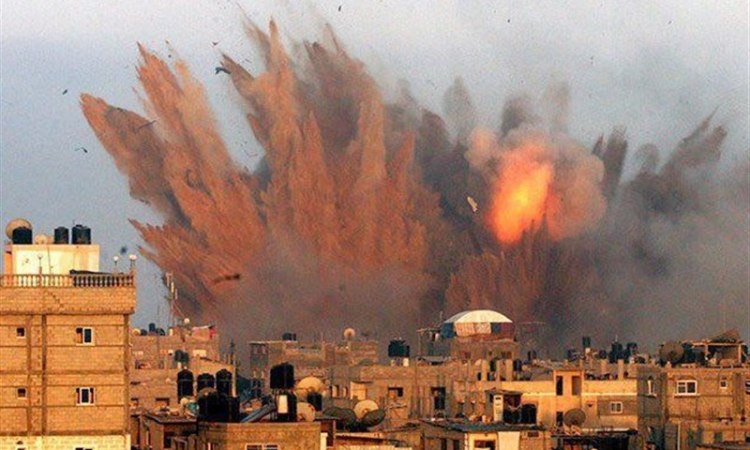
SANAA, March 28 (YPA) – The war launched against Yemen since the dawn of March 26, 2015, was not merely a conventional military confrontation. Instead, it represented an integrated project targeting both state and society through multiple tools, combining direct bombardment with a suffocating economic blockade.
Since their onset, military operations have coincided with systematic policies of starvation and impoverishment, aimed at undermining the pillars of life and weakening the steadfastness of the Yemeni people.
From the very first moments, the targeting of infrastructure was not a random act. It followed a clear trajectory to strike the vital joints of the national economy by destroying factories and production facilities, and targeting ports, airports, and vital crossings. This led to the paralysis of economic movement, the drying up of public income sources, and pushed the country toward an unprecedented humanitarian crisis.
Comprehensive Targeting of Infrastructure and the Economy
Statistics reflect the scale of the widespread destruction that afflicted various vital sectors, as thousands of civilian facilities were destroyed or disabled—a scene reflecting a war that did not differentiate between military and civilian targets.
The following were destroyed:
- 8,000 roads and bridges: Leading to the isolation of vast areas and the disruption of transport.
- 2,900 educational facilities: Exacerbating the education crisis.
- 5,600 electricity grids and stations: Resulting in the collapse of energy services.
- 2,200 telecommunications facilities: Impacting the information infrastructure.
- 2,200 government service buildings: Paralyzing state institutions.
- 8,500 means of transport: Deepening the crisis of movement and trade.
The destruction also reached essential sectors directly affecting citizens’ lives, targeting:
- 15,000 food facilities.
- 12,400 water facilities.
- 19,400 agricultural and livestock facilities.
This has tightened the noose on food security and raised poverty and unemployment rates to unprecedented levels.
The Health and Humanitarian Sector Under Fire
The health sector was not spared, with the destruction of 360 health facilities and 670 health units and ambulances. This occurred while Yemen suffers from the spread of diseases and malnutrition, doubling the magnitude of the humanitarian catastrophe.
Damage also extended to 930 fuel and gas stations, 4,700 fishing boats, and 420 archaeological sites. This indicates the breadth of the targeting to include livelihoods and national heritage.
Targeting Ports, Airports, and Media
The bombardment extended to the state’s sovereign gateways, targeting:
- 9 airports and 4 civilian aircraft.
- 14 ports and their facilities.
- 86 media institutions.
- 48 judicial facilities.
This reflects a clear attempt to isolate Yemen from the world, silence the media voice, and disable justice institutions.
Humanitarian Catastrophe in Shocking Numbers
Recent statistics reveal the scale of human suffering resulting from this war:
- The number of martyrs and wounded has exceeded 60,000 Yemenis.
- More than 1,400,000 civilians have been affected by the blockade, disease outbreaks, and malnutrition.
- The Yemeni economy has incurred massive losses exceeding $57 billion in direct and indirect damages.
Additionally, the livestock sector suffered significant losses, including 43,000 camels, 90,000 cows, and 450,000 heads of livestock.
Direct Israeli Escalation Against Yemen During the Support for Gaza
The destruction was not limited to the initial years of aggression but extended to include direct Israeli attacks during 2024 and 2025 in response to Yemen’s position supporting Gaza.
According to economic expert in Sanaa, Rashid al-Haddad, in press statements in October 2025, “Israeli” attacks on Yemen caused economic losses exceeding $10 billion during Yemen’s support for Gaza.
The Israeli entity carried out approximately 18 airstrikes, resulting in the destruction of four civilian aircraft, the disruption of Sanaa International Airport, and the targeting of nine power plants—most notably the Hizyaz, Ras Katib, Thahban, and Asr stations.
The targeting also included cement factories in Bajil and Amran. The aggression focused brutally on the three Hodieda ports, which faced seven direct attacks, leading to the destruction of nearly 70% of the berths at Hodeida Port and the striking of the marine jetties at the Ras Isa oil port. This caused initial port losses of $1.3 billion and diminished their capacity to receive commercial and relief ships.
Israeli attacks extended to vital commercial areas in the heart of the capital, Sanaa, destroying the property and goods of small traders, street vendors, and transport vehicle drivers in an explicit attempt to strike citizens’ livelihoods and incite terror.
This coincided with direct US participation in the bombing at the beginning of 2025 and the leadership of the so-called “Prosperity Guardian” coalition. Furthermore, the US Treasury imposed three rounds of sanctions targeting individuals, exchange companies, and, for the first time, a public government institution: the Kamaran Industry and Investment Company, which employs hundreds of workers.
Human rights organizations and activists assert that these systematic attacks on infrastructure and civilian facilities represent war crimes and crimes against humanity, aimed at imposing a policy of siege and starvation and exacerbating human suffering to deter Yemen from its position supporting the Palestinian cause.
YPA