

US‑Israeli aggression on Iran pushes oil prices higher, threatens global economy
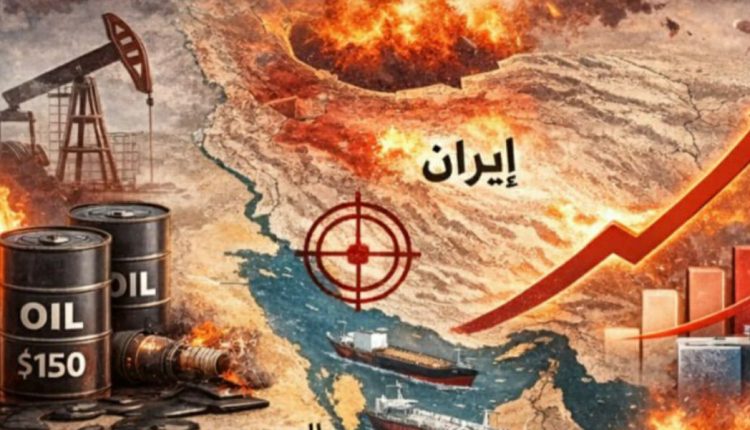
SANAA, March 09 (YPA) – As US- Israeli aggression on Iran continues, global energy markets are experiencing unprecedented disruption, threatening to reshape oil and gas prices and trigger a new wave of global inflation.
The greatest risk lies in a potential halt to energy exports from the Arab Gulf, a scenario that could significantly deepen challenges for the global economy and heighten market volatility.
Oil Prices Soar to Record Levels
The British newspaper “The Guardian” reports that oil prices could surpass $100 per barrel within days due to US–Israeli aggression on Iran and Iran’s retaliatory measures, amid severe supply disruptions.
US investment bank Goldman Sachs warned that prices could reach $150 per barrel if oil flows through the Strait of Hormuz remain blocked. Current exports have reportedly fallen to just 10% of normal levels, an impact 17 times greater than the Russian production shock in April 2022.
These estimates highlight the scale of the shock hitting global markets and the direct risks posed to the international economy.
Gas Market Disruption and Rising Insurance Costs
Qatar has warned that continued war could force all Gulf energy-exporting nations to declare force majeure, halting production and pushing oil prices toward $150 per barrel and natural gas to around $40 per million British thermal units.
Qatari Energy Minister Saad Al-Kaabi told the Financial Times that even after hostilities end, the energy crisis could take weeks or months to stabilize.
“If this war continues for several weeks, it will impact global GDP growth, drive energy prices higher, and create shortages in some products, triggering a chain reaction affecting factories and production lines,” he said.
Al-Kaabi also noted that Gulf states could face legal liability if they fail to declare force majeure, highlighting the potential consequences of the war on both the global economy and the oil-rich region.
Impact on Markets
Fuel oil traders in Asia are struggling to secure alternative supplies, according to sources cited by Reuters, after US-Israeli aggression on Iran reduced shipments from key Middle Eastern suppliers via the Strait of Hormuz, forcing buyers to seek cargoes from Western markets.
The shortage is expected to disrupt marine fuel supplies, with prices projected to rise at major ports such as Singapore in the coming weeks. Higher bunkering costs for shipowners could ultimately be passed on to shipping companies and consumers, further impacting global trade costs.
Global Economic Impacts
According to Bloomberg, European gas prices have risen to their highest level in three years, while senior European Union officials warned that the attacks on Iran could make the energy crisis existential.
The effects are also being felt in the United States, where gasoline prices at service stations have risen by 16% since the start of the war, according to The New York Times, illustrating the direct impact on American consumers.
Analysts say the aggressive US and Israeli policies are having immediate consequences for the global economy, energy prices, and everyday life—driving global inflation, increasing transportation and industrial production costs, and disrupting supply chains.
The aggression on Iran is increasingly being viewed as a direct threat to global economic stability, with rising oil and gas prices, supply disruptions, higher shipping and insurance costs, potential production stoppages in the Gulf, and a surge in inflation all pointing to significant and lasting impacts on markets, industries, and consumers worldwide.
@E.Y.M