

Saudi Arabia turns page of pro-UAE STC in Aden
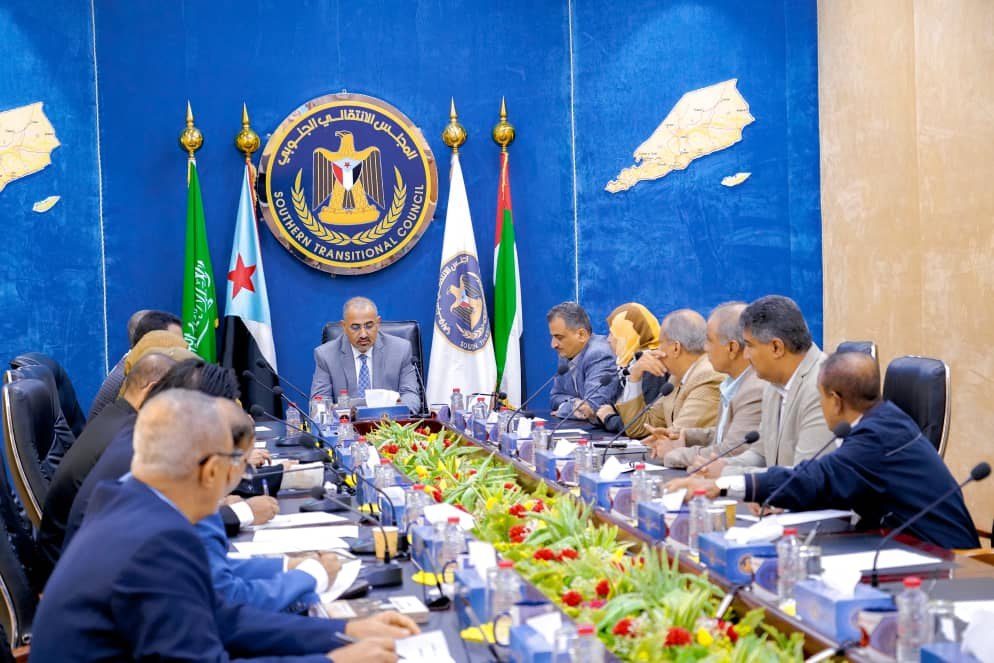
RIYADH, Jan. 09 (YPA) – In a sudden development that confused the political scene in southern Yemen, Saudi Arabia announced on Friday from the capital Riyadh, the complete dissolution of the UAE-backed Southern Transitional Council (STC), in a move described as a forced end to a political entity that has lasted for almost nine years under the umbrella of the Saudi-led coalition.
The announcement came after a closed-door meeting that included leaders from the STC’s delegation in Riyadh, amid direct Saudi pressure, which ended with the leaders being obliged to recite the council’s dissolution statement, in a scene that observers considered a declaration of a political end by an external decision.
During the meeting, in the presence of the STC’s vice-presidents, Abdulrahman Al-Muharram and Ahmed Saeed bin Brik, Secretary-General Abdulrahman al-Subaihi read out an official statement announcing the dissolution of the STC with all its main and subsidiary bodies and institutions, and the closure of its offices at home and abroad, with a pledge to continue working for what he called the “southern goal” through the preparation of a comprehensive Southern Conference under Saudi sponsorship.
The statement attributed the decision to dissolve to what it described as the “unfortunate events” witnessed in the governorates of Hadramout and Mahra, warning of serious repercussions of the escalation there, in an attempt considered by followers to shirk responsibility for the military operations that exacerbated popular anger and deepened the southern division.
It pointed out that the continuation of the STC “no longer serves the Southern cause,” while praising the Saudi role, in a formula that observers saw as a clear political recognition of guardianship and dependence.
Internal rejection and accusations of the arrest of the delegation
In the first response from within the council, the official spokesman of the STC, Anwar Tamimi, announced his categorical rejection of the dissolution decision, doubting its legal and political legitimacy.
Tamimi stressed that what was issued from Riyadh is not a binding legal decision, stressing that the dissolution of the council can only be done through its official institutions and headed by its chairman, and not through statements imposed from outside the regulatory framework.
In a remarkable escalation, Tamimi described the STC’s delegation in Riyadh as a “detainee,” stressing that any fateful decisions would not be taken into account before the delegation was released, referring to what he described as political pressure and coercion.
He added that the STC would continue to deal with political tracks to ensure “the right of the people of the south to self-determination,” in a position that reflects the unprecedented internal division within the council.
Between the announcement of the solution and the rejection of it from within, the scene remains open to a complex political conflict and a wide exposure: has the page of the STC been permanently folded or is what has happened just a new chapter in the struggle for influence and guardianship inside Yemen?
AA