
Gaza’s sewage crisis worsens due to Israeli occupation’s destruction of infrastructure
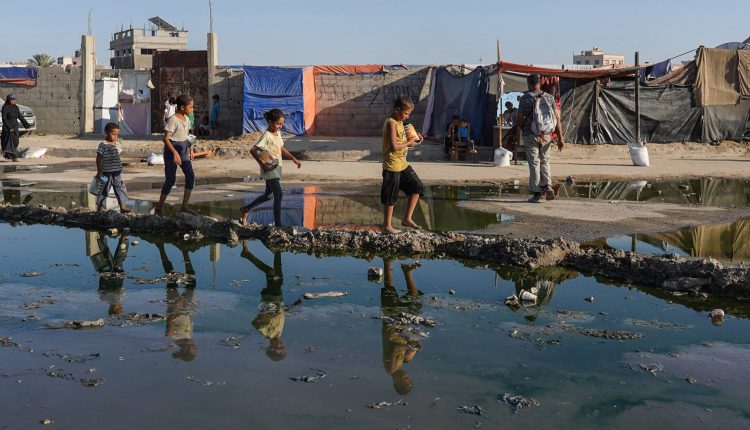
GAZA, Sept. 02 (YPA) – The sewage crisis in the Gaza Strip has worsened to unprecedented levels due to the occupation’s extensive destruction of infrastructure, leading to the collapse of the treatment system and threatening the environment and public health.
The Water Authority reported on Wednesday that 55,000 cubic meters of untreated sewage are discharged daily, of which 40,000 cubic meters are pumped directly into the sea and 15,000 cubic meters seep through cesspools and network leaks.
It explained that the five main treatment plants are completely shut down, and only 18 pumping stations are partially operational out of 74. The percentage of the population served by the sewage network has also decreased from 85% to 45%, and the treatment capacity of 185,000 cubic meters per day has stopped at zero, except for the rehabilitation of the Sheikh Ajlin station.
As part of the emergency response, pumping stations are being supplied with fuel, 20 critical stations and networks are being repaired, 900 priority points are being treated, and damage is being assessed at 44 stations and 385 km of networks.
Rehabilitation plans include restarting the Sheikh Ajlin station in two phases with a capacity of up to 65,000 cubic meters per day, and rehabilitating the Sheikh Radwan station.
The authority warned of worsening pollution and demanded the provision of fuel, pumps, generators, and spare parts, considering the system’s reactivation an urgent priority given the direct threat to residents’ lives.