

Yemen’s south faces continued unrest, violence amid economic, security crisis
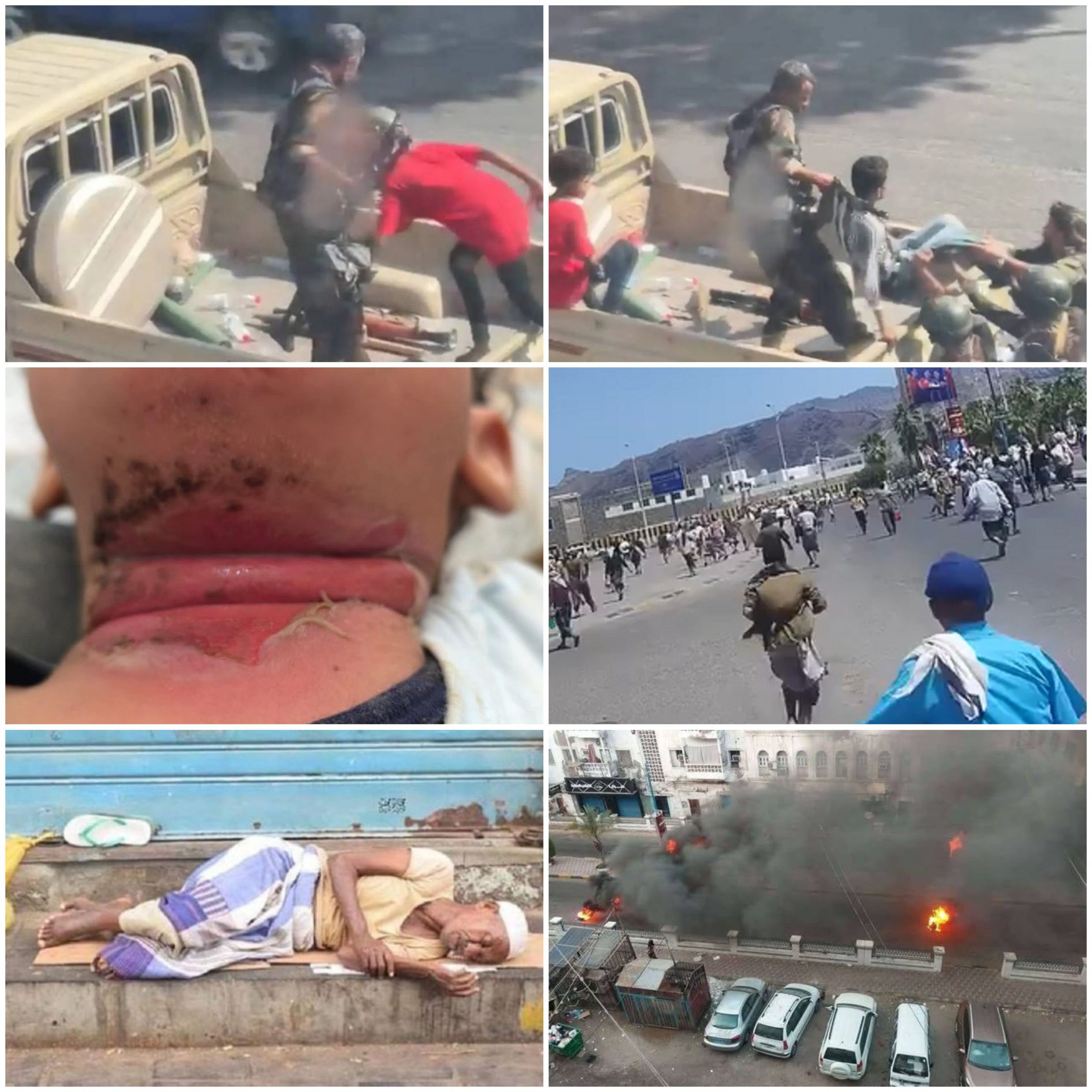
ADEN, June 24 (YPA) – The Saudi-UAE-held southern Yemeni provinces have been witnessing, since the beginning of June, a wave of widespread anger and an escalating popular uprising against the Saudi-Emirati forces and their local proxies, including affiliated mercenaries and militias.
These developments come amid an unprecedented security, economic, and living collapse, described as a direct result of systematic starvation and subjugation policies implemented by the occupation against the population of the occupied governorates.
In this report, we present a detailed overview of security incidents, protests, and manifestations of lawlessness that have affected the southern governorates from June 1 until today, documented with figures and events:
First: Popular and service-related uprising against the Saudi-UAE forces
Cities including Aden, Mukalla, and Seiyun have, since the beginning of the month, turned into arenas of daily angry protests, dubbed by activists as the “hunger uprising”:
Electricity and services protests:
Angry protesters blocked main roads in the districts of Al-Mualla, Crater, and Sheikh Othman in the occupied temporary capital Aden, and burned tires in protest against electricity outages exceeding 16 hours per day amid an intense summer heatwave. Residents attribute this deliberate deterioration to a policy of coercion and pressure exercised by the occupation through its proxies to control political decision-making.
Political marches rejecting guardianship:
On June 20, 2026, mass demonstrations took place in Aden and Hadramawt, where citizens expressed outright rejection of impoverishment policies and foreign guardianship, condemning the organized looting of oil and gas resources in Shabwa and Hadramawt and the deprivation of local populations from basic necessities.
Second: Violent repression and live fire against protesters
Militias and proxy armed groups linked to the occupation reportedly used excessive force to suppress public anger and protect external interests:
Human rights reports documented live ammunition being used to disperse protesters in Crater and Al-Mualla districts, resulting in at least two deaths and five injuries, in addition to cases of suffocation from tear gas.
Occupation-backed forces also carried out widespread night raids and arrests targeting more than 14 activists and citizens who led service-related protests, in an attempt to reinforce a climate of fear that is reportedly beginning to erode.
Third: Deadly clashes, explosions, and organized security breakdown
The southern governorates are experiencing what is described as a “sustained security fluidity” fueled by a divide-and-rule policy and internal rivalries among armed factions. The most significant incidents this month include:
Explosion at Al-Amaliqa Brigades camp in eastern Aden:
On June 11, 2026, a powerful explosion struck an ammunition depot inside a camp belonging to the “Al-Amaliqa” factions, resulting in several casualties (unofficial medical sources report 3 dead and more than 7 injured).
Armed clashes inside the Aden governor’s residence:
On June 12, 2026, heavy gunfire erupted inside and around the residence of the occupation-appointed governor in the Al-Dareen area of Sheikh Othman district due to disputes among guards, resulting in two deaths and four injuries among personnel and bystanders.
Tragedy of children’s remains in Dhalea:
On June 22, 2026, children were victims of war remnants when an explosive device detonated in Al-Raibi village in Hajar district, northern Dhalea, killing and injuring 17 children. Four children were confirmed dead, including three girls whose bodies were burned, while 13 others were seriously injured, some of whom suffered amputations.
Fourth: Statistics of violations and crimes (killing, kidnapping, and rape)
In the absence of functioning state institutions and with judicial and security offices effectively controlled by occupation-linked militias, alarming levels of organized crime were recorded during the first three weeks of June:
Killings and assassinations:
Around 11 criminal and mysterious killings were recorded across southern provinces within 20 days, including the mid-month discovery of a girl found dead under mysterious circumstances in a hotel room in central Aden, amid security failure and the case being filed against unknown persons.
Abductions and arbitrary detentions:
Secret detention facilities run by occupation forces and their affiliates have become “prisons for the living,” with local organizations documenting the abduction and enforced disappearance of 9 civilians and media workers without legal charges, except for expressing opposition to the occupation and deteriorating living conditions.
Moral violations and drug proliferation among youth:
Field reports indicate a massive influx of narcotics, particularly the drug “shabu,” through ports and entry points controlled by occupation forces, allegedly aimed at undermining the social fabric of the south and facilitating control. This has led to several documented cases of moral exploitation and blackmail shared on social media this month.
Analytical reading:
Observers widely agree that what is happening in the southern provinces is not merely a temporary service crisis or uncontrolled chaos, but a systematic destructive plan managed by foreign occupation operations rooms.
Keeping the southern governorates under suffocating deprivation, continuous insecurity, and daily loss of life through clashes, explosives, and remnants of war ensures the occupation’s continued control over strategic islands, ports, and facilities (such as Belhaf, Aden, and Socotra) without a unified internal front capable of confronting and expelling its influence.
YPA