

America’s influence in the Red Sea declines, forcing it to seek safer carrier routes
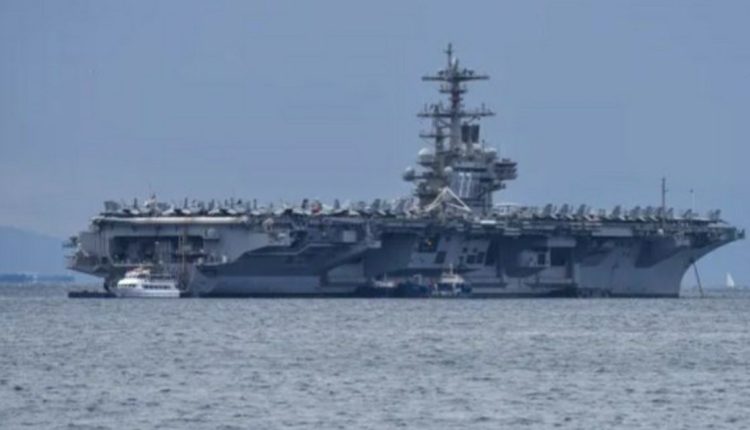
SANAA, April 15 (YPA) – Since the transit of the US aircraft carrier USS Dwight D. Eisenhower through the Bab al-Mandab Strait in December 2023, no comparable U.S. carrier movements through the strait toward the Arabian Sea have been reported, a trend observers say signals a change in naval deployment patterns across one of the world’s most strategic waterways.
During the developments linked to the “Al-Aqsa Flood” operation and the subsequent maritime clashes in the Red Sea, a noticeable shift in patterns of control and influence emerged, as the region moved from near-complete US dominance to a new reality in which Sanaa forces established a significant military presence, reshaping the rules governing naval movement and deployment in one of the world’s most important waterways.
Recent movements indicate that the US aircraft carrier USS George H.W. Bush (CVN-77) has avoided transit through the Red Sea and Bab al-Mandab Strait, instead reportedly taking a longer route around southern Africa toward the Indian Ocean and Arabian Sea, where it is expected to join broader US naval deployments.
It is also likely that this shift will become a more consistent patten of US naval operations, with American aircraft carriers potentially avoiding transit through the Bab al-Mandab Strait and the Red Sea, opting instead for longer and more complex routes around southern Africa or repositioning in alternative operational areas in the Indian Ocean and the Arabian Sea.
This, reflects a loss of the ability to maintain the previously unrestricted freedom of naval movement in this critical maritime corridor.
In this context, the issue is no longer framed in terms of “potential risks” or “precautionary measures,” but rather as an established reality on both land and sea, which has effectively brought an end to the period of direct US dominance in the Red Sea and introduced a new phase defined by a different balance of deterrence in the region.
On this basis, it can be said that the era of absolute U.S. maritime dominance in the Red Sea has effectively come to an end, with the naval landscape entering a new phase in which Sanaa forces have become a key influencing actor in patterns of movement and engagement. This development has sparked a broad restructuring of the balance of power in this strategic waterway.
With this shift, the Red Sea is no longer an open arena for U. naval deployment as it once was, but has instead become a theatre shaped by new balance of deterrence, establishing a reality different from previous phases and effectively marking the end of the era of US naval dominance in this vital region.
@E.Y.M