

Yemen joins battle with Iran: Shift altering balance of power against US, “Israel”
SANAA, March 29 (YPA) – Yemen’s official entry today (Saturday) into the battle to support the Islamic Republic of Iran and the resistance forces highlights it as an influential power in the region.
By adopting the strategy of the “Unity of Fields” in defense of the Ummah’s causes—just as it stood by Gaza and the Palestinian resistance during the “Al-Aqsa Flood” battle against the Israeli occupation entity—Yemen now stands alongside Iran and the resistance forces, participating in the battle to confront America and “Israel.”
How Yemen Views the Aggression Against Iran
The Yemeni people view the American-Israeli aggression against Iran through the lens clarified by Sayyed Abdul-Malik al-Houthi in his speeches on the matter: This aggression does not target Iran alone, but rather the entire Islamic Ummah. It serves the “Zionist project” in the region, aiming to reshape the so-called “Middle East,” establish “Greater Israel,” and remove the largest obstacle to this project: the Islamic Republic of Iran. Therefore, the battle is one for the entire Ummah.
A Firm and Clear Stance
Since the early days of the aggression against Iran, Sayyed Abdul-Malik al-Houthi declared that Yemen’s official and popular position is firm and clear: standing with the Islamic Republic of Iran and the Muslim Iranian people, offering full solidarity, and maintaining readiness to participate in the military battle should necessities and developments require it.
Not a day passed since the aggression began before millions of Yemenis took to the streets in support of Iran in its war against the American-Israeli aggression coalition, embodying the alignment between the people and the leadership, and declaring that the leadership’s stance in support of Iran reflects the stance of a people who always champion the causes of their Ummah.
The “Not Neutral” Speech
While the world watched Yemen’s position—with some proposing hypotheses that Yemen might distance itself from this war—Sayyed Abdul-Malik al-Houthi’s speech last Thursday came to confirm that Yemen’s position is not neutral. Rather, it stands with Islam and the Islamic Ummah against the Zionist scheme that targets the Ummah and human society as a whole.
He emphasized that any developments in the battle requiring military action would see Yemen take the initiative with full confidence and reliance on Allah, as in previous rounds.
This speech represented the actual inauguration of Yemen’s official intervention in the battle. Less than 48 hours later, a statement from the Yemeni Armed Forces demanded that the American and Israeli enemy immediately respond to international efforts to stop the aggression against Iran and the countries of the Axis, alongside other demands related to Palestine.
Following the lack of response to these warnings and signs that the American and Israeli enemy is proceeding toward further escalation, Yemen decided—hours after the warning statement—to officially enter the battle in support of the Islamic Republic of Iran and the resistance forces in the region.
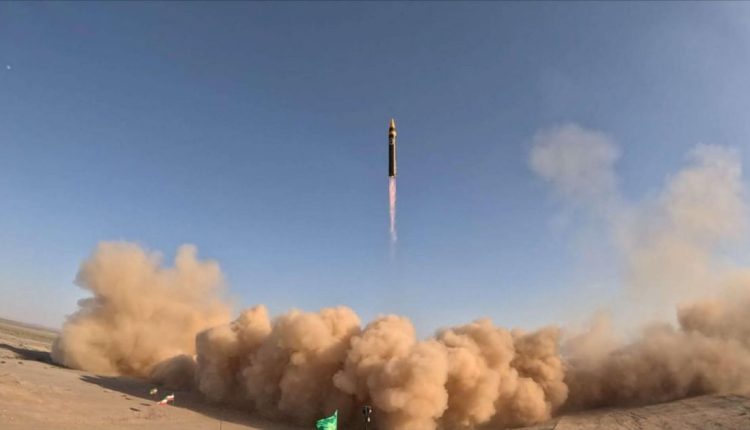
Today, Saturday, the Yemeni Armed Forces issued a statement announcing the execution of the first military operation against the Israeli entity, using a batch of ballistic missiles targeting sensitive military targets in Southern Occupied Palestine.
The statement confirmed that military operations will continue until the declared goals are achieved and the aggression stops on all resistance fronts, making Yemen an active party in confronting America and “Israel” in this battle.
The Impact of Yemen’s Entry into the Battle
Yemen’s official entry into the battle to support Iran and the resistance forces carries significant strategic impact on the course of the conflict in the region.
With its military and missile capabilities and its sensitive geographical location, Yemen can shift the balance of power in favor of Iran and the Axis of Resistance, especially when operations are coordinated with the resistance fronts in Lebanon, Palestine, and Iraq.
For the Israeli occupation entity, Yemen’s missile and drone capabilities represent an additional and direct pressure factor. These capabilities, which proved effective during previous confrontations, give Yemen the ability to target the depth of the entity, including military targets and vital infrastructure.
This means the entity will face an additional active front that exhausts its defense systems and drains its military resources, particularly given the multiple fronts already open against it. Furthermore, the continuation of missile and drone attacks will disrupt “Israeli” military calculations and increase internal pressure, affecting its ability to manage the battle.
This impact intensifies if Yemen decides to close the Bab al-Mandab Strait in a targeted manner against the United States and “Israel.” The strait is a vital artery for energy trade, and its closure would exert direct strategic pressure on the US and “Israel.”
If tensions in Bab al-Mandab are added to those in the Strait of Hormuz, the repercussions on global oil and gas markets will be doubled, increasing economic and political pressure on hostile powers and allowing Iran and the Axis of Resistance greater strategic maneuverability and control over the course of the battle.
Consequently, Yemen’s entry into the battle is not merely symbolic support; it represents a maneuverable factor that could be decisive in determining the results of the confrontation and shifting the balance of power in favor of Iran and the Axis of Resistance.
YPA