

Rare ancient Yemeni statue smuggled abroad, expert reveals
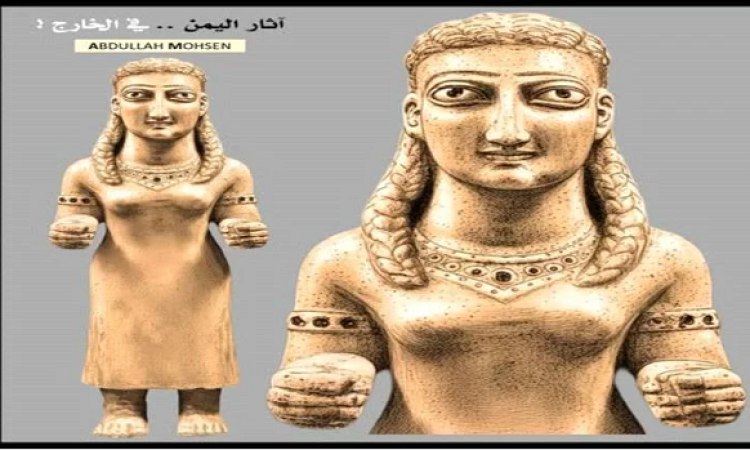
SANAA, Feb. 11 (YPA) – Yemeni antiquities specialist Abdullah Mohsen has revealed the smuggling of a rare female statue of Yemeni heritage abroad, likely dating between the fifth and first centuries BC.
Mohsen urged relevant authorities and antiquities experts to share any information that could help trace the statue’s whereabouts or monitor its possible appearance at international auctions.
In a post on his Facebook page, he explained that the statue is carved from alabaster and features a rigid frontal stance and complete symmetry—hallmarks of funerary sculpture in ancient Yemen, where symbolic and ritualistic elements outweigh naturalistic detail.
The figure appears with a long cylindrical body and arms bent forward, hands clasped in a gesture commonly associated with worship or offering rituals.
He noted that the facial features are oval and broad, with prominent almond-shaped eyes, arched eyebrows, a straight nose, and a small closed mouth—characteristics that reflect the concept of “eternal presence” in ancient Yemeni art.
The hair is styled in two braids falling over the chest, and the figure wears a simple ankle-length garment adorned with a multi-strand necklace, bracelets, and minimal ornamentation.
According to Mohsen, the statue was likely votive or funerary in purpose, symbolizing the enduring presence of its owner within a temple or burial site, in line with the philosophical foundations of South Arabian art, which emphasize social and ritual dimensions over individual representation.
He concluded by appealing to anyone with knowledge of the statue’s location or its appearance in public auctions to come forward, stressing that any information could be crucial in safeguarding and recovering Yemen’s archaeological heritage.
AA