
How Gulf regimes, celebrities fabricate narrative to justify treason, normalize relations with “Israel”?
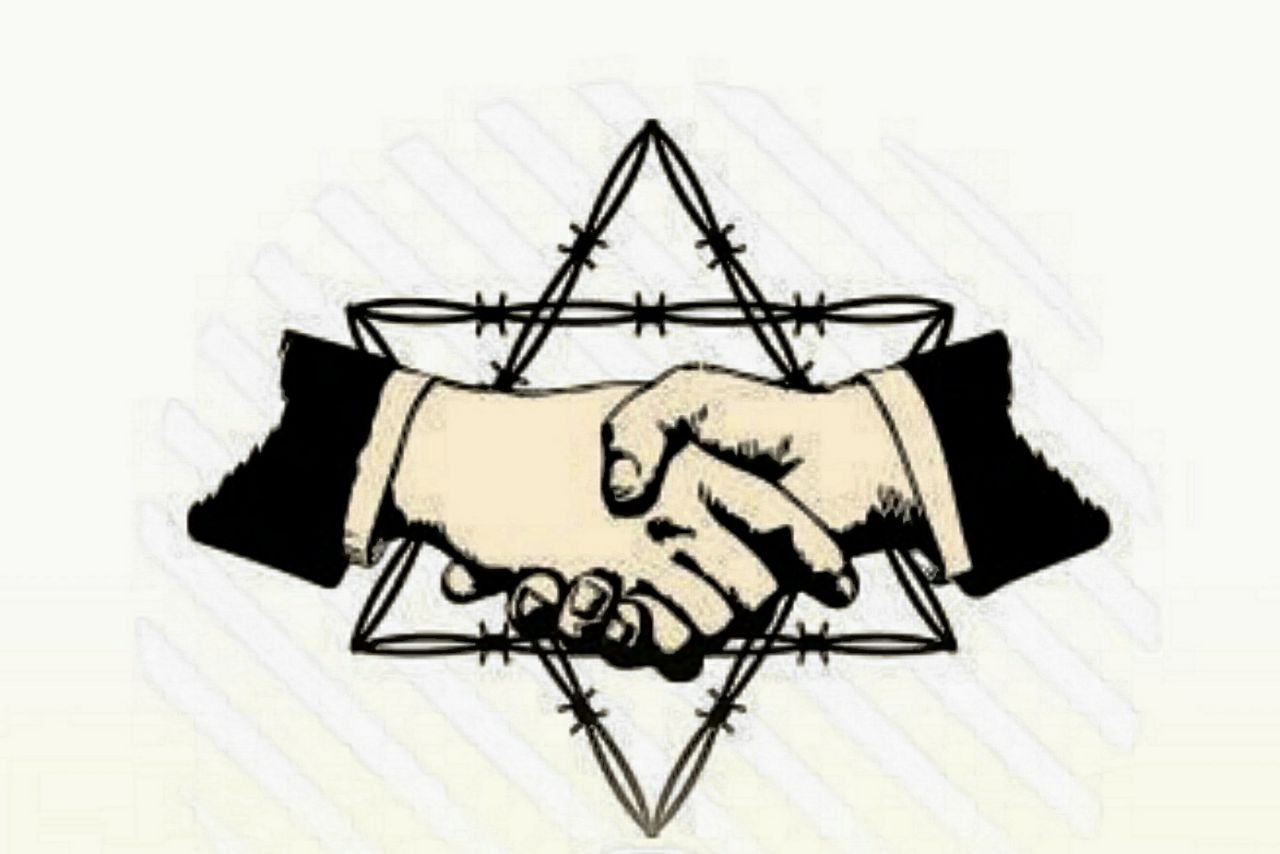
SANAA, Dec. 13 (YPA) – From late 2017 until the end of 2019, social media platforms witnessed an unprecedented wave of Gulf media discourse, particularly in Saudi Arabia, that addressed the Palestinian issue with a tone diminishing its importance and calling for rapprochement with the Israeli occupation.
Social media platforms, foremost among them “Twitter” (X) were crowded with positions from Saudi celebrities, journalists, and writers who criticized or minimized the Palestinian cause. Among them was writer Turki Al-Hamad, who stated that the issue no longer concerned him, describing it as “the cause of those who have no cause.”
Similarly, Abdulrahman Al-Lahim and Muth’ib Al-Mutarafi wrote posts asserting that preoccupation with Saudi affairs was more important than following the Palestinian issue.
In a widely controversial position, journalist Abdulhamid Al-Hakim – during an interview with the American channel “Alhurra” – called for recognizing Al-Quds (Jerusalem) as a “religious symbol for Jews” with a sanctity parallel to that of Mecca and Medina for Muslims. Meanwhile, Hamza bin Mohammed Al-Salem wrote, predicting that “Israel” would become the “number one tourist destination for Saudis” if a peace agreement were signed.
The scene was not limited to Saudi Arabia; other Gulf media figures and writers, such as Kuwaiti media personality Fajr Al-Saeed and writer Ali Al-Fadala, joined similar discourses that large segments of the Arab public described as “justification for treason” and mental and emotional normalization with the “Israeli” occupation.
“Unified Vocabulary and a Systematic Campaign”
The platforms varied at the time, but the discourse was almost unified: (accusing Palestinians of “ingratitude” – accusing them of selling their land – promoting the idea that Saudi Arabia and Gulf countries have “more important issues than Palestine,” and fabricated comparisons between Al-Aqsa Mosque and the Two Holy Mosques).
Some writers adopted a discourse almost identical to the “Israeli” narrative, presenting the Palestinian resistance as an “illusion,” while portraying “Israel” as “the reality that must be acknowledged.” Some even went as far as demanding “Israel’s” inclusion in the Arab League.
These discourses coincided with a period of political groundwork that began before the announcement of the normalization agreements known as the “Abraham Accords” in 2020. This confirmed the existence of an organized process to “prepare public opinion” for accepting any subsequent official steps.
In fact, what happened between 2017 and 2020 was not merely individual opinions but an integrated campaign in which social media platforms, traditional media, and influential figures were utilized to market Arab acceptance of normalization, criminalize the resisting Palestinian discourse, justify betrayal, and tame the masses.
“American Praise for the Role of Gulf Voices”
In May 2019, this media wave drew international attention when Jason Greenblatt, the envoy of US President Donald Trump, praised the comments of Saudi activists who attacked the Palestinian resistance during the aggression on Gaza.
Greenblatt published a report from the “MEMRI” website that included tweets from several Saudi writers, including Turki Al-Hamad, Mohammed Al-Sheikh, and Abdulhamid Al-Hakim, all of whom shared a critique of the resistance and presented “Israel” as a threatened victim.
“After the Al-Aqsa Flood Operation (October 7, 2023)”
The scene did not differ much after the Al-Aqsa Flood operation on October 7, 2023. It became clear how Arab regimes, primarily Saudi Arabia and the UAE, utilized a group of celebrities, clerics, and public figures to justify their political stances and prevent any popular movements supporting Gaza and the Palestinian resistance. The messages appeared coordinated and synchronized, aiming to indoctrinate the masses and block the formation of a widespread solidarity wave that was emerging in several Arab cities.
An example of these calls is the address by Saudi cleric Sulaiman Al-Ruhaily on October 25, 2023, which sparked widespread outrage after a video clip circulated showing him calling for the avoidance of demonstrations in support of Gaza, citing the pretext of “mixing between men and women” and other potential “Sharia violations,” as he described them.
Many commentators linked this call to the official Saudi position that banned any form of protest or gathering, despite Arab and Islamic cities witnessing massive demonstrations in support of Gaza. Activists considered Al-Ruhaily’s speech consistent with an official policy seeking to deny public opinion the space to express its anger over the massacres committed by the Israeli occupation.
“Attacks on the Resistance and Demonization of Hamas”
The use of Gulf religious platforms extended beyond preventing demonstrations. In March 2024, Kuwaiti preacher Othman Al-Khamis sparked a major controversy when he described the Hamas movement as a “deviant group” that threw itself “into the arms of Iran,” deeming it partially responsible for what is happening. Despite acknowledging the duty to support the oppressed, Al-Khamis deliberately separated Gaza from the resistance in his speech, which many considered part of the efforts to “demonize” Hamas.
Other Saudi clerics issued similar statements, including Sa’eed bin Halil, who downplayed the value of the resistance, considering its rockets against the occupation “ineffective” and “bringing no benefit,” adopting a narrative close to the “Israeli” narrative that seeks to strip the resistance of its legitimacy.
In parallel with the religious discourse, a number of celebrities and influencers were active in adopting a neutral or system-aligned discourse. Many avoided any clear support for the resistance or explicit condemnation of the occupation, a scene that analysts interpreted as an extension of previous roles in preparing public opinion for normalization before 2020.
Conclusion:
Tracking the media, religious, and celebrity discourse in the Gulf, both before and after the Al-Aqsa Flood, indicates that what transpired was not merely individual opinions or spontaneous shifts in public mood. Instead, it was part of a conscious engineering of public opinion that utilized the soft tools of power: media, clerics, influencers, and celebrities. These tools played a pivotal role in re-shaping collective consciousness and directing it towards accepting normalization and abandoning the centrality of the Palestinian cause.
Furthermore, the events following October 7 proved that this rhetorical system has not changed; rather, its presence intensified through calls to curb popular solidarity, prevent demonstrations, tarnish the image of the resistance, and present the occupation as “the unavoidable reality.”
A review of this period reveals that the battle was not only on the ground in Gaza but also a battle for consciousness, in which international and regional powers used their allies among media figures, clerics, and celebrities to manufacture an alternative narrative that justifies abandonment, normalizes betrayal, and subjugates the masses in favor of their enemy, “Israel.”
YPA