

From inside Yemen to Riyadh: Saudi Arabia faces an expanding, multi-front conflict
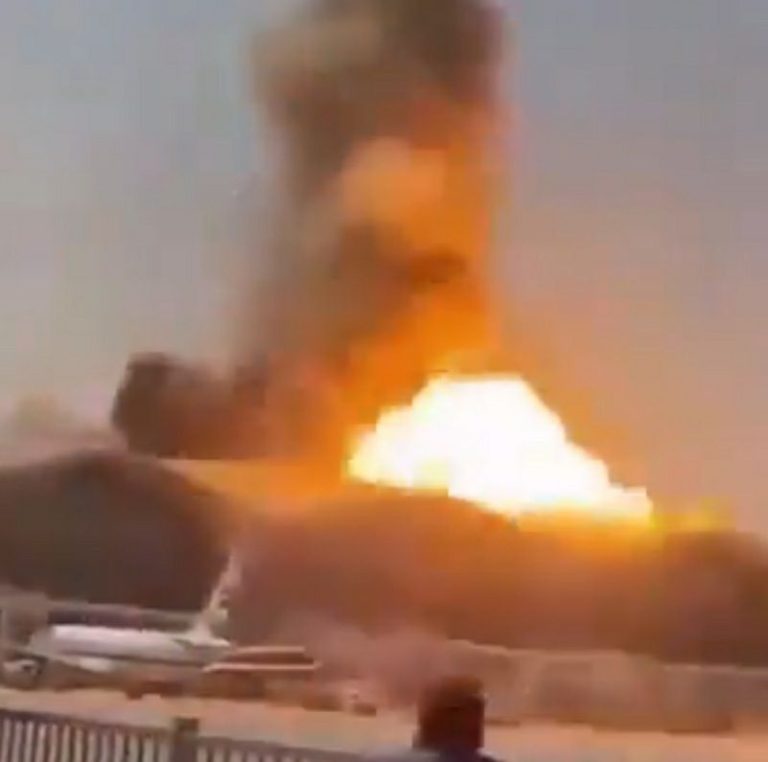
SANAA, Sept. 20 (YPA) – A remarkable shift in the confrontation between Sanaa and Riyadh has clearly emerged following the announcement by Sanaa forces on Saturday targeting objectives in the Saudi capital, Riyadh.
A Remarkable Shift in Escalation
This development shifts operations from the southern regions of the Kingdom deep into its interior, placing the capital itself directly within the scope of engagement.
Sanaa forces announced the success of their operations and the outbreak of fires at the targeted sites. Meanwhile, international reports confirmed the occurrence of fires and explosions in Riyadh. Among them, “Reuters” reported the issuance of an aerial threat warning in the capital and Al-Kharj, as well as the sound of explosions and the appearance of heavy smoke near King Khalid International Airport.
Strategic and Military Implications
The military significance of this development lies in Saudi Arabia finding itself confronted with an extended front stretching from inside Yemen to its capital, Riyadh. This threat is not confined to land borders; it extends to the sea as well, where Sanaa imposes a naval blockade on Saudi-linked shipping. This imposes new pressure on Riyadh, forcing it to deal with multiple simultaneous fronts.
Consequently, Riyadh no longer faces a localized single front that can be contained within a defined scope. Instead, it confronts an expanding military theater originating in Yemeni territory, reaching into the heart of Saudi Arabia, and opening another axis of pressure in the Red Sea.
This broadening places Saudi Arabia under severe strain: as the area of confrontation expands, so does the range of territory and facilities requiring protection. Threat vectors multiply, and the cost of attempting to contain the fallout escalates—at a time when Riyadh appears unable to halt field advances or prevent operations from transferring into its deep interior.
Diminishing Foreign Options
Amid this growing pressure, external responses to Saudi requests for intervention against Sanaa appear limited. The United States does not seem prepared to engage in direct military involvement, while the United Kingdom and France show no willingness to enter an open-ended confrontation. Even Pakistan and Turkey, Saudi Arabia’s partners in the ‘Makkah Alliance’, do not appear headed toward direct military intervention.
Furthermore, reported “Israeli” intelligence assistance—reportedly provided at the request of the United States—does not seem capable of altering the equation on the ground or halting the expanding scope of engagement.
Deeper Entanglement in Yemen
Thus, as operations stretch from inside Yemen to Riyadh and extend into the sea, Saudi Arabia finds itself sinking deeper into the Yemeni quagmire. External options capable of extracting it from this dilemma are shrinking, with no foreign hand extended sufficiently to alter the trajectory of a confrontation that Sanaa affirms will expand further until Saudi Arabia ends its war, lifts its blockade on Yemen, and ceases interference in Yemeni internal affairs.
YPA