

Lebanese Resistance; four decades of thwarting occupation, expansion projects
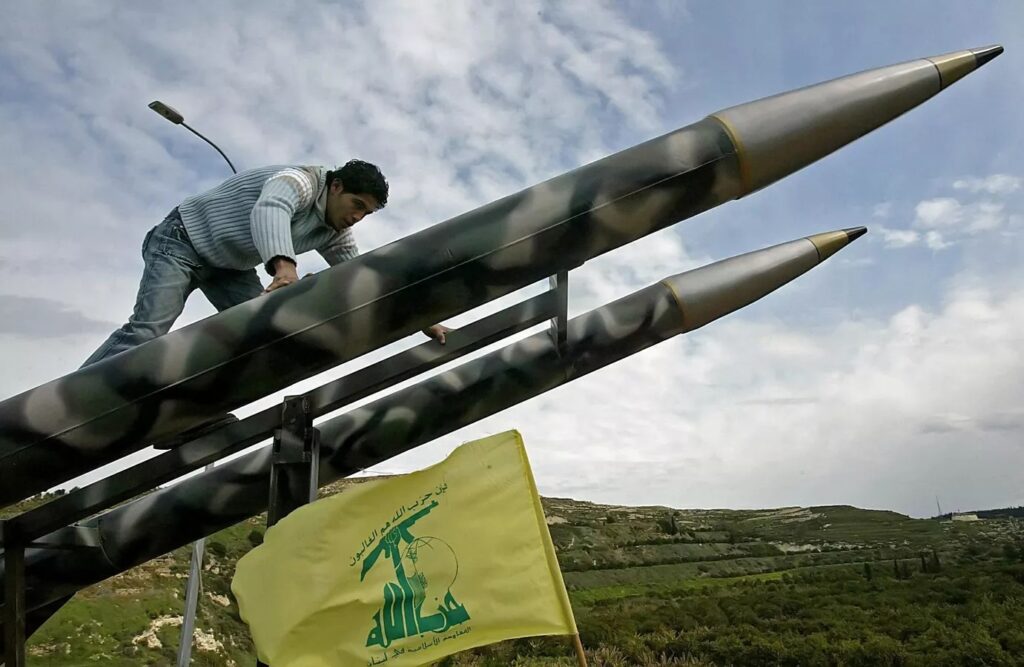
BEIRUT, May 10 (YPA) – Since the beginning of the Israeli invasion of Lebanon in 1982, Southern Lebanon has served as an open arena for a long-term occupation project, through which “Israel” sought to impose a new security and political reality to ensure control over its northern borders and establish a permanent military zone of influence inside Lebanese territory.
However, from its earliest moments, this project collided with popular rejection and escalating resistance. Over the years, this evolved into an organized force that succeeded in thwarting the occupation’s objectives and halting its expansion, rendering the Lebanese Resistance the decisive factor in protecting Lebanon and preventing its fall under “Israeli” control.
In the early years of the occupation, resistance operations began on a limited scale through Lebanese groups targeting “Israeli” forces deployed in the South, before gradually evolving into a continuous war of attrition between 1985 and 2000.
During that stage, the Resistance relied on ambushes and precision strikes against military sites and patrols belonging to the occupation army within what was known as the “Border Strip.” This led to the exhaustion of the “Israeli” military apparatus and raised the human, political, and security costs of the occupation.
The Withdrawal from Southern Lebanon
These operations were not merely scattered confrontations; they constituted a genuine strategy of attrition that forced “Israel” to re-evaluate its military presence in Southern Lebanon after the region turned into a daily drain on the occupying forces.
As strikes escalated and the occupation failed to achieve security stability, signs of collapse began to appear within the military system managing the occupation in the South. The major turning point came in 2000, when “Israel” was forced to conduct a unilateral withdrawal from Southern Lebanon without a peace agreement or direct political arrangements. This move reflected the magnitude of the military pressure imposed by the Resistance over many years.
The accumulation of military operations led to the collapse of the occupation system and the inability of “Israeli” forces to remain on Lebanese soil—an event considered the first clear defeat for “Israel” and a breakdown of its expansionist project in Lebanon.
This withdrawal was not just a military event but a strategic shift in the region, proving that armed resistance is capable of imposing new equations and forcing “Israel” to retreat. Had it not been for the Lebanese Resistance at the time, the occupation might have succeeded in consolidating its military and political presence and perhaps expanding into deeper areas of Lebanon, including the capital, Beirut.
The Defeat of July 2006
Following the 2000 withdrawal, the conflict entered a more complex phase, particularly as “Israel” attempted to restore the deterrence power damaged by its withdrawal from Southern Lebanon and later from the Gaza Strip in 2005.
On July 12, 2006, “Israel” launched a wide-scale aggression on Lebanon after Hezbollah succeeded in capturing two “Israeli” soldiers with the aim of exchanging them for Lebanese and Palestinian prisoners. Instead of negotiating, “Tel Aviv” chose to launch an all-out war involving intensive aerial bombardment, a naval blockade, and ground incursions into Southern Lebanon, setting ambitious goals of eliminating Hezbollah, disarming it, and restoring deterrence.
During the war, the occupation army attempted to seize the town of Bint Jbeil on July 24, 2006, viewing it as a moral symbol of the Resistance. However, “Israeli” forces faced fierce resistance that resulted in the death of 13 soldiers and the wounding of dozens, forcing an eventual retreat. The battles of Southern Lebanon transformed into a new model of attrition warfare that crippled the occupation’s ability to achieve a decisive advance.
Despite the intensity of the 33-day aggression, the war ended in August 2006 without “Israel” achieving its objectives. Lebanese rockets continued to target occupied northern Palestine until the final moments before the ceasefire under Resolution 1701. Meanwhile, “Israel” failed to eliminate the Resistance or free its soldiers by force, who were eventually released through indirect negotiations.
In contrast, Hezbollah emerged from the war more organized and capable. “Israeli” estimates later indicated that it possessed a massive missile arsenal exceeding 150,000 rockets, compared to only about 14,000 before the 2006 war, in addition to a significant evolution in its military, technical, and tactical structure. This bolstered the deterrence equation and prevented “Israel” from reconsidering an occupation of Lebanese territory.
The Battle of Al-Aqsa Flood and the Support for Gaza
With the outbreak of the “Al-Aqsa Flood” battle, Hezbollah announced on October 8, 2023, its involvement in the confrontation by opening the Southern Lebanon front and executing operations targeting “Israeli” military sites with rockets and artillery, as part of supporting Gaza and the Palestinian Resistance.
This participation formed a core part of the “Unity of the Arenas” (Wadat al-Sahaat) strategy, as the Lebanon front imposed direct military and strategic pressure on “Israel.”
During this stage, Hezbollah succeeded in imposing new rules of engagement that forced the occupation army to distribute its forces between Gaza and Lebanon, exhausting its military capabilities and weakening its ability to focus entirely on the Gaza Strip.
Resistance operations also targeted surveillance and espionage sites, military gatherings, and northern settlements, leading to the displacement of tens of thousands of settlers from occupied northern Palestine and turning the northern front into an open front of attrition.
Hezbollah’s involvement played a significant role in maintaining the outcomes of “Al-Aqsa Flood” and bringing the Palestinian cause back to the international forefront, in addition to shattering the “Israeli” image of deterrence and exposing the fragility of the occupation’s security and military infrastructure despite its technological and military superiority.
Faced with escalating military pressure, “Israel” launched a broad aggression on Lebanon, which included a series of assassinations targeting prominent Hezbollah leaders, including the assassination of the former Secretary-General, Sayyed Hassan Nasrallah, in an attempt to weaken the party’s leadership and military structure and disrupt its command and control system.
However, despite the strikes and assassinations, Hezbollah continued its military operations based on a broad organizational structure and intricate military and security networks. This eventually forced “Israel” to accept a ceasefire agreement that took effect in October 2024, despite ongoing “Israeli” violations within Lebanese territory.
During the subsequent phase, Hezbollah followed a policy of no direct response to violations while focusing on reorganizing its ranks and arranging its capabilities in preparation for future rounds of conflict.
The War with Iran and the Return to the Deterrence Equation
In early March 2026, Hezbollah announced the resumption of its operations against “Israel” in support of Iran and in defense of Lebanon. As the war escalated between Iran on one side and the United States and “Israel” on the other, Hezbollah returned forcefully to the conflict arena—not just as a supporting party, but as a force with real field and strategic influence.
Military operations demonstrated Hezbollah’s ability to target the “Israeli” depth with rockets and drones, alongside repelling attempts at ground incursions into Lebanese territory.
The battles in Southern Lebanon revealed the scale of the difficulties faced by the occupation army, which admitted to deaths and hundreds of injuries among its troops during ground operations. This is a clear indicator of the failure of incursions to achieve decisive goals, as Southern Lebanon once again turned into an open arena of attrition.
Field data indicates that border villages have become confrontation points draining “Israeli” forces, while the Resistance has succeeded in targeting troop gatherings, command centers, and logistics bases in occupied northern Palestine, keeping the occupation army under constant pressure and preventing it from establishing stable control within Lebanese territory.
Politically, the positions of the “Israeli” leadership reflected a clear retreat from declared war goals. After initially speaking of eliminating Hezbollah and disarming it, the discourse shifted to attempting to impose a buffer zone on the Lebanese border. However, this goal also collided with the harsh field reality and the continued Resistance preventing the establishment of any permanent occupation control.
Given the current field data in Southern Lebanon, the confrontation appears destined toward a long-term attrition of the Israeli occupation army, in a scene reminiscent of the previous occupation experience that ended in withdrawal in 2000 under the pressure of resistance operations.
The “Israeli” ground incursion into border villages has failed to establish stable control or impose a permanent security reality. Instead, the areas entered by occupation forces have turned into open battlefields where “Israeli” troops are subject to continuous targeting by rockets, drones, and direct ambushes.
Field facts indicate that the Lebanese Resistance has succeeded in preventing the occupation army from achieving a decisive breakthrough by adopting attrition tactics targeting invading forces, supply lines, and command centers. This has led to rising human and military losses and increased internal pressure on the “Israeli” leadership, which now faces a costly war without achieving clear objectives.
As this reality continues, indicators grow that “Israel” may eventually find itself forced to withdraw from the areas it recently occupied within Lebanese territory, especially given the difficulty of maintaining a permanent military presence under the fire of the Resistance.
Historical experience in Southern Lebanon has proven that, over time, the occupation faces a combat environment that exhausts its capabilities and strips it of the ability to persist, making the withdrawal scenario the most likely natural outcome of the current confrontation, just as occurred after the occupation of Southern Lebanon in past decades.
YPA