

Saudi Arabia reshuffles political landscape in southern Yemen after STC dissolution
ADEN, April 30 (YPA) – The city of Aden and other southern and eastern provinces are at a critical political turning point amid a covert regional power struggle between Saudi Arabia and the United Arab Emirates (UAE), following a reported reduction in the UAE’s role and the dismantling of its allied factions.
The developments have pushed the region toward heightened political and public tension.
The Southern Transitional Council (STC), reportedly dissolved under a Saudi decision issued in January, is preparing to impose a new reality in Aden and surrounding areas on May 4 through large-scale mass demonstrations expected to sweep public squares and key state institutions.
The planned protests are described by supporters as a response to the council’s dissolution and a rejection of the Saudi “guardianship.”
The STC’s mobilization comes amid Saudi-backed effort to create alternative southern factions, a policy said to have intensified following the dissolution decision, alongside continued restrictions on STC-aligned leaders, who have reportedly been under house arrest in Riyadh for the fourth consecutive month.
Since the announcement of the STC’s dissolution, its president, Aidarous Al-Zubaidi, has not appeared in public, fueling uncertainty over his whereabouts.
According to the Saudi narrative, he left Aden by sea to Somalia and then traveled to the UAE. However, conflicting reports indicate that he may be detained in a Saudi facility or was killed in airstrikes targeting his hometown in Dhalea.
Amid the formation of new political entities, pro-STC activists have sharply criticized Saudi Arabia, describing the newly created groups as “artificial” and accusing Riyadh of backing them financially and through media in an attempt to sideline the STC, which they say Saudi Arabia has failed to fully dismantle or remove from Aden and other areas.
Saudi-backed efforts in Aden and the southern provinces are reportedly facing widespread public rejection, particularly over moves to dismantle STC’s factions and confiscate heavy weapons under the pretext of “integration,” in line with a vision attributed to pro- Saudi Defense Minister Taher Al-Aqili. These efforts are also seen as paving the way for the return of Islah Party-affiliated leaders to Aden under renewed political justifications.
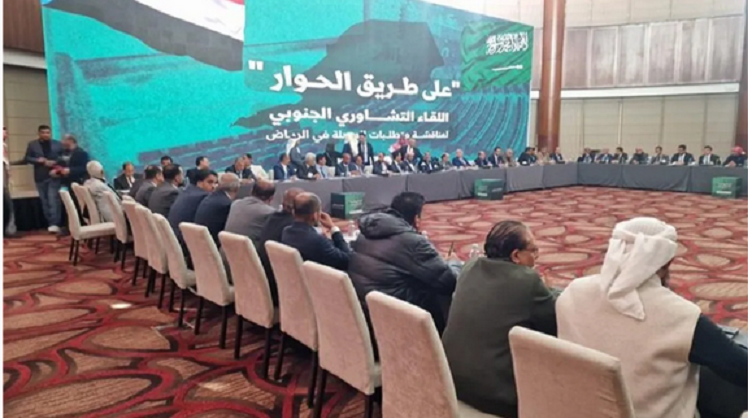
Southern observers say Saudi Arabia is seeking to sow division among southern groups by establishing rival entities opposed to the UAE-backed STC, while simultaneously preventing southern leaders from returning to Aden and keeping them under house arrest under the banner of “intra-southern dialogue,” which has yet to materialize since January.
Some leaders have reportedly rejected Saudi financial incentives to join the so called “manufactured” entities serving Riyadh’s economic and military interests.
Riyadh is also attempting to impose an alternative political order amid warnings of a potential clash between newly formed factions and a southern public increasingly opposed to the coercive policies.
Political and military actors have accused Saudi Arabia of managing Aden and southern regions through instability and security disorder, allegedly as a cover for advancing a strategic project to build a crude oil pipeline from its territory through Al-Mahra to the Arabian Sea.
Meanwhile, Saudi Arabia has been criticized for failing to address the worsening economic crisis in Aden and other areas under its influence, despite an unprecedented collapse in living standards and public services.
Public calls to take control of Al-Maashiq Palace, the seat of the Saudi-backed government, have grown ahead of the planned May 4 demonstrations, in a bid to end what is described as a “disguised occupation.”
@E.Y.M