

Sayyed al-Houthi criticizes restrictions on freedom of expression in Gulf states
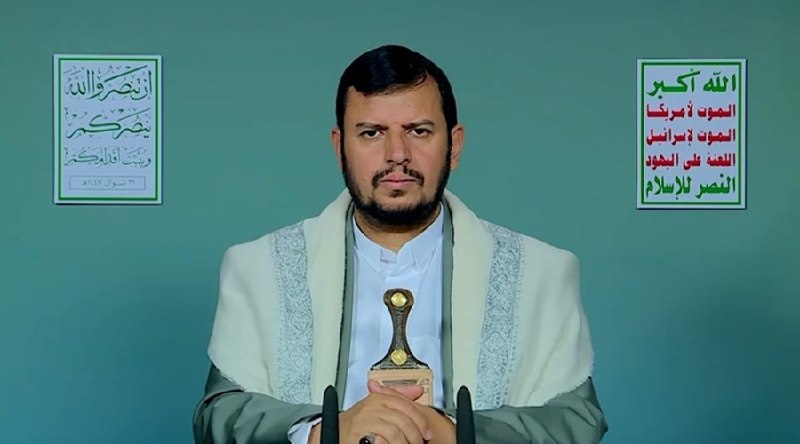
SANAA, April 21 (YPA) – Sayyed Abdul-Malik al-Houthi, leader of Yemen’s Ansarullah Movement, sharply criticized the suppression of pro-Gaza expression and resistance discourse in several Gulf countries, accusing them of acting in alignment with U.S. and Israeli occupation’s interests.
In a televised address on Tuesday, he said that regional policies are increasingly being used to silence dissent and prevent any voices opposing American and Israeli dominance, as well as to curb expressions of solidarity with the Palestinian people or criticism of Israeli occupation.
The movement’s leader warned that this environment reflects a broader “state of silence and inaction,” urging wider mobilization to confront ongoing developments.
Sayyed al-Houthi asserted that some Gulf states have imposed stringent restrictions on freedom of expression, including punitive measures such as imprisonment and fines against individuals who voice support for Palestinians on social media platforms.
He further claimed that official directives in certain countries prohibit expressions of sympathy with Hezbollah or the Lebanese population amid Israeli military actions, while, according to him, expressions supportive of Israel or critical of resistance groups remain permissible.
He argued that such restrictions, in some cases, surpass those seen in the United States and Europe in terms of severity, accusing what he termed “adversarial powers” of seeking to impose widespread silence across the Arab and Islamic worlds and to suppress reactions to U.S. and Israeli policies.
According to leader al-Houthi, these measures are intended to entrench submission and deter both public and official opposition to what he described as hostile agendas, extending to the criminalization of criticism of Israeli actions.
In a related context, he said the Islamic world is facing systematic targeting, noting that even verbal expressions of dissent are increasingly constrained. He emphasized that peaceful protest remains a legitimate means to revive public awareness and encourage societal engagement in addressing current challenges.
Sayyed al-Houthi also criticized what he described as inaction by certain governments, accusing them of serving U.S. and Israeli agendas and warning of the potential long-term consequences for the region.
He called for comprehensive action across multiple fronts to confront these challenges, while acknowledging that resistance to submission remains limited. He concluded by stating that yielding to or supporting the United States and Israeli occupation is incompatible with religious values and moral principles.