

Gulf States pay heavy price of US–Israeli aggression against Iran
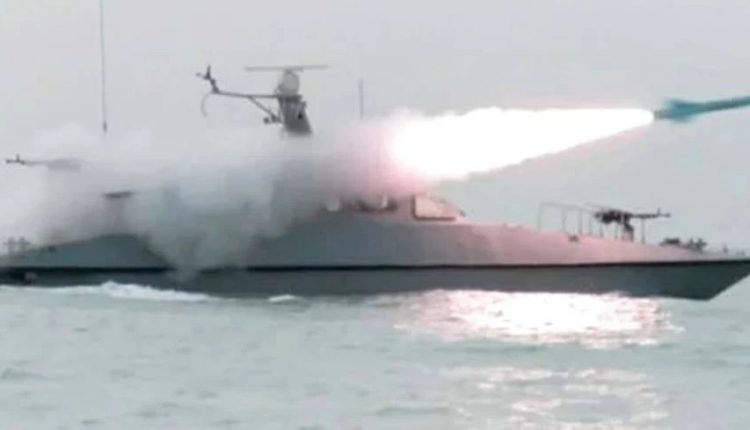
Beyond the military dimension, the crisis is exerting immediate economic and security pressure on Gulf states.
The potential closure of the Strait of Hormuz, financial market volatility, rising air defense costs, and disruptions to air and maritime traffic are collectively imposing significant daily losses, underscoring the region’s vulnerability to prolonged instability.
Strait of Hormuz Closure Threat
In a remarkable development, Brig. Gen. Ebrahim Jabbari, an advisor to the Commander of the Iranian Revolutionary Guard Corps (IRGC) announced on Monday that the Strait of Hormuz is now closed, warning that any vessel attempting to transit the waterway will be considered a direct target.
He added that Tehran would not allow oil exports to its adversaries from the region.
What the Closure of the Strait of Hormuz Would Mean
Approximately 20 million barrels of oil pass through the Strait of Hormuz daily — roughly 20% of global consumption and more than a quarter of seaborne oil trade. At an average price of $80 per barrel, the daily value of oil transiting the strait stands at about $1.6 billion. Should prices rise to $100 per barrel amid conflict, that figure would increase to $2 billion per day.
Any sustained disruption would represent a direct economic shock to Gulf economies, which rely heavily on exporting oil and gas through this strategic corridor.
Direct Oil Revenue Losses
Saudi Arabia, the United Arab Emirates, Kuwait, Qatar, and Bahrain depend heavily on the Strait of Hormuz for energy exports.
- Saudi Arabia exports more than 5 million barrels per day via the strait, equating to an estimated $400 million in daily revenue at $80 per barrel.
- Kuwait exports around 2 million barrels per day, or approximately $160 million daily.
- United Arab Emirates exports roughly 3 million barrels per day, amounting to about $240 million per day.
- Qatar, the world’s largest exporter of liquefied natural gas (LNG), sees nearly 20% of global LNG trade pass through the strait, exposing it to significant disruption risks.
Collectively, Gulf states could face direct export revenue losses exceeding $1 billion per day if shipments were halted entirely.
Immediate Losses in Gulf Markets
According to Reuters, Qatar’s benchmark index dropped 4.3%, marking its steepest daily decline since March 2020. Shares of Qatar National Bank — the Gulf’s largest lender by assets — dropped 4.8%, its biggest one-day loss since December 2022.
In the United Arab Emirates, authorities suspended trading on both the Abu Dhabi Securities Exchange and the Dubai Financial Market for two consecutive days in an effort to contain volatility.
Saudi Arabia’s main stock index dropped 4.6%, its sharpest single-session drop since April, while Oman’s Muscat Stock Exchange recorded losses of around 3% amid widespread selling.
Rising Air Defense Costs
Gulf states are incurring substantial costs to counter missile and drone threats. Daily expenditures related to interceptor missiles — including Patriot and THAAD systems — along with operational and maintenance costs, are estimated between $16 million and $44 million per day.
These figures do not account for the replacement of expended interceptors or long-term upgrades to defense infrastructure, which could significantly increase fiscal pressures if hostilities persist.
Airport and Port Disruptions
The suspension or disruption of airport and port operations across parts of the Gulf is compounding economic pressure on the region. Estimated daily losses linked to halted aviation and maritime activity range between $250 million and $500 million, with the potential to rise significantly if the closures are extended.
Broader Economic Implications
The ongoing crisis underscores just how deeply Gulf economies depend on regional stability. A possible shutdown of the Strait of Hormuz, volatile financial markets, rising defense costs, and disruptions to vital transport networks together highlight the severe economic consequences of sustained conflict.
Experts point out that although the tensions are primarily between the US and Iran, and Israel and Iran, Gulf states are shouldering substantial indirect economic burdens. Continued instability could strain public finances, shake investor confidence, and threaten critical revenue streams across the region.
@E.Y.M