

INSI highlights Israeli targeting of Yemeni “26 September” newspaper headquarters
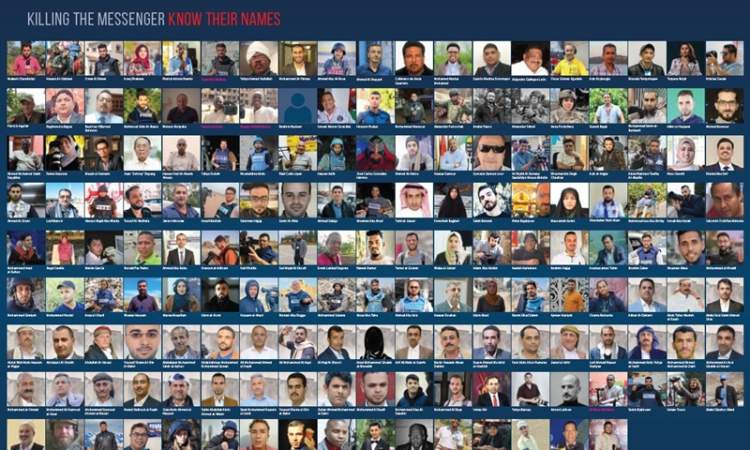
SANAA, Feb. 05 (YPA) – The International News Safety Institute (INSI) has published a report regarding the Israeli enemy entity’s targeting of the 26 September newspaper headquarters in Sanaa, as part of a detailed statistical study on casualties among journalists and media workers worldwide during the year 2025.
The report explained that on September 10, 2024, violence reached the heart of the Yemeni capital, Sanaa, where a series of Israeli airstrikes targeted the headquarters of the weekly 26 September newspaper, resulting in the death of 31 journalists and media workers and injuring dozens of others.
The report noted that “Israel” has repeatedly failed in previous cases in Gaza, Lebanon, and Iran to distinguish between military targets and journalists, justifying the killings by classifying media workers as “terrorists” or “propagandists.”
“Under international humanitarian law, journalists are considered civilians protected from attack, including those working for state-owned media or media affiliated with armed groups, unless they participate directly in hostilities,” the report added.
The report touched upon what the Zionist defense forces posted on the (X) platform on September 10, stating that they: “Targeted military objectives in Sanaa, including what it termed the ‘Houthi Public Relations Department’,” accusing it of spreading “psychological terrorism.”
The report quoted Nasser Al-Khadri, Managing Editor of 26 September newspaper, who described the targeting of journalists as a massacre, saying, “We were searching, calling their phones, and shouting their names. We could not find any survivors because the destruction was total; the place where I used to work had turned into a crater. It is a massacre.”
The report pointed out that the individuals present at the 26 September headquarters were not soldiers or fighters, but rather editors and technicians—people producing words under conditions difficult for outsiders to understand, let alone endure.
“What burned alongside them was one of Yemen’s most important historical archives, as 26 September newspaper documented the country’s modern history across multiple eras,” the report continued.
The magazine quoted the Managing Editor saying “This archive was the history of a country. It was destroyed and scattered due to the Israeli targeting, and we could not save it.”
Regarding the survivors, Al-Khadri says they live in constant fear and confusion, uncertain if they are safe anywhere—whether at work or away from it—and are unable to return to the site at all. He adds: “They saw their colleagues die before their eyes, and that trauma remains in the head and does not go away.”
The Managing Editor stated, “Israeli bombs killed 31 journalists in cold blood, yet we have not heard a clear or firm condemnation. Nothing restores our confidence in the existence of institutions that speak on our behalf.”
Al-Khadri pointed out that international law is clear: journalists are civilians and targeting them is a war crime. However, the response has been silence or something close to it.
He concludes, “Targeting journalists has become permissible. What could possibly justify the targeting of journalists?”
YPA