

Silent assassination by proxy… Hidden and most dangerous face of Zionist war on Gaza
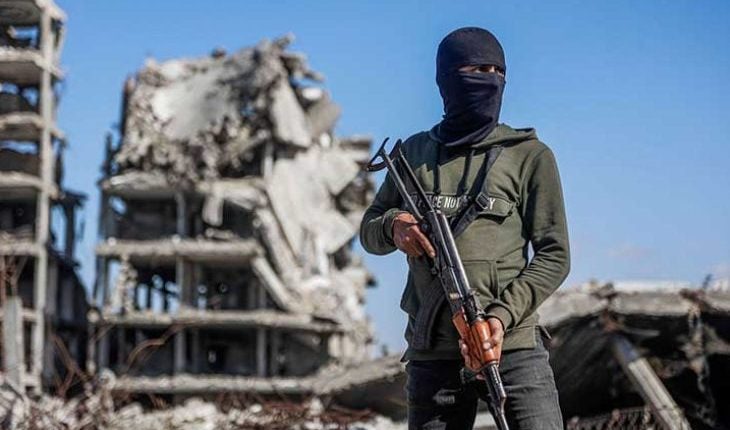
SANAA, Dec. 19 (YPA) – In a development that extends beyond aerial bombardment and open military confrontations, the Gaza Strip is witnessing a more covert and potentially dangerous dimension of the ongoing Israeli war. This dimension takes the form of a silent campaign conducted in the shadows, in which the Zionist occupation employs “proxy assassination” as a calculated strategy to spread fear and fracture Palestinian society from within, while avoiding the direct military and political costs of overt operations.
A recent report issued by the Palestinian Media Center documents an emerging pattern that has gradually taken root in the Gaza Strip. The pattern involves the use of criminal gangs and unofficial weapons to carry out targeted killings and assassinations of resistance activists, under the guise of criminal activity or internal disputes.
According to the report, this approach enables the occupation to conceal its involvement, mislead public opinion, and transform criminal violence into a sustained instrument of attrition no less destructive than conventional warfare.
“Silent Murder”: A Tool of an Undeclared War
Military expert and strategist Akram Sariwi clarified that the occupation has significantly expanded its reliance on local collaborators and criminal groups as a central component of what he describes as an “undeclared war.” This strategy, he explains, seeks to undermine the internal cohesion of Palestinian society without provoking direct confrontation.
Sariwi noted that these liquidation operations are carried out under deceptive criminal narratives, allowing the occupation to evade accountability while obscuring the true beneficiaries of the rising wave of assassinations.
He further explained that the activation of criminal gangs, including the so-called “Abu Shabab group,” represents the continuation of an old yet renewed policy aimed at eroding public trust, spreading security chaos, and creating conditions that can later be exploited to justify increased repression and intervention. This occurs alongside a deliberate policy of turning a blind eye to the proliferation of weapons and criminal activity, while intensifying pressure on resistance efforts.
A Low-Cost, Fingerprint-Free Strategy
Major General Mohammed al-Sharqawi described “proxy killing” as one of the most dangerous forms of unconventional warfare, in which victims are recorded as casualties of internal violence rather than as targets of a systematic occupation policy.
He explained that the management of these networks is conducted through intelligence channels designed to foment suspicion, dismantle the popular support base of the resistance, and secure intelligence advantages, all while testing public and organizational responses without opening new military fronts.
Al-Sharqawi warned that the most perilous aspect of this strategy lies in its ability to normalize assassination as a routine occurrence carried out quietly and without international repercussions. Such normalization, he argues, deepens humanitarian and psychological harm and pushes society toward prolonged instability and fear.
Awareness as the First Line of Defense
Both experts emphasized that confronting this strategy cannot be confined to security measures alone. It also requires heightened public awareness, reinforced internal unity, and the exposure of the Israeli political, media, and legal frameworks that, they argue, facilitate and legitimize organized criminal activity.
They concluded that identifying and exposing proxy assassinations is not merely an analytical exercise, but a critical step in safeguarding social cohesion and protecting the internal front of the resistance.
AA