

Sanaa’s control over Bab al-Mandab forces “Israel” to seek alternative maritime routes
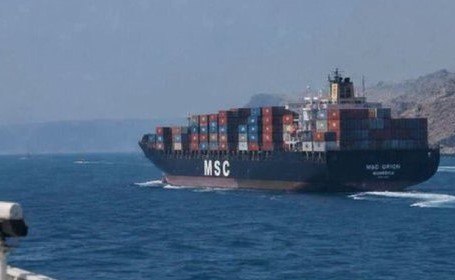
SANAA, Sept. 17 (YPA) – Developments following the control of Bab al-Mandab by Sanaa forces are forcing “Israel” to recalculate its maritime security and trade routes, amid mounting concerns over the Port of Eilat—“Israel’s” southern maritime gateway to the Red Sea.
In a new report published on Wednesday, the Hebrew newspaper “Yedioth Ahronoth” highlighted the repercussions of Sanaa forces controlling Bab al-Mandab, confirming that recent developments have driven up ship insurance premiums and threaten to paralyze the remaining activity at Eilat Port. The newspaper also cited “Israel” Ports Company calling for an urgent strategic solution in response to the new reality.
According to the Hebrew newspaper, concerns in Eilat come at a time when the port has not yet recovered its former activity since operations escalated in the Red Sea in late 2023, after shipping lines began avoiding the sea route leading to it, while the majority of vehicle imports shifted to the ports of Haifa and Ashdod. Yedioth Ahronoth notes that the remaining activity at the port has become extremely limited, amid fears of a complete shutdown.
The repercussions are not confined to the Port of Eilat. The Hebrew outlet links the situation in Bab al-Mandab to “Israel’s” need for strategic alternatives to maritime passages. According to the newspaper report, “Israel Ports Company” views current developments as highlighting the importance of alternative trade routes, at a time when the Israeli economy relies heavily on maritime transport.
These concerns coincide with another analytical report published by Yedioth Ahronoth Wednesday, which addressed what it termed the threat posed by developments in Yemen to Israeli navigation in Bab al-Mandab.
The newspaper points out that the issue for “Israel” extends beyond the future of Eilat Port itself to affect its position within the maritime trade network originating from Asia via the Red Sea. Any prolonged disruption in Bab al-Mandab forces companies to seek longer, more costly routes or rely on alternative land and sea corridors.
Hebrew reports reveal that “Israel” views Sanaa’s control over Bab al-Mandab as a serious threat to its associated maritime traffic. This is reflected in a shift in debate—from how to preserve traffic at Eilat Port to pursuing strategic solutions and alternative maritime passages in anticipation of lingering consequences from the new reality imposed by developments in Bab al-Mandab.
The reports further reveal that Sanaa’s control over Bab al-Mandab is now being discussed in “Israel” as a challenge requiring a complete rethink of the trade routes and corridors upon which it relies.
YPA