

Saudi Arabia’s maritime bleeding widens following new designation of its coasts as dangerous war risk areas
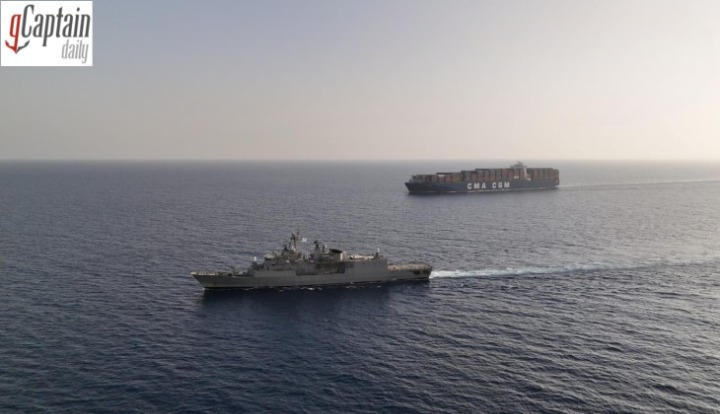
SANAA, Sept. 04 (YPA) – Saudi Arabia faces escalating economic pressure on its maritime front as the scope of risks threatening vessel traffic and ports along the western coast expands, a development that raises shipping and insurance costs while subjecting oil exports to increasingly complex calculations.
The American maritime news outlet ‘gCaptain’ reported today, Friday, that escalating maritime risks have prompted insurance companies to expand the scope of “war risk” zone designations off Saudi Arabia’s western coast to include an additional stretch of approximately 800 kilometers northward along the Red Sea.
The repercussions of this development extend beyond insurance boundaries; designating new areas as high-risk directly impacts insurance premiums, freight costs, and shipping rates, adding new financial burdens to trade and energy movements connected to Saudi ports.
The website noted that Yemeni attacks targeting Saudi-linked vessels in the Red Sea and the port of Yanbu have forced Riyadh to seek alternative routes for oil transport in an attempt to reduce the exposure of its shipments to mounting maritime hazards.
In this context, Saudi Arabia has turned once again to an overland route through Egyptian territory, transporting approximately 1.9 million barrels of crude oil per day via a pipeline reaching the Mediterranean, according to the outlet.
However, this alternative option carries an additional economic cost. gCaptain indicated that the route through Egypt is more expensive and adds weeks to the transit time required for oil to reach Asian markets compared to traditional transit routes through the Red Sea.
Thus, maritime risks are shifting from a direct security threat into an escalating economic bill for Riyadh—starting with surging insurance and freight costs, and continuing through the Kingdom’s forced redirection of a portion of its oil flows via longer and more expensive routes.
The maritime outlet’s report comes amidst a naval blockade imposed by Yemen—represented by Sana’a forces—against Saudi Arabia by banning Saudi navigation in the Red Sea. This move follows the Riyadh regime’s failure to fulfill the peace deal agreements with Sana’a and serves as a response to the air and sea blockade imposed by Saudi Arabia on the Yemeni people.
With “war risk” zones expanding by hundreds of kilometers along the Saudi coast, Riyadh faces a difficult economic equation: as maritime risks rise, so do insurance and shipping bills, and the more it turns to alternative routes, the greater the distance, cost, and time required for oil to reach global markets.
YPA