

How Saudi Arabia converts crises into tools to impose agendas on southern Yemeni street?
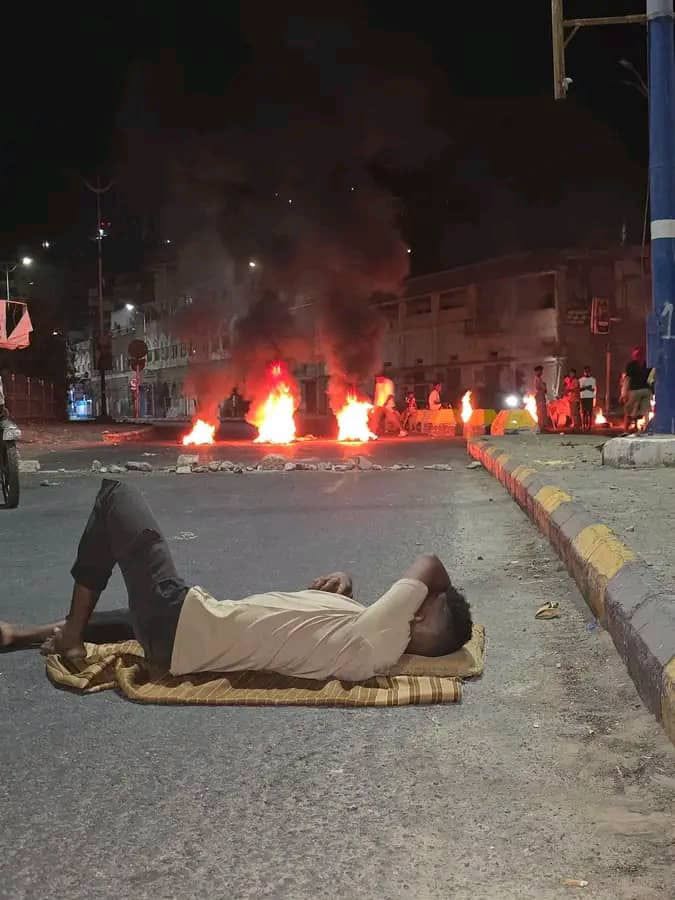
ADEN, Aug. 27 (YPA) – Since the beginning of 2016, residents of Aden and remaining southern and eastern Yemeni provinces under Saudi control have endured tragic living and service conditions that can no longer be tolerated, driven by exacerbating, systematic crises managed by Riyadh.
The agendas Riyadh seeks to impose across southern and eastern Yemen reflect the scale of ongoing risks and plots over the past decade—a decade that exposed the falsity of promises once made by Saudi Arabia to appease a populace rejecting Saudi tutelage.
These various crises have witnessed a escalating and dangerous widening of economic collapse in Aden and other Saudi-controlled areas. This follows Saudi airstrikes targeting the UAE-backed Southern Transitional Council (STC) factions in Hadramout governorate after the STC seized Islah party camps in late December, leaving over a thousand dead and wounded. This event resulted in the decision to dissolve the STC in early January and an assassination attempt on its president, Aidarous al-Zubaidi—who managed to flee Aden by sea to Somalia and then to Abu Dhabi in the UAE, according to the Saudi military narrative.
Saudi Arabia moved through the “Emergency, Dera Al-Watan” forces to establish a new status quo in Aden, reaching Mahra and Hadramout, while continuing to dismantle STC-affiliated factions under the guise of “integration and restructuring,” supervised directly by Islah-affiliated Defense Minister Taher Al-Aqili, with a clear aim: disarm Southerners and bring them into full submission to Saudi agendas.
The pressure exerted on the daily lives of citizens in Aden and remaining areas was nothing short of coercive behavior aimed at applying maximum pressure on the Southern populace rejecting Saudi tutelage. Meanwhile, Saudi Arabia relies on representatives of its “Special Committee” in Aden and other provinces to enforce a policy of collective punishment and a systematic war on public services to push citizens to the point of helplessness, forcing them to accept Riyadh’s dictates—chief among them re-enabling its loyalist traditional forces, dubbed by the Southern street as the “7.7 Gang,” back into the Al-Ma’ashiq Palace in Aden after having lost their interests and influence in Sanaa since the start of the war in March 2015.
The manifestations of collective punishment executed by the Saudi Special Committee through its loyalist authorities are visible in harsh daily scenes: elderly citizens and children stand in endless long queues under the scorching heat for days seeking a domestic gas cylinder, caused by deliberate quota reductions by the Islah-controlled “Safer” gas company in Marib.
Other public services—water, education, health, as well as electricity—fare no differently than the suffocating gas crisis. Power outages in Aden and other provinces persist for over 8 consecutive hours against just 2 hours of supply. Coupled with worsening economic collapse and unpaid civil service salaries, the Southern street faces a comprehensive siege and manufactured crises orchestrated behind closed doors by the Saudi “Special Committee.”
The dimensions of the service warfare and systematic Saudi starvation policy transcend mere livelihood choking into far more dangerous territory: Riyadh exploits deteriorating economic conditions and weak purchasing power to recruit thousands of youth, employees, and citizens forced by urgent need to join new factions organized by radical ‘Salafi’ leaders in Aden and other provinces. These act as a counterweight to STC factions following the latter’s refusal to participate in the Saudi war on Sanaa across various fronts on the grounds that the war does not serve the Southern cause.
According to available data, Riyadh seeks—through these new recruits subjected to ideological and sectarian indoctrination by radical Salafi groups—to curb the STC’s influence on the ground and cement its direct presence in Aden and remaining southern regions per dictates from Saudi “Special Committee” delegates, while keeping the STC delegation detained in Riyadh for the eighth consecutive month.
Despite the severe service exhaustion and economic hardship imposed on helpless citizens, popular calls demand an immediate end to these artificial crises, starvation policies, and coercive measures aimed at imposing foreign projects and agendas on Southern Yemen, alongside calls for field escalation up to what they termed “armed struggle” against Saudi tutelage.
YPA