

Sanaa dismisses Saudi-led maritime coalition, affirms Red Sea’s security depends on Yemen’s deterrence
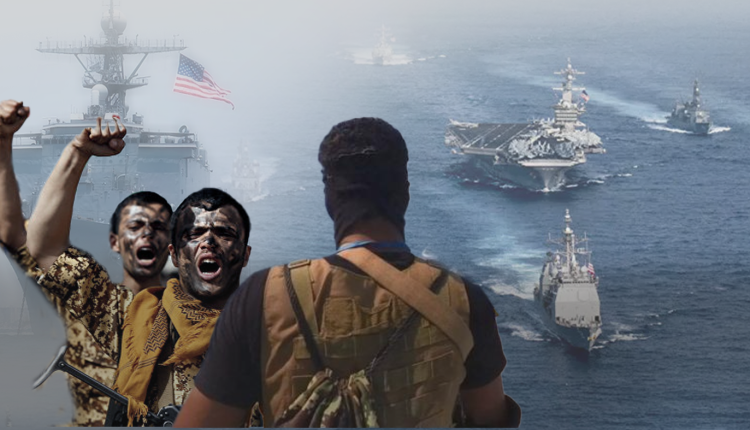
SANAA, Aug. 02 (YPA) – Yemen’s Sana’a-based authorities have dismissed Saudi Arabia’s efforts to establish a new maritime coalition under the banner of protecting Red Sea shipping, arguing that military alliances have never been the decisive factor in ensuring safe navigation.
Hussein Al-Ezzi, a member of the political bureau of Ansarullah, said shipping security is linked to Sanaa’s responsible management of the maritime file rather than to international naval coalitions.
“Had alliances been the determining factor, not a single ship would have crossed safely,” Al-Ezzi wrote on X, asserting that the relative continuity of maritime traffic through the Red Sea and the Bab al-Mandab Strait has been maintained by Sanaa’s handling of the confrontation rather than by foreign naval deployments.
He added that Sanaa possesses the capability to close the Bab al-Mandab Strait and influence shipping routes extending into the Mediterranean and Indian Ocean from any point in Yemen, while adding that possessing such capabilities does not mean they would be used indiscriminately.
Al-Ezzi said Sanaa has acted responsibly toward international shipping, arguing that its approach has allowed commercial navigation to continue despite regional tensions. He also warned against provoking Sanaa, saying all options remain available in the event of further escalation.
The remarks come as Saudi Arabia faces mounting obstacles in its bid to form a new Red Sea maritime coalition. Britain’s Lloyd’s List reported that the initiative appears more political than operational, citing the absence of clear details regarding participating forces and implementation mechanisms, and suggesting the announcement is unlikely to alter shipping or insurance risk assessments for the Red Sea.
Separately, U.S. outlet Axios reported that Saudi Defense Minister Prince Khalid bin Salman failed to secure U.S. backing for the proposed coalition, while The New York Times said the United States and several European countries are reluctant to participate.
According to the report, only 14 of the 51 countries invited have responded positively, amid concerns that such a coalition could further escalate regional tensions.
Meanwhile, Western and Israeli commentators have continued to acknowledge the challenge posed by Yemen’s military capabilities. Former Israeli occupation’s navy commander Eliezer Marom said Yemeni forces have established a complex deterrence equation, arguing that European naval deployments have failed to decisively counter the threat and that there is no solution to the challenge posed from Yemen. He also said Saudi Arabia and the UAE had failed to curb the development of Sanaa’s military capabilities.
The developments follow the Yemen’s Sanaa-based armed forces’ announcement of a maritime blockade targeting Saudi shipping under what they describe as the equation of siege for siege, a move that observers say increases pressure on Riyadh while raising questions over whether any new naval coalition could alter the existing balance of power in the Red Sea.
AA