

Al-Alimi warns STC against using southern cause to justify armed rebellion
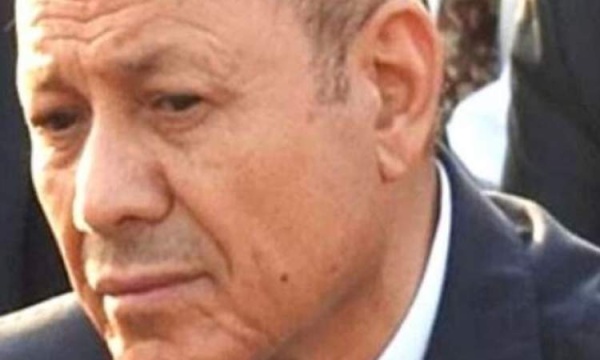
RIYADH, May 22 (YPA) – Rashad Al-Alimi, President of the Presidential Leadership Council loyal to the Saudi-led coalition, issued a stern warning to the UAE-backed Southern Transitional Council (STC) against using the southern cause as justification for armed rebellion against the Saudi-backed government.
In a speech delivered on Thursday evening from the Saudi capital, Riyadh, marking the 36th anniversary of Yemeni unity, al-Alimi called on STC leaders to hand over all weapons, ammunition, and military equipment seized during recent events in Hadramout and hand them over to the relevant authorities.
He stressed that handing over the weapons is a necessary step toward strengthening security and stability and reinforcing the government’s exclusive control over arms in accordance with what he described as the law.
He also reaffirmed his commitment to restoring state institutions in southern and eastern Yemen.
Addressing STC leaders directly, al-Alimi said: “Those who fail to learn from bitter experiences and fail to recognize the value of diversity, the importance of integration, the need to respect the balance of interests and standards of legitimacy, and the danger of ignoring realities on the ground or being deceived by shifting balances of power.”
On the security situation, al-Alimi admitted to the expansion of terrorist activity in Aden, citing recent attacks he said had brought fear back to the streets, eroded trust in government institutions, and stalled hopes for stability.
He insisted nonetheless that such threats would be defeated, in what was seen as a pointed warning to the STC.
Al-Alimi said the period following the “dissolution” of the STC had seen notable developments that could contribute to stronger institutional coordination, unified military and security decision-making, improved performance of local authorities, and greater readiness across state institutions at various levels.
During the speech, al-Alimi also criticized the former regime of Ali Abdullah Saleh — despite having previously served as one of Saleh’s ministers — accusing it of contributing to what he described as a dangerous deviation from the principles of Yemeni unity.
He said the former regime had produced deep injustices through exclusion and marginalization, ultimately undermining the national partnership upon which Yemeni unity was originally founded.
@E.Y.M