

How did Saudi Arabia transform al-Qaeda into its military arm in war on Yemen?
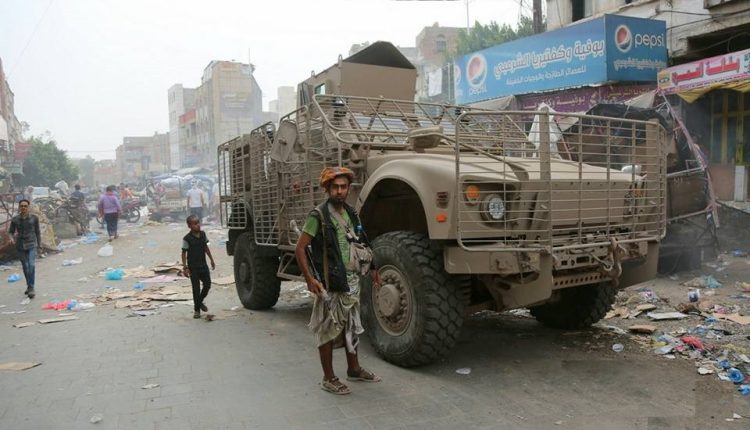
SANAA, March 27 (YPA) – Since the declaration of war on Yemen on March 26, 2015, the battlefronts have become more than just arenas for traditional military conflict. They have transformed into a stage for one of the most dangerous pragmatic alliances of the modern era.
International documents and investigative reports indicate that Saudi Arabia, which led the war on Yemen, did not limit itself to direct military intervention. It also resorted to using the “terrorism” card as a tool to achieve victories against the Sanaa forces, making al-Qaeda a field ally that it financed with money and weapons.
The sectarian and religious rhetoric promoted by the Saudi-led coalition’s media to confront the so-called “Iranian project” in Yemen was nothing more than a cover for regrouping and rehabilitating elements of terrorist organizations under the names of new factions, supported by money, the latest American and British weapons, and broad political cover.
Sanaa’s accusations against the coalition countries of supporting the terrorist organizations al-Qaeda and ISIS were not mere political accusations or speculations, but rather confirmed facts documented by major international media and human rights organizations. These included a 2019 investigation by CNN and reports by The New York Times, which confirmed that advanced American and British weapons had fallen into the hands of al-Qaeda elements in Yemen after Washington supplied them to the coalition.
Furthermore, the Associated Press, in a report published in August 2021, confirmed that the Saudi- and Emirati-led coalition had made secret deals with al-Qaeda, involving the withdrawal of its fighters from certain areas and their deployment to the front lines against Sanaa’s forces in exchange for money. Hundreds of these fighters were even integrated into the ranks of the Security Belt forces and other groups in Aden, Abyan, Shabwa, and Hadramout provinces.
A leaked document from the Qatari embassy in Washington in October 2016 revealed direct communication between the Saudi and Emirati leaderships with al-Qaeda leaders listed on US terrorism lists, such as Ali Abkar al-Hassan and Abdullah Faisal al-Ahdal, to ensure the continued flow of financial and military support.
Other reports indicated that Saudi agreements with terrorist leaders were made with the knowledge and oversight of US leadership. Senior al-Qaeda commanders were reportedly receiving salaries from Saudi- and Emirati-backed leaders to fight Ansarallah (the Houthis) in Sanaa.
On the other hand, a UN Panel of Experts report on Yemen, issued in June 2017, reported that the UAE supported al-Qaeda-affiliated militants and appointed some of their leaders to head armed factions.
Among these was the Salafist Abu al-Abbas, whom Washington later designated a terrorist. The Abu al-Abbas Brigades, affiliated with the UAE, were subsequently integrated into Tariq Saleh’s forces on the western coast after their withdrawal from Taiz.
During the war on Yemen, Saudi Arabia adopted a “the ends justify the means” strategy. Its objectives included increasing support and funding for terrorist elements and using them as a “spearhead” in direct confrontations with Sanaa forces, given their combat experience and ideological extremism. This strategy also involved using ideological cover to transform the war from a sovereign political conflict into a purely sectarian and religious one, thus ensuring the mobilization of fighters under the banner of “jihad” against those they called “the Houthis.”
Bayda Governorate, central Yemen, became the most significant turning point for terrorist elements, transforming it into the main stronghold of al-Qaeda and ISIS, with full Saudi-American coordination. Its location at the crossroads of Yemen, between four southern and four northern governorates, was a key factor.
In 2020, Sanaa forces waged fierce battles, successfully clearing al-Qaeda’s stronghold in the areas of Yakla and Qayfa of takfiri elements. These confrontations resulted in the deaths of several senior leaders of the two organizations, including Abu al-Walid al-Adani, among others.
Sanaa forces found health insurance cards issued by Riyadh Central Hospital and “free Hajj” vouchers provided by the King Salman Center to terrorist elements at the locations of al-Qaeda and ISIS members. They also found Saudi money and modern cameras and communication equipment. Some members managed to escape to Marib, Shabwa, and Abyan, where the coalition forces, through leaders in the Islah Party, gathered them in training camps, including one in Wadi Aidah in the Al-Samdah area west of Marib city.
Additionally, during Operation “Nasr min Allah” (Victory from Allah) in the Najran sector in September 2019, Sanaa forces seized documents belonging to al-Qaeda containing fatwas from the organization’s so-called “Sharia Committee” urging young men to wage war against Ansarallah (the Houthis). This confirms the field coordination between the organization and the coalition forces.
Conversely, after years of operating under various names and pseudonyms, Saudi Arabia has now brought the leaders of “terrorist” organizations back into the spotlight, using their real names within new factions such as “Dera Al-Watan”, ” “Emergency Forces,” and “Al-Amaliqa,” which have been recruited to control the oil-rich areas of Hadramout and Shabwa.
This comes amidst accusations from southern Yemen that Saudi Arabia is facilitating the return of al-Qaeda to Abyan and Shabwa, coinciding with the dismantling of factions affiliated with the UAE-backed Southern Transitional Council since last January.
However, field evidence, leaked documents, and international reports confirm that the “war on terror” declared by the coalition is merely a cover for a systematic exploitation of “takfiri groups” to undermine the social fabric of southern Yemen.
Observers believe that Saudi support for terrorist organizations in Yemen is not arbitrary, but rather part of a strategy based on sectarian manipulation and the exploitation of extremist Salafist rhetoric to recruit thousands of hardline elements under various guises, serving American interests in controlling the oil-rich areas of the eastern governorates.
The question remains: Will Washington continue to turn a blind eye to the use of its weapons to fuel “terrorism” in Yemen through Saudi Arabia, or will the “support for al-Qaeda” file become a new pressure tactic in the regional conflict?
YPA