

Saudi-backed forces launch intelligence crackdown on STC activists in Aden
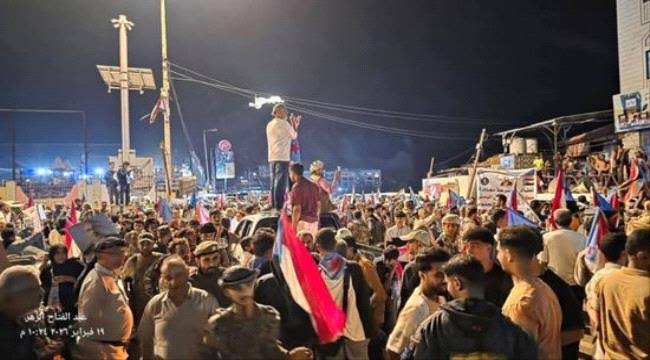
ADEN, Feb. 21 (YPA) – The city of Aden and surrounding areas are witnessing an unprecedented surge in military tensions following deadly clashes near the Al-Maashiq Palace, prompting a wide-ranging security and intelligence campaign targeting figures affiliated with the Southern Transitional Council (STC).
The developments underscore a deepening power struggle among factions loyal with the Saudi-led coalition, amid competing efforts to consolidate influence in southern Yemen.
Intelligence Grip and Settling of Scores
Sources familiar with the matter reported that the recently activated “State Security Service,” operating under the Presidential Leadership Council, has launched its first major intelligence operations in Aden and neighboring Lahj.
The campaign reportedly targeted dozens of activists and field commanders accused of inciting the attempted storming of Al-Maashiq Palace. Among those detained are prominent local figures, including Raouf Al-Subaihi, Al-Rawsi Al-Azaibi, and Abu Mohammed Muneef Al-Lahji.
Political observers view the appointment of Mohammed Ayda as head of the new security apparatus, alongside deputy Yahya Kazman, as a sign of renewed influence for factions historically linked to the Islah Party and former Vice President Ali Mohsen al-Ahmar.
Analysts say the move reflects a Saudi-backed effort to curb the influence of groups perceived as aligned with the United Arab Emirates.
Military Movements and Conflicting Claims
Fresh deployments on the ground have underscored the fragile security landscape in Aden, as rival coalition-backed forces maneuver for greater control following the unrest near Al-Maashiq Palace.
The Saudi-backed “Dera Al-Watan” forces, supported by units from the Al-Amaliqa Brigades faction led by Hamdi Shukri, have launched a sweeping campaign to pursue individuals they describe as “instigators.”
The operation is widely viewed as an attempt to weaken the mobilization capacity of supporters of the STC, whose recent actions reportedly disrupted Saudi-backed plans in southern governorates.
Amid the security confusion, conflicting reports have circulated regarding which forces control Aden’s main entry points. While some sources claim that Dera Al-Watan” units have taken over key sovereign checkpoints, those assertions were swiftly denied by Rashdi Al-Omari, spokesperson for the UAE-backed National Security Forces.
Al-Omari maintained that his forces remain responsible for securing the city, insisting that the visible presence of military police and “Dera Al-Watan” forces falls within a “joint coordination plan” limited to regulating the movement of military vehicles, rather than reflecting any formal handover of authority.
Aden: A Battleground for Competing Agendas
The latest escalation comes as Aden grapples with a near-total collapse of basic services and ongoing security breakdowns. Against this backdrop, Saudi- and UAE-backed forces are widely seen as turning the city into an arena for competing agendas and political score-settling among their respective local allies.
The unfolding situation in Aden undermines claims of stability promoted by the Presidential Leadership Council, exposing deep divisions among coalition-backed factions. These groups appear locked in a struggle to prove loyalty to their external patrons, at a severe cost to Yemeni lives and security in the contested areas.
@E.Y.M