

Saudi media accuses UAE of conducting deadly airstrikes in Yemen
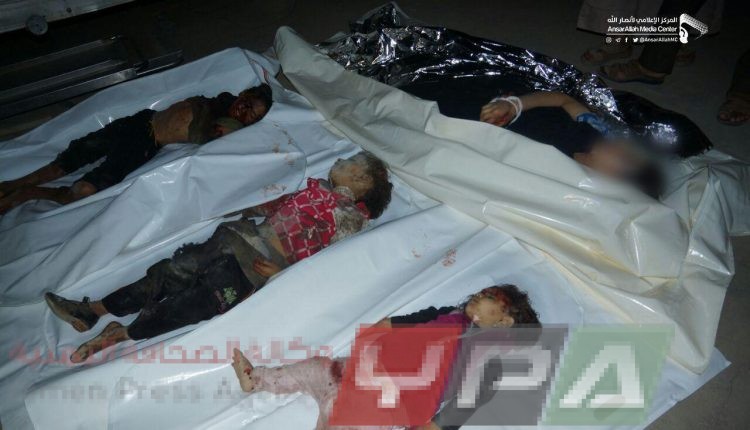
RIYADH, Feb. 08 (YPA) – In a move described by political circles as a “frank admission of war crimes,” Saudi state media sparked controversy by directly accusing the United Arab Emirates (UAE)’s air force of carrying out a series of some of the deadliest attacks on civilians and military personnel in Yemen between 2015 and 2018.
The report, aired by Saudi Arabia’s Al-Ekhbariya channel, said that Emirati aircraft were responsible for attacks that hit both civilian targets and military camps affiliated with forces loyal to former Yemeni President Abd Rabbu Mansour Hadi during the early years of the Saudi-led coalition’s intervention in Yemen.
Among the incidents referenced in the report were:
- The 2016 strike on the Grand Hall in Sana’a, which killed and injured hundreds of people attending a funeral gathering.
- The 2018 attack on a school bus in Dhahyan, Saada province.
- The 2017 bombing of the Engineers’ Residential City in Mocha.
- Airstrikes on military camps in Al-Abr, Hadramout, in 2015.
Tough Questions: Who Was Running the Operations Room?
This media escalation raises significant legal and political questions about command-and-control structures within the Saudi-led coalition. The coalition air operations were widely understood to be coordinated through a joint operations room in Riyadh.
If Emirati forces carried out the strikes, analysts note that Saudi Arabia, as the hub of operational coordination, would have played a central role in authorization and oversight. Any attempt now to distance itself from those actions could invite scrutiny of the coalition’s command-and-control structure that governed each air sortie.
The development has raised questions about the scope of collective responsibility within the coalition’s command structure.
Signs of Division
Observers say revisiting these bloody files at this time highlights the depth of geopolitical tensions between Riyadh and Abu Dhabi over influence in contested areas of Yemen.
Instead of addressing questions of international legal accountability, they argue that the Saudi media narrative appears to use the human toll of the conflict as a means of political pressure against a former ally.
Sanaa’s firm stance
Political authorities in the Sanaa government stated that the delayed acknowledgments, even if intended to shift blame elsewhere, reinforce their longstanding claim that Yemeni civilian casualties were the result of actions by multiple coalition members, including the UAE, Saudi Arabia, the United States, and the United Kingdom.
In their view, criminal responsibility lies collectively with all coalition states involved in the campaign.
@E.Y.M