

From Somaliland to Eastern Yemen: Israeli, Emirati, and Saudi Spheres of Influence Intersect
SANAA, Dec. 28 (YPA) – As the Israeli occupation announced its recognition of the Somaliland region as an independent state under the name “Republic of Somaliland” — a region that has operated as a de facto state since its secession from Somalia in 1991 but still lacks broad international recognition — the step drew regional attention.
It revived an issue long dormant: the repositioning of regional and international powers in the Horn of Africa, one of the most sensitive areas in global geopolitics.
The event was not an isolated diplomatic move, but a significant development within an intertwined regional scene, where the issues of the Red Sea and Yemen intersect and where struggles for influence overlap among regional parties engaged in a covert competition over geography and wealth.
With this announcement — described by Hebrew media as a “strategic breakthrough” — Israel became the first actor to confer political legitimacy on the separatist region, at a moment of acute regional sensitivity. This comes particularly in light of Sana’a’s role in supporting the Palestinian resistance during the war in Gaza and the growing tensions in Yemen’s eastern provinces.
A Geopolitical Platform, Not Just a Region
Somaliland lies on the southern coast of the Red Sea, directly opposite the Yemeni shores, in an area that controls one of the world’s most important maritime routes connecting Asia and Europe.
This location gives the region a multiplied strategic value, particularly given Sana’a forces’ control over large parts of northern and western Yemen, and the repeated attacks on Ships linked to Israel in the Red Sea, the Bab el-Mandeb Strait, and the Gulf of Aden.
Lebanese Political Analyst Mikhael Awad told the Yemen Press Agency: “Israeli recognition is not motivated solely by diplomatic considerations; it is tied to the restructuring of a maritime security belt extending from East Africa to the southern Red Sea, designed to counter what Netanyahu’s extremist government views as hostile expansion in Yemen.”
He added: “This sensitive location, combined with the international legal vacuum surrounding the region, has made it an attractive target for colonial powers seeking military and intelligence flexibility beyond traditional constraints, amid an international system experiencing unprecedented instability. This helps explain the sharp rise in global tensions and foreshadows potential waves of new secessions and conflicts.”
Security Dimensions: Mossad’s Involvement
The most significant signal came from the statement issued by the office of the Israeli Prime Minister, which explicitly referenced the participation of Mossad Chief David Barnea in talks with Somaliland officials — underscoring the intelligence and security nature of the move and marking a clear departure from conventional diplomatic norms.
Dr. Mikhael Awad noted: “It is no coincidence that the official statement from the Prime Minister’s office highlighted Mossad Chief David Barnea’s involvement in the discussions. This clearly indicates that the military dimension was central from the very beginning, with Yemen positioned at the forefront of a prospective Israeli operational plan.”
He added: “This level of involvement raises legitimate questions regarding the scope and limits of potential cooperation, and whether the recognition could serve as a precursor to military or intelligence arrangements in the region.”
UAE and Washington: Linking Israel to East Africa
According to Hebrew reports, Israeli recognition of Somaliland received direct support from the United Arab Emirates. Abu Dhabi wields extensive military and economic influence in the region through the Berbera military base, which includes a naval port, a runway for fighter jets, and facilities for transport aircraft.
Estimates published by the Hebrew newspaper Walla suggest that this base formed part of the logistical infrastructure for the UAE- and Saudi-led military campaign in Yemen, particularly in support of southern separatist forces. This positions Berbera as a strategic asset in any future security arrangements linked to Yemen and as a nexus between two critical theaters: the Horn of Africa and Yemen.
In an effort to secure US backing, Israel and Somaliland stated that the establishment of diplomatic relations would be carried out “in the spirit of the Abraham Accords.”
Hebrew reports further note that a US delegation visited the region, reinforcing speculation about potential American involvement, particularly amid heightened international competition with China for influence in the Horn of Africa.
These developments recall revelations reported by the Wall Street Journal earlier this year, which indicated that Somaliland had offered to host a US military base in exchange for formal recognition of its independence.
Regional Objections and Strategic Concerns
Israel’s recognition of Somaliland was met with immediate condemnation from the Somali government in Mogadishu, with explicit backing from Egypt, Turkey, the Palestinian Authority, and the Arab League, which described the move as a threat to regional stability and an attempt to impose new realities in the Red Sea without international consensus.
Ethiopia is closely monitoring the situation. The country had previously signed a memorandum of understanding with Somaliland to secure a maritime outlet, though the agreement was later suspended under regional pressure.
Tayeb Saeed, a member of the Somali community in Yemen, told the Yemen Press Agency: “This recognition could trigger a new civil war in Somalia, plunging the wider region, including Yemen and the Red Sea, into chaos that endangers one of the world’s most critical maritime routes and opens the door to major regional conflicts that would be extremely difficult to contain.”
In recent months, analyses have increasingly linked potential Israeli escalation against Yemen with efforts to establish military or intelligence platforms near the operational theater.
Within this context, Somaliland emerges as a strategic choice, given its geographic proximity, legal ambiguity, and lack of stringent international oversight.
Although no official statements have confirmed the establishment of Israeli bases, past precedents — including Israeli operations in Eritrea — make this a serious topic of discussion in research and policy circles.
Yemen at the Heart of Strategic Calculations
For Israel, indirect control over positions opposite Yemen carries amplified significance given the Sanaa forces’ control over extensive stretches of the Yemeni coast, the escalation of Red Sea–related attacks, Sanaa’s overt support for Gaza, and the erosion of Israeli deterrence in the south.
In this context, Palestinian journalist Mohammed Shaheen told the Yemen Press Agency: “Recognition of Somaliland could open the door to arrangements aimed at encircling Yemen with a combined maritime and land security belt, facilitating any potential future military or intelligence operations.”
Shaheen further emphasized: “Yemen was the only Arab country, and one of the leading states in the resistance axis, to support Gaza by enforcing a crippling naval blockade that inflicted substantial economic losses on Israel. It also contributed to the closure of Israeli airspace, exacerbating these losses and causing the near-collapse of the tourism sector, which constitutes a key component of Israel’s economic resources.”
Eastern Yemen: Arena of Rivalry Among Allies
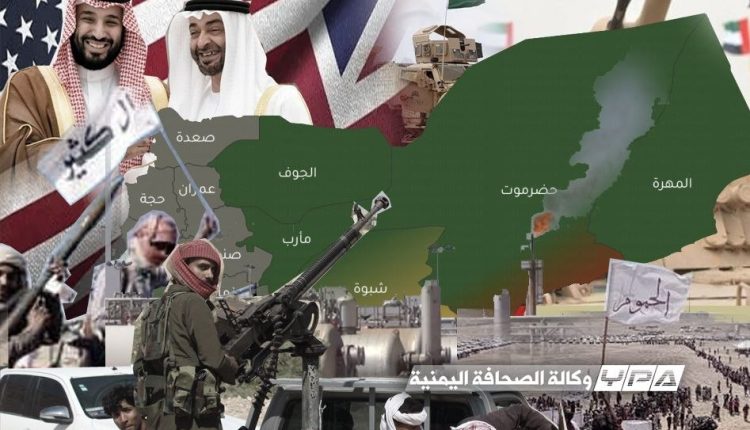
These developments are closely linked to the escalating tensions in Hadramout and Mahra, where clashes between UAE-aligned factions and Saudi-backed groups reflect a clear shift from wartime partnership to open competition for influence.
Local residents report that this rivalry has fragmented the security landscape and depleted local forces, while key strategic decisions remain concentrated in the hands of regional capitals.
The situation highlights the evolving nature of the Saudi–UAE relationship, moving from tactical coordination on the ground to overt competition over territory and strategic leverage, particularly in provinces rich in natural resources and critical access points.
Yemeni analysts observe that the UAE is focusing on supporting armed local groups to secure long-term influence, whereas Saudi Arabia is seeking to recalibrate the power balance through factions directly loyal to Riyadh.
Converging Trajectories: From Berbera to Hadramout
When the threads are connected, it becomes clear that Somaliland serves as the African extension of the security project, while eastern Yemen constitutes its terrestrial flank. The Saudi–UAE rivalry reflects divergent visions regarding who controls this flank and how. Moreover, the recognition of Somaliland is widely seen as potentially paving the way for an Israeli–UAE military redeployment near Yemen.
Between Israeli recognition in the Horn of Africa and the Saudi–UAE struggle for influence in eastern Yemen, a new conflict map is emerging. In this landscape, confrontations are not conducted along direct frontlines but through distant bases, flexible alliances, and local factions that bear the costs of subordination to ambitious regional powers.
In this strategic framework, Yemen is no longer merely an internal battlefield; it has become a central node in a wider regional struggle that extends from Gaza to Berbera and Sanaa, and from Hadramout to the Red Sea and Bab el-Mandeb.
@E.Y.M