

Calculated Escalation: How Saudi Arabia, UAE are re-engineering landscape in southern Yemen?
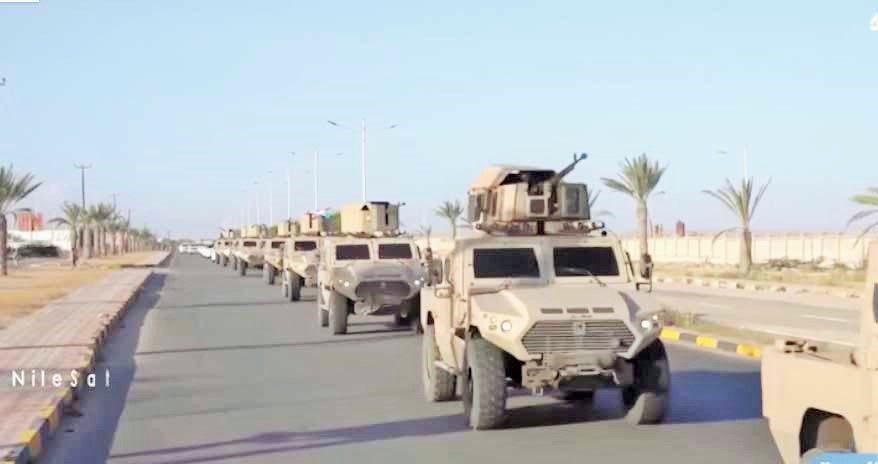
SANAA, Dec. 25 (YPA) – The southern and eastern provinces of Yemen, particularly Hadramout and Mahra, are witnessing a notable escalation in Saudi and Emirati military movements. This comes amid increasing talk of field tensions that could lead to a direct confrontation between the two parties.
However, a deeper reading of the course of events and recent developments suggests that what is happening does not exceed a rearrangement of roles and a new division of influence in the post-understanding phase between Riyadh and Abu Dhabi, which led to the removal of Islah Party militants from these two provinces.
Recently, Saudi Arabia pushed large military reinforcements from the so-called “Dera Al-Watan” forces, including tanks and armored vehicles. These moved from the Najran region, passing through the Empty Quarter desert, arriving at the city of Sharurah adjacent to the border with Hadramout province.
This coincided with the start of the deployment of these forces in several districts of the Hadramout Valley and Desert, following the withdrawal of units belonging to the so-called “Southern Transitional Council” (STC) funded by the UAE .
In contrast, the UAE-backed STC intensified its military movements. Local sources reported seeing large reinforcements belonging to the so-called “Fourth Al-Amaliqa Brigade” on the international road, coming from Shabwa province toward Hadramout, as part of efforts to strengthen the deployment of its forces in strategic areas such as Al-Abr and Al-Khash’ah in Hadramout valley.
Although these mutual movements are presented as an indication of an approaching comprehensive confrontation, the data of the field and political scenes suggest that both parties are moving within a ceiling of undeclared understandings aimed at consolidating spheres of influence and redistributing control, especially in vital areas linked to oil wealth and land supply lines.
These developments come in the context of a new phase that followed the removal of Islah Party militants from Hadramout and Mahra by a Saudi-Emirati agreement. This allowed both parties more space to re-engineer the military and political landscape in accordance with their respective interests, without prejudice to the general framework of the existing understanding between them.
Even with the escalating media rhetoric regarding the possibility of a “decisive battle” breaking out, several field and political indicators suggest that what is happening falls within a calculated struggle for influence. Through this, Riyadh and Abu Dhabi seek to redraw the map of control on the ground without sliding into an open clash that might disrupt existing arrangements.
Despite what appears on the surface as Saudi-Emirati competition in eastern Yemen, the course of events confirms that the dispute between the two parties does not touch the essence of the project being implemented. Rather, it is limited to the mechanisms of managing influence and the limits of control for each party.
Riyadh and Abu Dhabi meet at one strategic goal represented in the dismantling of Yemen and preventing the reconnection of its north with its south, even if this is done by displacing local tools that were previously used, such as the Islah Party militants.
The previous coordination between the two parties to remove Islah militants from Hadramout and Mahra reveals the existence of deep understandings that transcend declared differences. This measure constituted a pivotal step to rearrange the scene to serve the project that Saudi Arabia and the UAE are working on in Yemen, which comes within a larger project represented in re-engineering the region in accordance with the interests of “Israel.”
YPA