

UAE reshapes southern Yemen in service of Zionist project
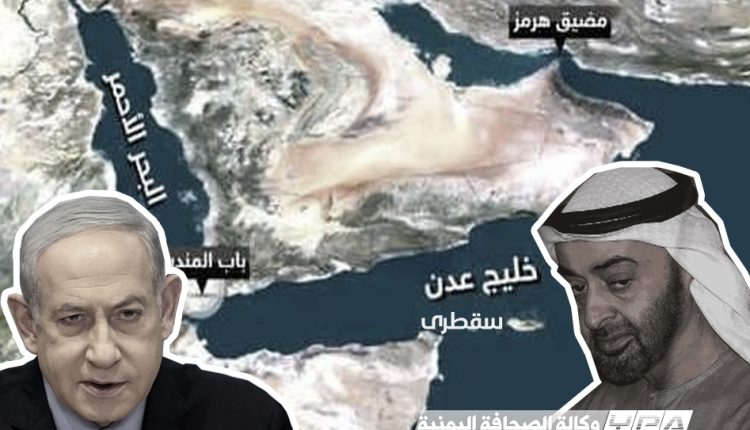
SANAA, Dec. 09 (YPA) – The rapid military and political shifts witnessed in Yemen’s southern and eastern provinces along the Arabian Sea are part of a field preparation for a new confrontation with Sana’a forces. This effort is being orchestrated by regional and international parties, chiefly the UAE in direct and separate cooperation with Washington and the Zionist entity.
The recent successive withdrawals of the Saudi-backed ” Dera Al-Watan” forces from their positions in Mahra, Aden, Lahj, and Abyan toward oil-rich Hadramout, and the handover of their positions to Emirati-backed factions, do not appear to be mere standard military redeployment. Rather, they are interpreted within a broader context of building a unified front under Emirati leadership, free of any Saudi military influence.
This process was preceded last week by the handover of camps and arms depots belonging to the Islah-affiliated “First Military Region” in Wadi Hadramout to the Emirati-loyal factions—arriving from Aden, Dhalea, Lahj, and Abyan—and the clearing of any Islah-loyal military or security presence, a step aimed at ensuring complete Emirati control over those areas.
In this regard, Israeli circles have not hidden their admiration for the UAE-backed Southern Transitional Council (STC) factions.
Avi Avidan, wrote on X that “the UAE-backed Southern Transitional Council (STC) forces captured Seiyun with little resistance, placing Yemen’s largest oil reserves under the control of the southern coalition, along with the Al-Maashiq presidential palace in Aden and Seiyun International Airport in Hadramout.”
He described the developments not only as a military success but also as part of “the genius of the UAE’s pincer strategy with Israel,” noting that this strategy aims to outmaneuver Sanaa forces from Socotra Island—where joint UAE-Israel intelligence centers exist—to Aden and Hadramout.
Avidan also highlighted STC leader Aidarus Al-Zoubaidi’s pledge last September to join South Yemen to the “Brahimi agreements,” considering it a step toward creating “an impregnable fortress against Iran.”
“Avidan” also described the STC as an “ambitious coalition”, as an “ambitious alliance,” particularly with the continuous offers made by STC President Aidarus Al-Zoubaidi to normalize relations with the Zionist entity in exchange for support for the project of Yemen’s separation, backed and funded by Abu Dhabi.
This includes Al-Zoubaidi’s welcoming in 2020 of the opening of an “Israeli” embassy in Aden and his readiness, along with Tariq Afash (commander of the Emirati-funded factions located in Mocha near Bab al-Mandab), to secure maritime navigation.
This came while the Sanaa forces were conducting military operations targeting Israeli-linked vessels heading to occupied Palestinian ports in the Red Sea, the Gulf of Aden, and the Arabian Sea in support of Gaza.
The offers made by the Emirati-loyal leaders, Al-Zoubaidi and Afash, served as an Israeli and American incentive over the past two years to plan for the use of the UAE-backed forces to potentially open a new war front on Sanaa.
It appears that the UAE-backed factions have become the central bet for the American-Israeli-British axis as the main tool in any upcoming confrontation with Sana’a.
This was confirmed by Afash in a comment regarding the STC factions’ control over the First Region camps in Hadramout and Al-Ghaydah Axis in Mahra as a “rearrangement of the theater of operations,” just one day after launching an attack against the Islah Party, accusing it of attempting to eliminate the General People’s Congress party and the Afash family.
For this reason, the UAE continues to rearrange and redraw the military and political landscape in Yemen’s southern and eastern governorates aiming to turn them into an advanced operations theater for a war designed by Washington, managed and executed by Abu Dhabi through its local tools, and supported and funded by Yemeni wealth plundered by the UAE.
This serves the Israeli security agenda, especially after the recent joint Emirati-Israeli-American military developments and movements on Zuqar Island, preceded by similar activities on Mayun in the Red Sea and Bab al-Mandab, and the Socotra Archipelago islands, which have been transformed since 2020 into joint military bases and intelligence centers between the UAE and Israel.
Meanwhile, Saudi Arabia—which has led the military coalition in the war on Yemen since March 2015—appears in the role of a powerless actor, having lost a significant portion of its influence, which has eroded in Yemen’s eastern provinces, particularly in Hadramawt. Saudi Arabia is mobilizing its factions there as its strategic depth, while it continues to execute political maneuvers with Sanaa through Omani mediation under the banner of peace in Yemen. However, its field movements with America and Britain are clearly visible through arms deals purchased and directed against the Yemeni people.
Thus, the political and military scene in southern and eastern Yemen appears to be progressing according to a strategy of building a unified force that serves American, British, and Israeli agendas and interests, secured through the UAE. As the Israeli expert “Avidan” sees it, this is to relieve the security burden on the United States in the Middle East, particularly concerning maritime navigation, at the expense of Yemeni sovereignty and regional stability.
@E.Y.M