
Sanaa Health Ministry warns dialysis services at risk amid Saudi-led blockade
SANAA, Aug. 01 (YPA) – Yemen’s Sanaa-based Health Ministry has warned that shortages of dialysis solutions and essential medical supplies as a result of the Saudi-led blockade that are pushing kidney dialysis services toward collapse and putting thousands of patients at risk.
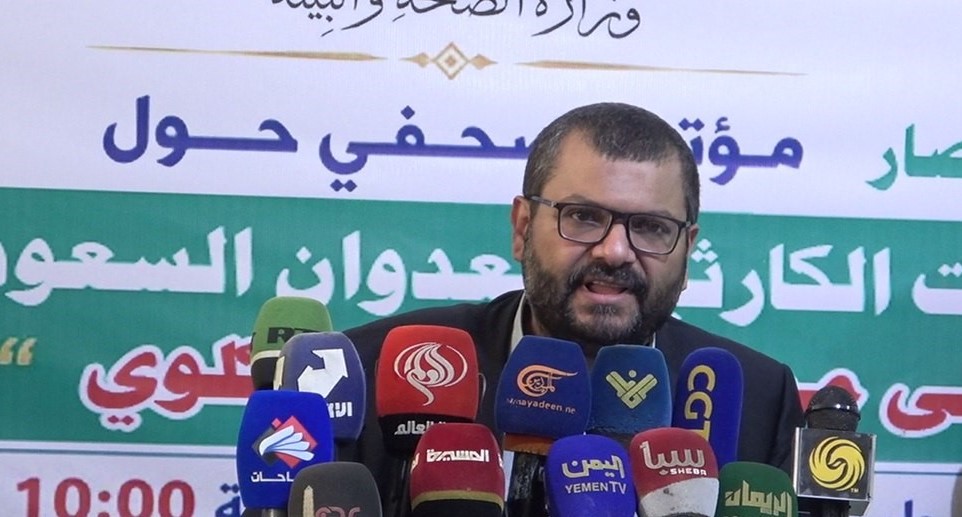
Speaking at a news conference at Al-Thawra General Hospital, ministry officials said Yemen requires almost 700,000 dialysis sessions annually, while dialysis centers need hundreds of tons of medical supplies each month.
They noted that humanitarian flights currently transport only 200–300 kilograms of medical cargo per trip, covering only a fraction of actual demand.
The ministry said shipments of medicines and medical supplies are delayed by three to four months due to transport and inspection procedures.
It also reported that more than 498 dialysis machines require maintenance after exceeding their operational lifespan, while nearly half of Yemen’s health facilities are either fully or partially out of service.
According to the ministry, Al-Thawra Hospital in Sanaa treats 170 to 220 dialysis patients daily from across the country. The hospital recorded 295 deaths among kidney failure patients in 2025 and 160 additional deaths between January and July 2026.
Officials also warned that supply shortages have forced some facilities to reduce dialysis treatment from the standard three four-hour sessions per week to only two sessions, or shorten treatment times, increasing the risk of toxin buildup, severe complications, and death.
The ministry estimated the annual cost of treating one dialysis patient at more than $7,250, with over 8,000 patients dependent on regular dialysis and more than 1,500 urgently requiring kidney transplants.
It added that over 90% of patients are unable to travel abroad for treatment, while 582 critical cases required overseas care between 2021 and 2025.
The ministry also stated that the closure of dialysis centers in Haradh district of Hajjah and Salah are of Taiz due to Saudi-led airstrikes has forced patients to seek treatment elsewhere, with some traveling up to 250 kilometers each week to receive dialysis.
The ministry said shortages of funding and medical supplies have contributed to the deaths of around 5,000 kidney failure patients over recent years.
It cautioned that fatalities could rise further unless urgent action is taken, calling on the United Nations, international humanitarian organizations, and donor agencies to intervene.
The ministry also urged the continuous reopening of Sanaa International Airport for humanitarian and commercial flights, the removal of restrictions on the entry of medicines, dialysis supplies, and spare parts for medical equipment, and improved access for patients requiring specialized healthcare.
AA