

US-Iran tensions drive oil prices higher, deepen global economic fears
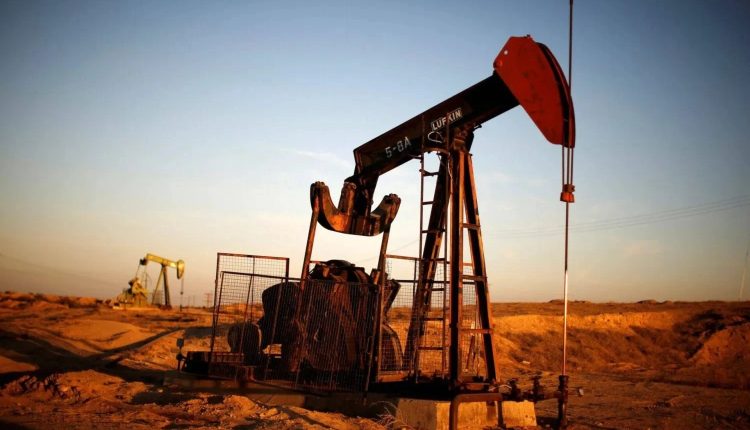
SANAA, May 12 (YPA) – Global oil markets have returned to the forefront of political and security tensions after recent developments between the United States and Iran pushed crude prices to record significant gains, amid growing concerns over the collapse of diplomatic efforts and the widening scope of escalation in the region.
This increase reflects the sensitivity of energy markets to any indicators threatening supply stability, especially given the Middle East’s connection to a large share of global oil production and exports.
The U.S. statements rejecting the Iranian response reflect the complexity of negotiations between the two sides, increasing the likelihood of continued tension and opening the door to further political and possibly military escalation.
Today, global oil prices jumped by around 5% after U.S. President Donald Trump announced that he rejected the Iranian response to Washington’s proposal to end the war, raising fears that diplomatic efforts may collapse and tensions may escalate further.
Brent crude futures rose by approximately 4.3%–5% to around $105 per barrel.
U.S. crude oil futures also climbed by a similar margin—between 3.8% and 4.7%—to reach about $99 per barrel this morning.
The increase came after Trump described the Iranian response to the U.S. proposal to end the war as “unacceptable” in a post published Sunday on his Truth Social platform.
The rise in oil prices directly impacts the global economy, as it leads to higher transportation, production, and energy costs, which may in turn drive up inflation rates and commodity prices in many countries.
The sharp increase also reflects growing anxiety in global markets, with investors rushing to buy oil in anticipation of future disruptions that could reduce global supplies.
The Iranian Tasnim News Agency reported details of Tehran’s response to Washington, which included an immediate cessation of military operations on all fronts, guarantees against future attacks on Iran, and the complete lifting of U.S. sanctions—including restrictions on oil exports—within 30 days.
The response also called for ending the naval blockade immediately after signing an initial agreement, in addition to releasing frozen Iranian assets and granting Iran control over the Strait of Hormuz in exchange for American commitments.
Inflation rates linked to tensions between the United States and Iran have risen sharply both in the U.S. and Europe, where gasoline prices have reportedly reached $1.15 per gallon since the start of the war, pushing core inflation toward levels threatening economic growth.
From another economic perspective, the shipping crisis has intensified, while fuel costs have increased significantly, affecting both maritime and air transport.
Analysts fear that the global economy could enter a state of “stagflation,” where economic stagnation coincides with high inflation, rendering traditional central bank tools—such as raising interest rates—either ineffective or extremely painful.
The crisis has already pushed many countries to rely on strategic reserves and accelerate the transition toward renewable energy, though these measures are considered insufficient to offset the major supply disruptions affecting the Gulf region and Iran.
As long as the closure of the Strait of Hormuz continues and negotiations between Washington and Tehran remain stalled, inflationary pressures are expected to intensify further, potentially leading to a decline in global purchasing power and triggering social unrest in countries most affected by rising food and energy prices.
It can be said that the U.S.-Iran conflict has gone beyond its regional dimensions and evolved into a global economic crisis with cross-border consequences.
While Washington seeks to apply military and political pressure, Tehran is using its geopolitical position to exert pressure on the core of the international economy.
If the current deadlock continues, it could push the world toward a prolonged period of “inflationary recession,” potentially reshaping the global economic order and forcing countries to reassess their security and energy strategies.
A diplomatic solution remains the only viable path to avoiding a comprehensive economic collapse, as the crisis has demonstrated that “energy security is the other face of national security” for all major powers without exception.