

Riyadh airport faces widespread flight disruptions as cancellations reach 421
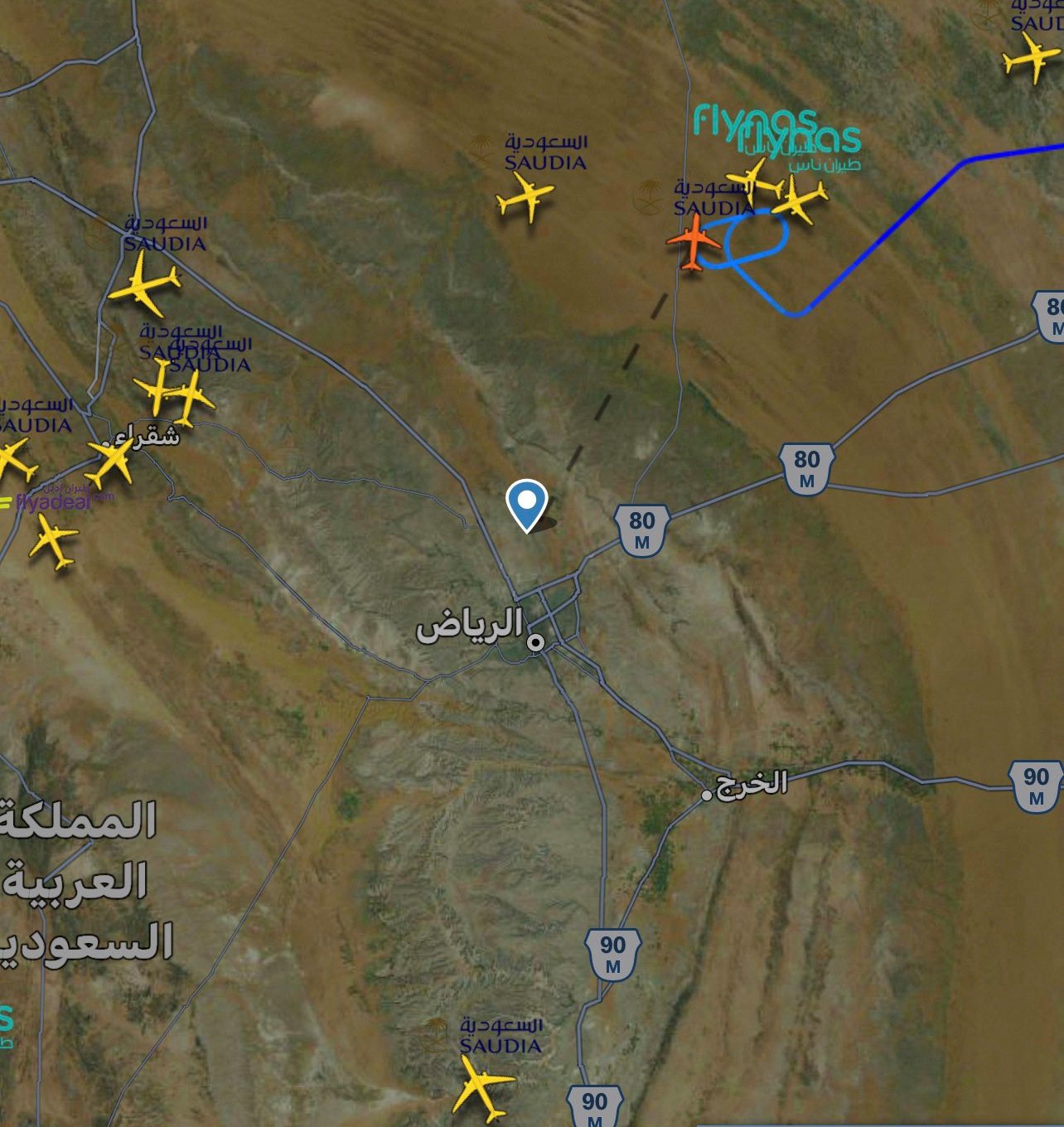
SANAA, Oct. 09 (YPA) – King Khalid International Airport in the Saudi capital, Riyadh, has experienced widespread disruptions to air traffic following the announcement by Sanaa forces that they had imposed an aerial blockade on the airport, while allowing humanitarian flights subject to prior coordination with the Sanaa-based Humanitarian Operations Coordination Center (HOCC).
The disruptions came as the number of canceled or suspended flights rose to 421 on Thursday and during the early hours of Friday, amid repeated missile attacks attributed to Sanaa forces. The developments prompted international airlines to suspend services, while the European Union Aviation Safety Agency (EASA) expanded its warnings concerning Saudi airspace.
Data from aviation analytics firm Cirium, as of 4:25 p.m. on Thursday, October 8, 2026, showed that 169 of the 378 scheduled departures from King Khalid International Airport had been canceled or were not operating, representing 44.7% of all departures. Meanwhile, 124 of 369 scheduled arrivals had been canceled or suspended, accounting for 33.6%.
According to the data, 293 flights had been affected during the monitoring period before the overall figure reportedly climbed to 421 on Thursday and in the early hours of Friday, indicating that disruptions to air traffic in the Saudi capital were continuing.
King Khalid International Airport management urged passengers to contact their airlines directly and check their flight status before heading to the airport. Travelers also told Agence France-Presse that their flights had been canceled or delayed, amid widespread confusion over travel schedules.
European Warning Expands Scope of Aviation Risks
In a parallel development, the European Union Aviation Safety Agency expanded its warnings concerning Saudi airspace amid escalating military activity and risks posed by missiles and drones.
According to the agency’s Conflict Zone Information Bulletin, European authorities recommended avoiding flights over specific parts of the Jeddah Flight Information Region, while extending precautionary measures to include additional areas in northwestern Saudi Arabia, according to reports on the updated advisory.
The European bulletin indicates that military developments have increased potential risks to civil aviation, including the possibility of aircraft being exposed to missile threats, air-defense interception operations or falling debris.
The expanded warnings reflect growing concerns over aviation safety in the region, particularly as international airlines increasingly rely on alternative routes to avoid areas affected by tensions and conflict.
International Airlines Suspend Flights to Riyadh
The disruptions have also affected several regional and international airlines, which have suspended flights to the Saudi capital or adjusted their operating schedules amid concerns over the safety of passengers and flight crews.
Singapore Airlines announced that it had postponed the launch of services to Riyadh until March 28, citing the volatile situation in the Middle East. Philippine Airlines, meanwhile, suspended flights to the Saudi capital until at least October 11.
IndiGo and Air India also halted their Riyadh services, while Cathay Pacific extended the suspension of flights to Riyadh and Dubai until January 31, according to the information provided.
Saudia was among the airlines most severely affected, with 97 of its 140 scheduled departures from Riyadh canceled, representing 69.3%. A further 87 of 136 scheduled arrivals were canceled, accounting for 64%.
Other Saudi carriers were also affected. Thirty of the 91 scheduled departures operated by flynas were disrupted, representing 33%, while 20 of flyadeal’s 54 scheduled departures were affected, accounting for 37%. Riyadh Air also saw two of its 15 scheduled departures affected.
International airlines operating flights to and from the airport were also impacted, including Turkish, Qatari, Egyptian, Omani, Emirati, Indian, Philippine and Sri Lankan carriers, although the scale of cancellations and delays varied among airlines.
Repeated Disruptions at King Khalid International Airport
King Khalid International Airport had previously experienced flight suspensions amid an escalation in attacks claimed by Sanaa forces.
Concerns also extended to other Saudi airports, including Abha Airport in the kingdom’s southwest, as airlines monitored security developments and reassessed their routes and flight schedules.
The developments come amid growing sensitivity surrounding Saudi airspace for international aviation, given its role as an alternative corridor for some flights seeking to avoid conflict zones in the Middle East.
@@