
President al-Mashat warns against attempts to divide Yemen on unity anniversary
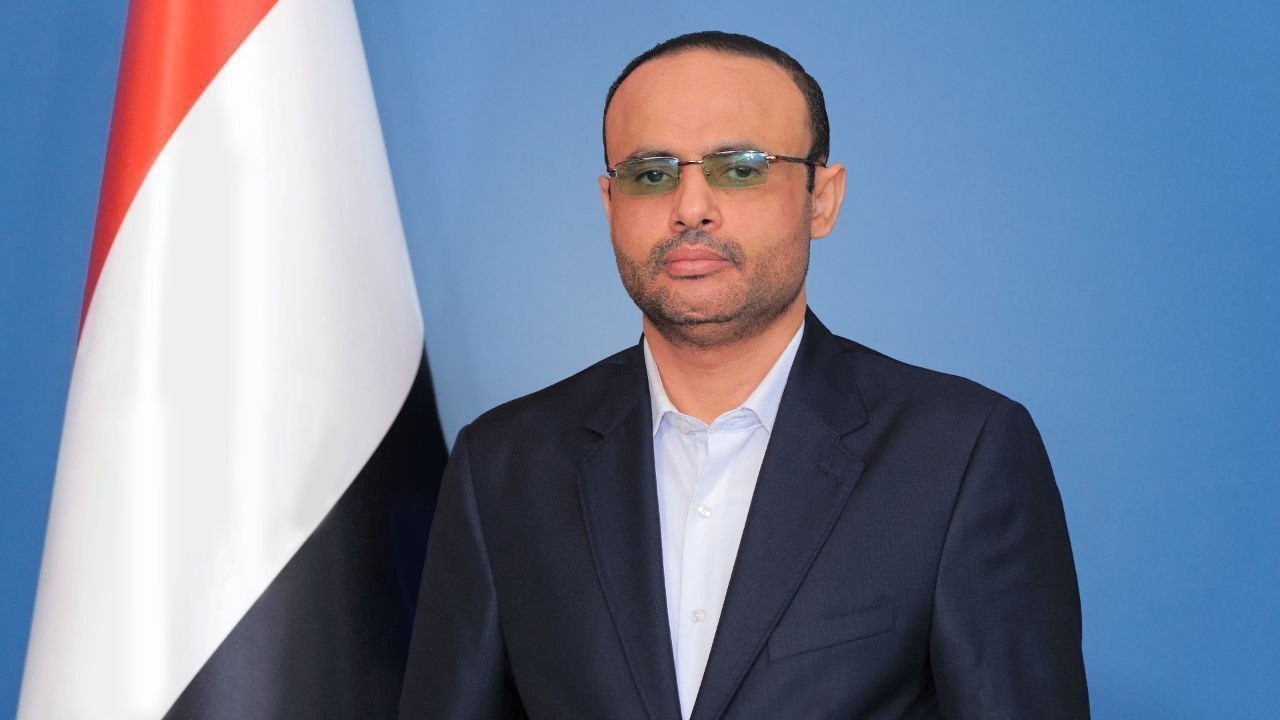
SANAA, May 21 (YPA) – President of the Political Council in Sanaa, Mahdi al-Mashat, stressed on Thursday that the anniversary of Yemeni unity should be regarded as a lasting national occasion that embodies the values of cohesion and collective identity, rather than merely a passing political event.
In a speech marking the 36th anniversary of Yemeni unity, al-Mashat said Yemenis had learned that national strength lies in unity and solidarity, while division leads to weakness and instability.
At the same time, he noted that celebrating unity should not overlook what he described as the “dark period” that followed the 1994 civil war, accusing the former regime of transforming unity from a project of partnership and national development into a system marked by exclusion, corruption, and injustice.
Al-Mashat argued that the former authorities undermined both the state and the principles of unity, emphasizing that Yemen and its unity project should not be reduced to the interests of political factions or power groups.
He further stated that Yemeni unity was the result of the people’s will rather than a privilege granted by any political elite, calling for the preservation of national unity while addressing the southern issue through what he described as an independent and fair national framework.
Mr. President also warned coalition-backed forces against attempts to weaken unity or revive policies associated with the former regime, accusing external actors of seeking to divide Yemen and exploit its resources through military intervention and political fragmentation.
On regional developments, al-Mashat said that Israel and the United States were openly pursuing broader regional agendas, referring to what he described as the “Greater Israel” project. He added that Yemen’s position since the launch of the “Al-Aqsa Flood” operation has been aligned with support for the Palestinian people in Gaza.
He also expressed support for Iran, affirming what he described as Tehran’s right to defend itself and manage strategic waterways, including the Strait of Hormuz, while claiming that pressure on Iran is linked to wider regional objectives.
In addition, al-Mashat called on Arab and Islamic countries to overcome internal divisions and avoid involvement in actions targeting regional populations, stressing the need for stronger collective positions on regional conflicts.
Concluding his remarks, he reiterated support for the Palestinian and Lebanese causes, condemned moves toward normalization with Israel, and criticized incidents involving desecration of the Quran, calling for broader political and economic pressure against countries that permit such acts.
AA